 MineArchive
Powder House
| Also known as | Magazine (Formal/heritage-listing name for the same structure, e.g. an explosives or powder magazine.) |
|---|---|
| Category | Structures & Machinery |
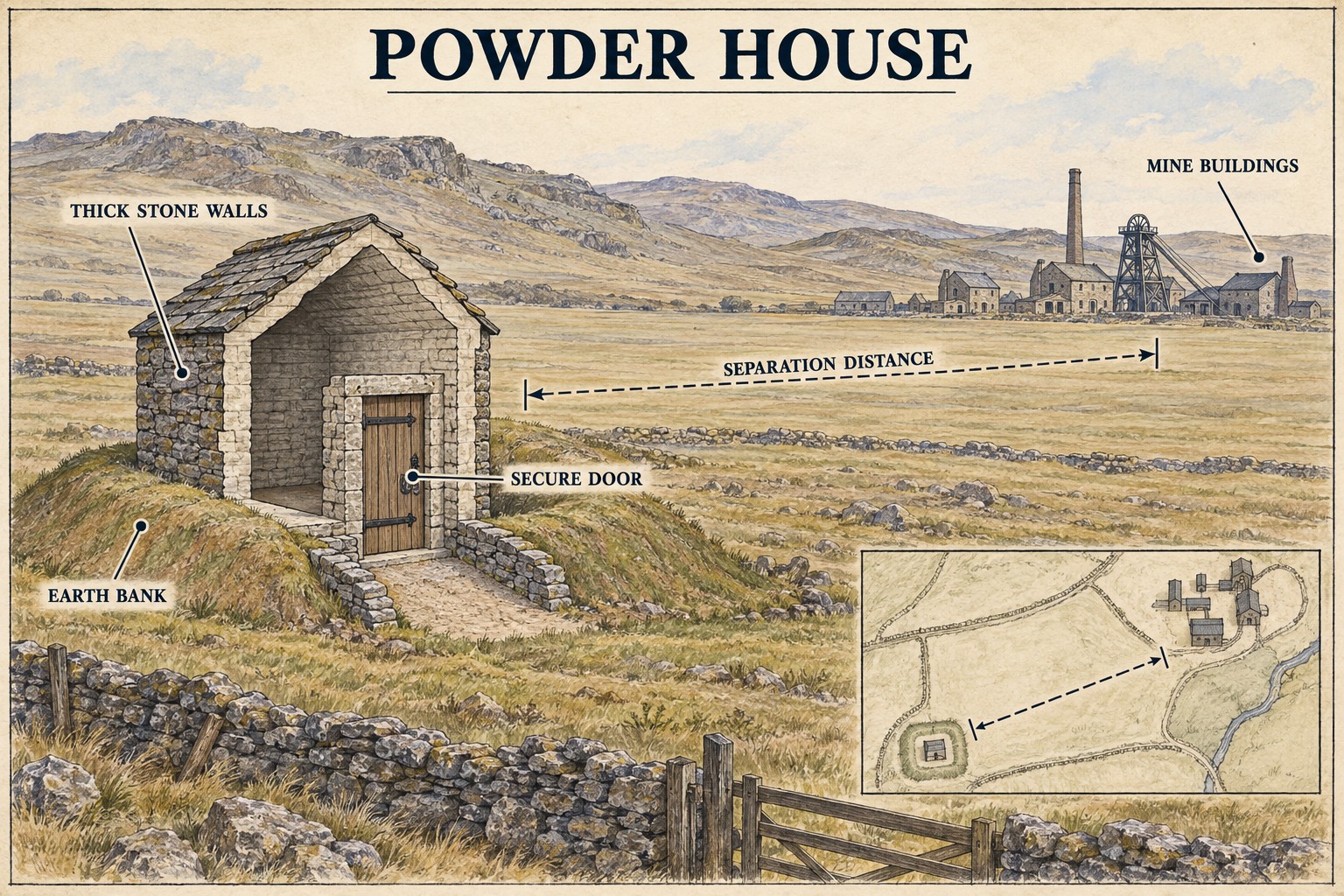
A dedicated store for gunpowder or other blasting explosives, deliberately built well apart from a mine's other buildings as a safety measure against accidental detonation. Also known, especially in official and scheduled-monument terminology, as a powder magazine.
Historical usage
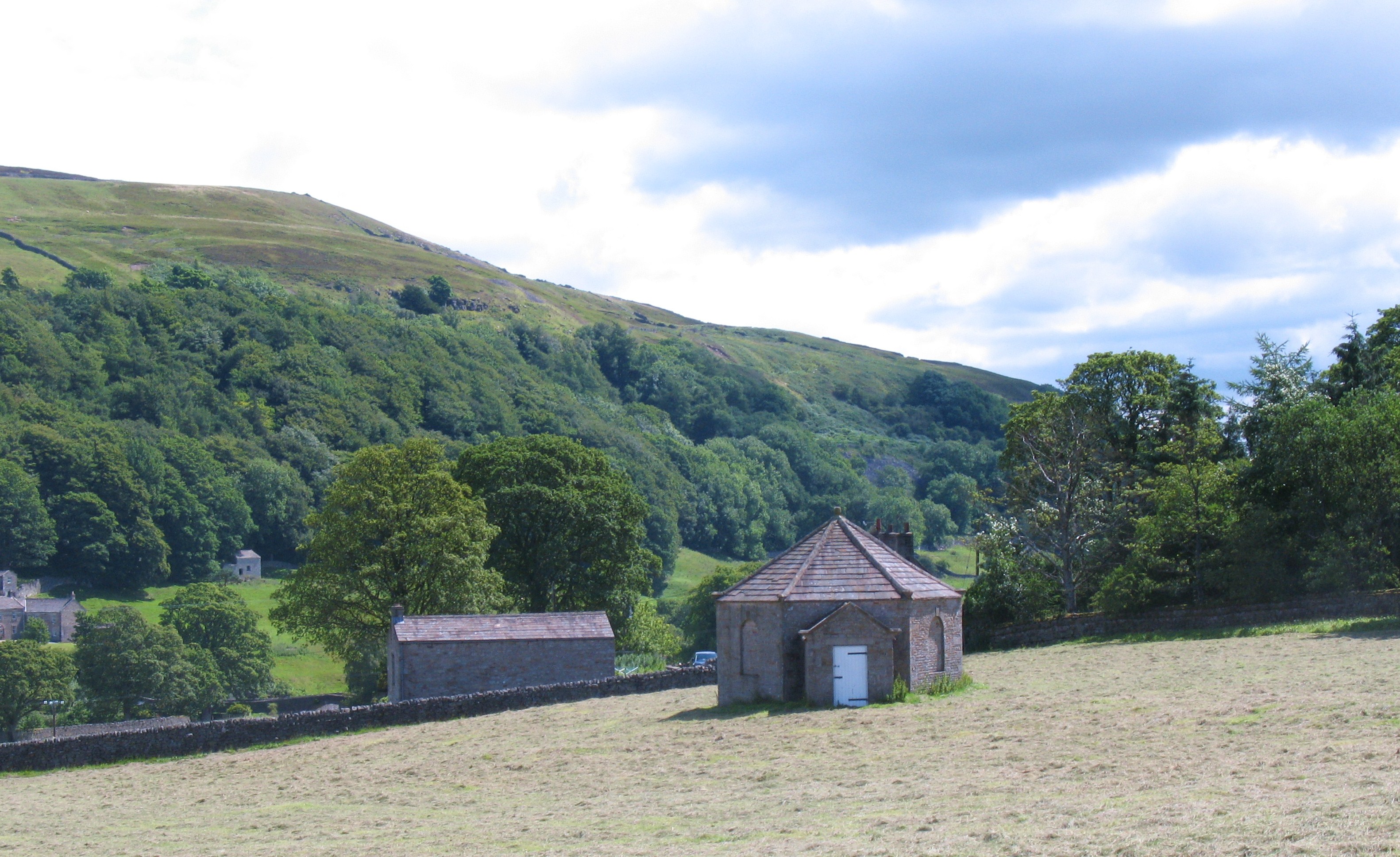
A standard feature of British mines and quarries from the introduction of gunpowder blasting in the 17th and 18th centuries onward, continuing in updated form once dynamite and other more powerful explosives began to supersede gunpowder from the later 19th century. CB Mine's own hexagonal powder house, built around 1802-04 and Grade II* listed, is a well-preserved example of the type.
How it worked
Explosives were stored in small, sturdy, often single-storey buildings, typically built of stone with thick walls, and positioned a deliberate distance — sometimes literally a separate field away — from workshops, engine houses and miners' accommodation. Powder was issued to miners from the store only in the quantities needed for a shift's blasting, rather than being kept loose underground or scattered across the wider mine site.
Why it was used
Isolating the explosive store minimised the human and material cost if the magazine itself ever detonated accidentally, protecting the rest of the mine's buildings, equipment and workforce from a single catastrophic loss.
Risks & limitations
A powder house still represented a real hazard in its own right, and the practice of carrying loose powder from store to face introduced its own additional risks along the way; later regulation increasingly formalised how much explosive could be stored at once and how it had to be transported underground.
Regional variation
Called a 'powder house' in most everyday English and Welsh mining usage, and more formally a 'powder magazine' or 'gunpowder magazine', particularly in scheduled-monument and heritage-listing terminology — functionally the same structure throughout Britain regardless of name.
Related terminology
Mines associated with this term
5 examples chosen from 45 linked records — the term page is not an index.
- Ecton Copper Mines — Staffordshire (well documented example)
Named twice in this record, first in the current condition: “…Association. Surface remains include restored dressing floors, a powder house (1884), and the 1788 Boulton & Watt engine house — reputedly the…” - Stirling Hill Quarry — Aberdeenshire (well documented example)
Named in this record’s surface remains: “Flooded quarry pits, tramway embankments and stone-built magazine and mason's buildings are visible across the hill, walkable via the…” - Trefor Granite Quarry — Gwynedd (well documented example)
Named in this record’s surface remains: “Extensive: rail-served galleries, workshops, magazine, bins, crusher house, the 920 m incline and the 1923 concrete…” - Auchencairn Mine — Dumfries and Galloway (well documented example)
The surface buildings included a magazine — the separate store every mine using explosives had to keep well clear of everything else. - Belmont Mine — North Yorkshire (well documented example)
Named 3 times in this record, first in the summary: “…no ore at all in its last decade. Its drift mouth, sub-station and powder house survive above the town.”
Sources
- (secondary) Old Powder House, CB Lead Mines, Arkengarthdale — North Yorkshire Historic Environment Record
- (secondary) Old Powder Magazine — Wikipedia
Record created: 24 August 2026 · Last researched: 24 August 2026