 MineArchive
Ecton Copper Mines
| Location | Ecton Hill, near Wetton, Staffordshire Moorlands, Staffordshire — 53.1213, -1.8543 (exact) |
|---|---|
| Commodities | Copper, Lead, Zinc |
| Type | Metal |
| Worked | Bronze Age–1891 |
| Maximum depth | c. 300m below river level |
| Operators | Duke of Devonshire (1760–1790) |
Overview
Ecton Hill's mines are unusual for the Peak District orefield in having been worked mainly for copper rather than lead and zinc. Deep Ecton, the principal mine, was one of only two known Bronze Age copper mines yet identified in England, and in the 18th century became the deepest mine in Britain.
History
Copper extraction at Ecton began in the Bronze Age, roughly 3,500 years ago, using stone hammers and bone or antler tools; alongside one other English site, it is one of only two places where Bronze Age copper mining has been confirmed archaeologically. Small-scale medieval lead mining followed. From the 1660s Ecton was among the first mines in Britain to use gunpowder blasting. An ‘Adventurers’ company dewatered the pipe-like ore deposits via the Deep Ecton Level in the 1720s and 1730s, and from 1760 the Duke of Devonshire took the mine in-house, running it directly for around thirty years; the venture is said to have made him upwards of £300,000, reputedly helping to finance the Crescent at Buxton. A Boulton & Watt steam winding engine house was built on the hill in 1788, by which point Deep Ecton's workings reached roughly 300m below the River Manifold — well below sea level, and the deepest in Britain at the time. The main ore pipe failed in the 1790s and the mine went into decline. The Dukes of Devonshire consolidated their holdings across the hill between 1805 and 1825, and underground steam pumping engines were installed at the nearby Clayton Mine from 1814. With profits falling, Deep Ecton was allowed to flood to river level during the 1850s, and successive private companies searched unsuccessfully for further rich ore through the 1820s–1880s before all mining on the hill finally ended.
Geology
The mines exploit near-vertical, pipe-like hydrothermal copper-lead-zinc mineralisation where the River Manifold cuts through Lower Carboniferous limestone.
Geological setting: Hydrothermal Deposits (well documented example)
Workings
Workings include Deep Ecton's main ore pipe, the neighbouring Clayton Mine (worked 1805–25 with its own underground steam pumping engines), Salt's Level (the main ore-extraction route from 1807), an underground ore canal built 1773–1784, and a horse-powered capstan and balance-cone winding arrangement.
Closure
Unknown.
What remains
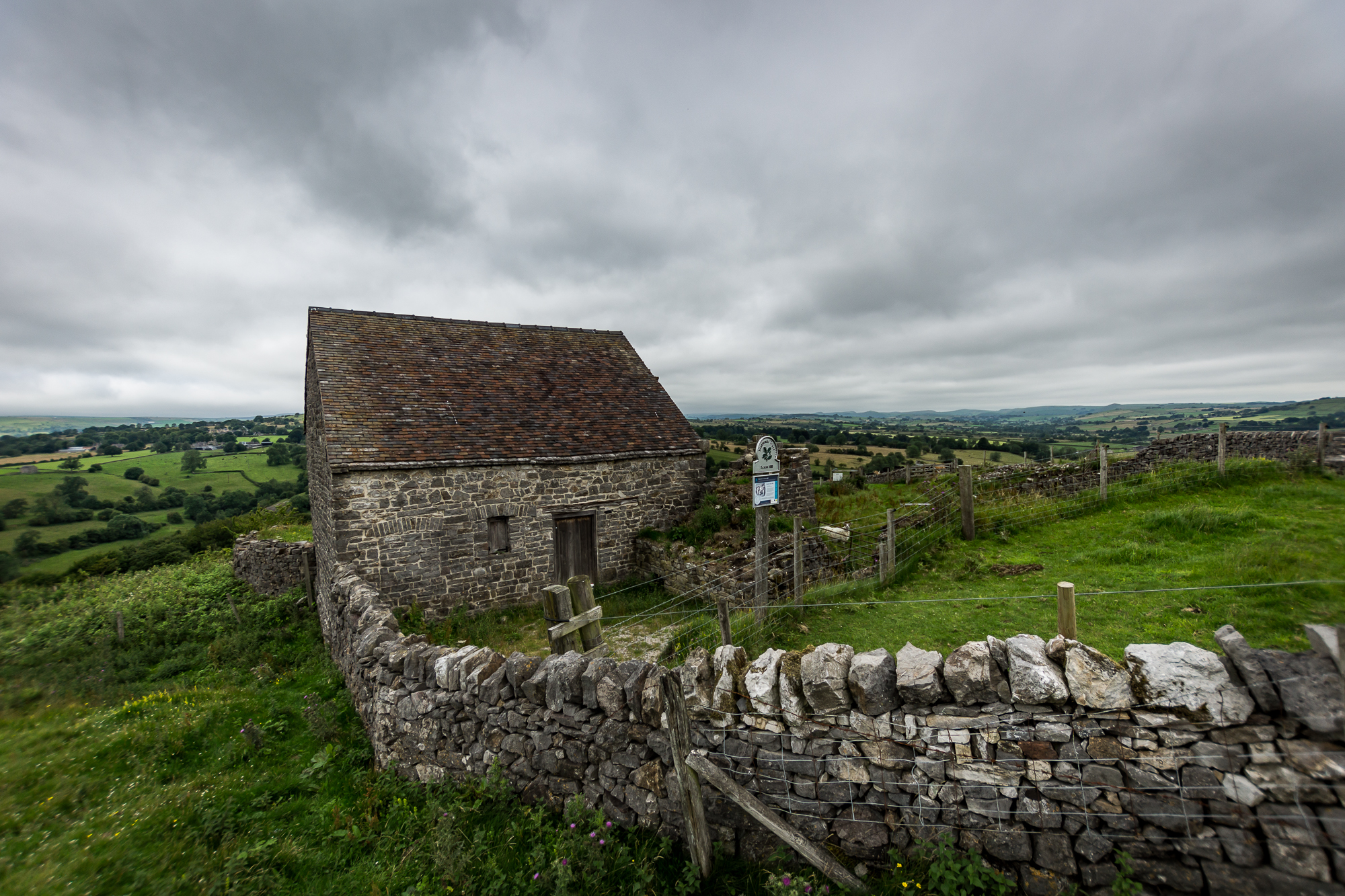
The site is a Scheduled Monument and Site of Special Scientific Interest, managed by the Ecton Mine Educational Trust with teaching support from the Ecton Hill Field Studies Association. Surface remains include restored dressing floors, a powder house (1884), and the 1788 Boulton & Watt engine house — reputedly the oldest surviving engine house of its kind anywhere. Most visitor access is limited to Salt's Level; the deeper workings are flooded and only open to specialist survey under strict conditions. In 2018–2019 the flooded shafts were surveyed to depths of 127m and 113m by autonomous submersible robots as part of the EU-funded UNEXMIN project, in each case stopping at a blockage. A multi-year conservation project on the mine's balance cone -- which housed a counterbalance reducing the load on the 1788 Boulton & Watt winding engine -- was completed in 2024 with £145,000 of Defra Farming in Protected Landscapes funding, led by Peak District National Park Authority archaeologists working with the Ecton Mine Educational Trust, Ecton Hill Field Studies Association and Historic England; the site was removed from Historic England's Heritage at Risk Register as a result.
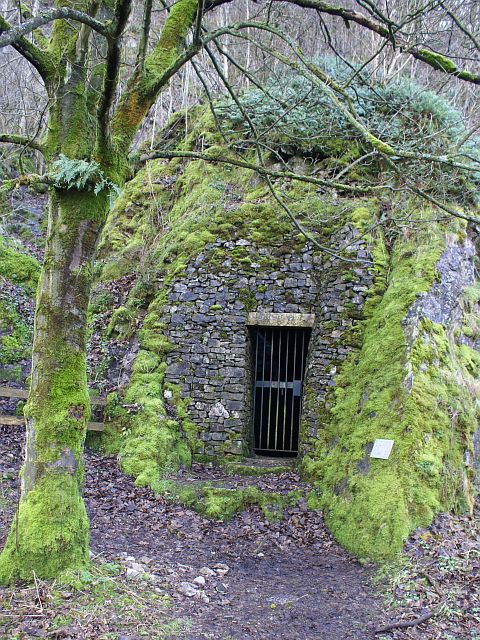
Old mine ruins, spoil tips and the restored powder house remain visible around the hillside; the Boulton & Watt engine house still stands, and ‘The Folly’, a former mine building, survives as a private house.
Related mines
- Bincliff Lead Mines — Both were owned throughout by the Duke of Devonshire, and men were regularly transferred between the two.
Nearby mines
- Bincliff Lead Mines — 1.6 miles (2.7 km) S
- Brown End Quarry — 5.0 miles (8.1 km) S
- Caldon Low Quarry — 5.5 miles (8.8 km) S
- Lathkill Dale Mine — 5.8 miles (9.3 km) NE, Derbyshire
- Mandale Mine — 5.8 miles (9.3 km) NE, Derbyshire
Straight-line distance, within 9 miles (15 km). Show on the map.
What's uncertain
Points where sources disagree or the record could not be settled; both accounts are kept. All open questions in the archive.
- The 1788 Boulton & Watt engine house on Ecton Hill is reputed to be the oldest surviving engine house built for winding ore out of a mine anywhere in the world. (uncertain) 3
- Profits from the Duke of Devonshire's mining at Ecton in the 18th century are said to have helped finance the building of the Crescent at Buxton. (uncertain) 1
- The Ecton Mine Educational Trust's own history gives the mine's final abandonment as 1889. (disputed) 3
- Wikipedia gives the mine's final closure as 1891. (disputed) 1
- A June 2024 report describes the Whey Adit (originally Birches Level, later used by a nearby creamery to store whey) as a straight 213-metre passage, rough underfoot with remains of old drainage infrastructure, ending at a flooded section. (uncertain) 4
Recorded claims
Individual factual claims, each attached to the source(s) that support it below. Where sources disagree, both are kept.
- Bronze Age copper mining at Ecton, dated to roughly 3,500 years ago, is one of only two confirmed instances of Bronze Age copper extraction so far identified in England. 1,2
- The 1788 Boulton & Watt engine house on Ecton Hill is reputed to be the oldest surviving engine house built for winding ore out of a mine anywhere in the world. (uncertain) 3
- Profits from the Duke of Devonshire's mining at Ecton in the 18th century are said to have helped finance the building of the Crescent at Buxton. (uncertain) 1
- The Ecton Mine Educational Trust's own history gives the mine's final abandonment as 1889. (disputed) 3
- Wikipedia gives the mine's final closure as 1891. (disputed) 1
- Between 2018 and 2019, autonomous submersible robots surveyed Ecton's flooded shafts to depths of 127m and 113m respectively as part of the EU-funded UNEXMIN project, in each case stopping at a blockage. 1
- A June 2024 report describes the Whey Adit (originally Birches Level, later used by a nearby creamery to store whey) as a straight 213-metre passage, rough underfoot with remains of old drainage infrastructure, ending at a flooded section. (uncertain) 4
- A conservation project on the mine's balance cone, completed in 2024 with £145,000 of Defra Farming in Protected Landscapes funding, led to the site's removal from Historic England's Heritage at Risk Register. 5
Photographs & further reading
The educational trust's own detailed history of the site, including its Bronze Age origins and the Duke of Devonshire era.
View sourceAn underground report on the Whey Adit (Birches Level), a 213m trial level later reused by a local creamery, ending at a flooded section.
View sourceSources
- (secondary) Ecton Mines — Wikipedia
- (primary) Prehistoric Copper Extraction in Britain: Ecton Hill, Staffordshire — ResearchGate
- (secondary) History — Ecton Mine Educational Trust
- (observational) Ecton Whey Adit, Staffordshire, June 2024 — 28DaysLater
- (secondary) Ecton Copper Mine Removed from Heritage At Risk Register — Industrial Heritage Support
Record created: 19 August 2026 · Last researched: 30 August 2026