 MineArchive
Bettisfield Colliery
| Location | Bagillt, on the Dee estuary, Flintshire — 53.2747, -3.1764 (exact) |
|---|---|
| Commodity | Coal |
| Type | Coal |
| Worked | 1872–c. 1934 |
| Maximum depth | 290 yards |
| Operators | Bettisfield Colliery Co. Ltd (1872–?), Bagillt Coal Co. Ltd (1908–?) |
Overview
Bagillt had at least eleven coal pits during the nineteenth century and Bettisfield was the largest and most important of them, standing on the Dee estuary shore below the village. It opened in 1872 with two shafts sunk 290 yards, one seventeen feet across and the other ten feet six inches. In 1894 it employed 712 people. It worked the One, Two and Three Yard seams with the Queen and Five Feet, passed through the Bagillt Coal Co. and back to Bettisfield Colliery Ltd, and closed around 1934. Its buildings still stand beside the Wales Coast Path.
History
The Bettisfield Colliery Co. Ltd opened the colliery in 1872 at Bagillt, on the Flintshire shore of the Dee. Two shafts were sunk to 290 yards, one seventeen feet in diameter and the other ten feet six inches. It was much the largest of the eleven or more pits worked at Bagillt in the nineteenth century. The Lists of Mines give 712 people in 1894 and 538 in 1896, of whom 100 worked on the surface, raising house and steam coal. Employment fell to 346 in 1900 and 287 in 1905 before recovering to 689 in 1910. By 1908 the colliery was in the hands of the Bagillt Coal Co. Ltd with 641 people; Bettisfield Colliery Ltd were the owners again by 1918, when the workforce numbered 450. In 1923 a total workforce of 502 raised house and steam coal from the One, Two and Three Yard seams and the Queen and Five Feet seams, and 415 people were returned in 1933. In December 1909 a runaway journey of tubs jerked the endless rope in the main haulage level and killed two men (see Disasters, below).
Geology
Bettisfield worked the Flintshire end of the North Wales coalfield, where the measures run out under the Dee estuary. The named seams are the One, Two and Three Yard, the Queen and the Five Feet, taken from two shafts sunk 290 yards.
Geological setting: Sedimentary Beds and Seams (well documented example)
Workings
Two shafts of unequal size sunk to 290 yards, one seventeen feet in diameter and the other ten feet six inches, returned as the No. 1 and No. 2 shafts in the Inspector's lists.
Closure
The colliery closed around 1934, the Lists of Mines returning 415 people in 1933. Its site on the shore is now open ground crossed by the Wales Coast Path, with a car park where the colliery stood.
What remains
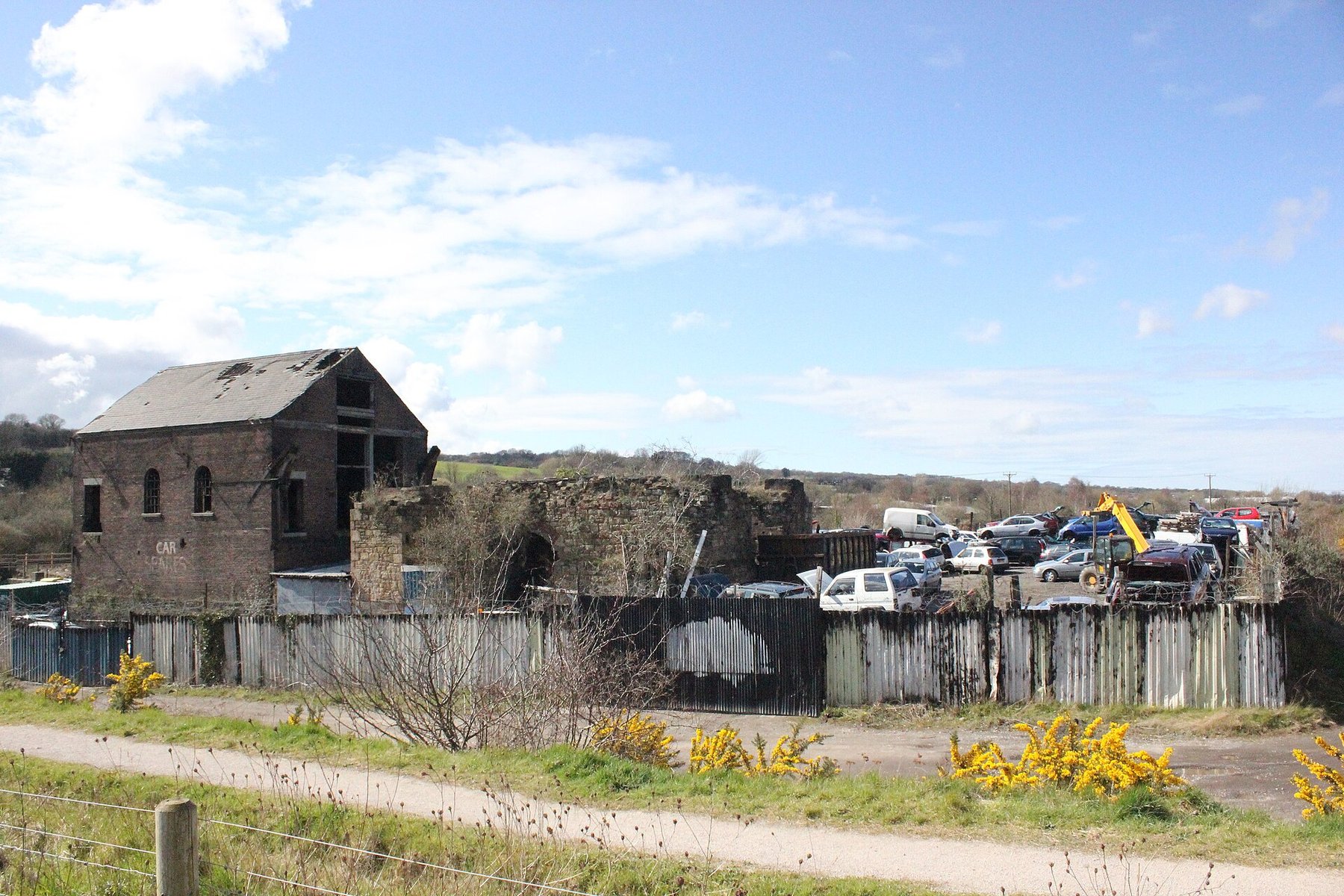
Substantial remains of the colliery buildings still stand at Bagillt, beside the Wales Coast Path on Bagillt Cob and visible from passing Chester to Holyhead trains; a path and car park now occupy part of the site, and a commemorative plaque stands in the village.
Substantial remains of the colliery buildings stand at Bagillt beside the Wales Coast Path.
Nearby mines
- Halkyn Mountain — 2.9 miles (4.6 km) SW
- Pen-y-Bryn Mine — 3.4 miles (5.4 km) S
- Bryngwiog Lead Mine — 3.8 miles (6.0 km) SW
- Milwr Tunnel — 3.8 miles (6.1 km) S
- Neston Colliery — 4.5 miles (7.3 km) E, Cheshire
Straight-line distance, within 9 miles (15 km). Show on the map.
Disasters & major incidents
-
Bettisfield Colliery explosion, 1884
2 October 1884 · Explosion · 2 fatalities
An explosion of gas at Bettisfield Colliery, Bagillt, on the Flintshire shore of the Dee, killed two colliers on 2 October 1884. -
Bettisfield Colliery roof fall, 1895
1 July 1895 · Collapse / Roof Fall · 2 fatalities
Two repairers were killed at Bettisfield Colliery, Bagillt, on 1 July 1895 when loose top roof they had not drawn down fell on them as they set timbers in the main road. -
Bettisfield Colliery haulage accident, 1909
11 December 1909 · Haulage / Transport · 2 fatalities
A full journey of tubs broke loose from a self-acting jig at Bettisfield Colliery, Bagillt, on 11 December 1909 and struck the endless rope in the main haulage level, killing two men working there.
Recorded claims
Individual factual claims, each attached to the source(s) that support it below. Where sources disagree, both are kept.
- At different times during the nineteenth century there were at least eleven known coal pits at Bagillt, and Bettisfield was the largest and most important of them. 1
- Two shafts were sunk to a depth of 290 yards, one seventeen feet in diameter and the other ten feet six inches. 1
- The colliery employed 712 people in 1894 and 689 in 1910; the Inspector of Mines list for 1896 gives 538 including 100 surface workers. 1,2
- The Bettisfield Colliery Co. Ltd opened the colliery in 1872; by 1908 it was held by the Bagillt Coal Co. Ltd, and Bettisfield Colliery Ltd were the owners again by 1918. 1
- In 1923 a workforce of 502 raised house and steam coal from the One, Two and Three Yard seams and the Queen and Five Feet seams; the colliery closed around 1934. 1
Photographs & further reading
The opening, the two shafts and their diameters, the ownership changes through the Bagillt Coal Co. and the seams worked in 1923.
View sourceOutput, employment and seams for each Lists of Mines year, with the names and circumstances of those killed at the colliery.
View sourceSources
- (primary) Bettisfield Colliery, Bagillt — Welsh Coal Mines, from the Inspector of Mines lists
- (primary) Durham Mining Museum: Bettisfield Colliery — Durham Mining Museum, from the Lists of Mines
- (observational) Remains of Bettisfield Colliery buildings, Bagillt (photographed 2016) — Geograph Britain and Ireland, Jeff Buck
Record created: 10 September 2026 · Last researched: 10 September 2026