 MineArchive
Pen-y-Bryn Mine
| Also known as | New North Halkyn Mine, Pen-y-Bryn Shaft |
|---|---|
| Location | Halkyn Mountain, Flintshire — 53.2272, -3.1952 (exact) |
| Commodities | Lead, Zinc |
| Type | Metal |
| Worked | By 1899–1957 (ore winding ended) |
| Maximum depth | Sunk to 800 feet; a 1905-6 exploratory passage from Lewis's Shaft reached a depth of 609 feet at Pen-y-Bryn without finding significant ore. |
| Operators | Halkyn District United Mines |
Overview
A lead and zinc mine on Halkyn Mountain, part of one of Wales's most important lead orefields, whose shaft became the centre of the 20th-century Halkyn District United Mines operation before its headframe was dismantled in 1987.
History
Pen-y-Bryn worked lead and zinc on Halkyn Mountain, part of an orefield mined since at least the Bronze Age, with more certain evidence of Roman-period lead and silver extraction and continued working through the Middle Ages. More intensive mining began in the 17th century, and through the 19th century small mining ventures were gradually replaced by larger companies as capital requirements grew; by the late 19th century Flintshire as a whole had become the most productive mining area in Wales, before foreign competition brought decline around the century's end. The Ordnance Survey showed only old workings here in 1875, a Pen-y-Bryn mine in use in 1899 and the New North Halkyn Mine in 1912.
The Pen-y-Bryn Shaft itself, nine feet by seven, was sunk to 800 feet as an upcast shaft for the district's ventilation system. In 1905-6 a passage was driven north-west from the separate Lewis's Shaft at Halkyn -- the true main shaft of the Holywell-Halkyn Drainage Tunnel, also known as the Milwr or Sea-Level Tunnel, despite some sources wrongly crediting that role to Pen-y-Bryn -- in search of ore, reaching a depth of 609 feet at Pen-y-Bryn, though little ore was found.
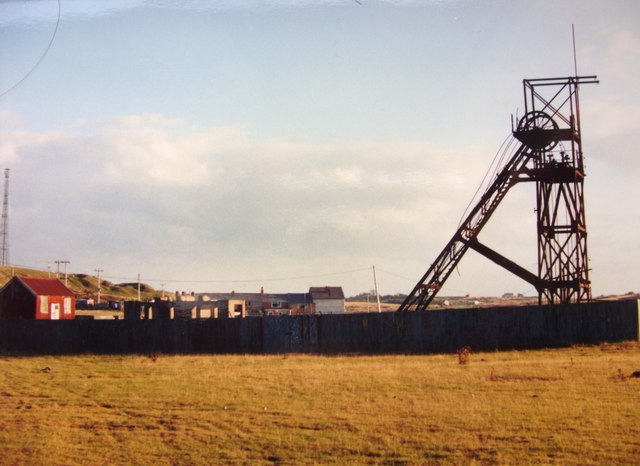
The Ministry of Munitions provided loans to stimulate lead production during the First World War, and although mining was suspended during the Second, it resumed afterward with operations that combined lead mining with limestone quarrying for agricultural use. For a period in the 20th century, the large-scale operations of the Halkyn District United Mines -- an amalgamation of nine former mining companies -- were centred on the Pen-y-Bryn Shaft. Small-scale operations continued into the 1970s, and the headframe at Pen-y-Bryn was finally dismantled in 1987.
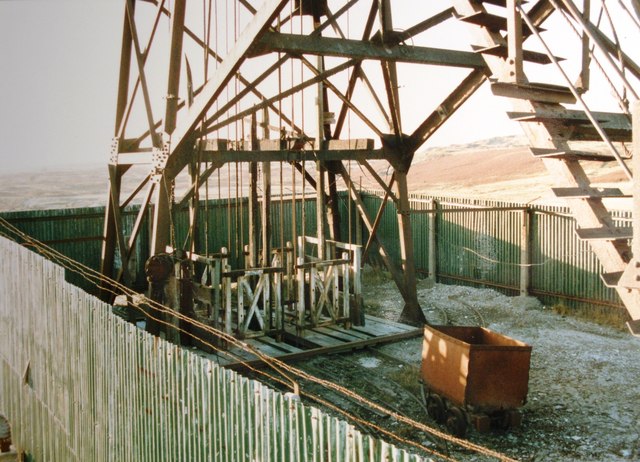
The Milwr Tunnel, driven south under the mountain by Halkyn District United Mines, reached the shaft in July 1929, and the company moved its surface operations here the next month. Two cages in balance, each taking eight men or one loaded wagon, were wound by an 80-horsepower electric motor; a large mill was built at the shaft in 1932, with electricians', blacksmiths' and carpenters' shops beside it. As the tunnel went on south the centre of operations moved in 1934 to the Olwyn Goch Shaft at Hendre, a change that brought the men out on strike, and Pen-y-Bryn was kept for winding ore and materials. During the Second World War chambers in the workings near the shaft were let to the Ministry of Supply to store TNT. Ore was last wound and milled here in 1957; the winder went to the Greenfield Valley Heritage Park in the early 1980s.
Geology
Lead and zinc on Halkyn Mountain, an orefield worked since at least the Bronze Age, later drained by the Holywell-Halkyn tunnel.
Workings
Sunk to 800 feet as an upcast ventilation shaft, nine feet by seven; a 609-foot exploratory passage was driven to it from the separate Lewis's Shaft in 1905-6. From 1929 the shaft stood on the Milwr Tunnel, with two cages in balance wound by an 80-horsepower electric motor and a battery-locomotive railway bringing ore trains to it for the mill built in 1932.
Closure
Surface operations moved to Olwyn Goch at Hendre in 1934, and Pen-y-Bryn stopped winding and milling ore in 1957. Small-scale operations continued until the 1970s; no lead was raised after 1977, the final shift was worked on 10 December 1986, and the headframe was dismantled in 1987.
What remains
Few mine buildings or other above-ground structures survive, both through natural decay and a deliberate policy of clearing derelict buildings; the headframe itself was dismantled in 1987.
The shaft site now lies within the Wimpey Quarry, with minimal surviving structural remains; the 1932 mill buildings were demolished in the 1960s and the headframe, still standing in 1986, was scrapped soon after. The final shift at the mine took place on 10 December 1986, and men were kept on for tunnel maintenance until 1987. Much of the wider Halkyn District United site has since been landscaped, including reclamation for Holywell Golf Course, through a derelict-land scheme of shaft capping and waste disposal. Underground, two man-riding cars and a covered truck built for a manager stand at the shaft bottom.
Related mines
- Halkyn Mountain — Pen-y-Bryn worked lead and zinc directly on Halkyn Mountain, and its own shaft became the centre of the district's major 20th-century operations.
- Hendre Mine — Halkyn District United Mines moved its surface operations from Pen-y-Bryn to Hendre in 1934; the two shafts worked the same lodes, Pen-y-Bryn winding ore while Olwyn Goch wound men and materials.
- Milwr Tunnel — The Milwr Tunnel reached Pen-y-Bryn Shaft in July 1929, and the shaft then wound ore and men for the mines worked off the tunnel.
Nearby mines
- Halkyn Mountain — 0.8 miles (1.3 km) NW
- Milwr Tunnel — 1.0 miles (1.6 km) SE
- Bryngwiog Lead Mine — 1.1 miles (1.8 km) W
- Hendre Mine — 1.8 miles (2.9 km) S
- Bettisfield Colliery — 3.4 miles (5.4 km) N
Straight-line distance, within 9 miles (15 km). Show on the map.
What's uncertain
Points where sources disagree or the record could not be settled; both accounts are kept. All open questions in the archive.
- The Pen-y-Bryn shaft was 925 feet deep. (disputed) 5
Recorded claims
Individual factual claims, each attached to the source(s) that support it below. Where sources disagree, both are kept.
- The Pen-y-Bryn Shaft was sunk to 800 feet as an upcast ventilation shaft; in 1905-6 a passage was driven to it from the separate Lewis's Shaft -- the true main shaft of the Holywell-Halkyn (Milwr) Drainage Tunnel -- reaching 609 feet at Pen-y-Bryn, though little ore was found. 1
- For a period in the 20th century, the large-scale operations of the Halkyn District United Mines, an amalgamation of nine former mining companies, were centred on the Pen-y-Bryn Shaft; small-scale operations continued until the 1970s, and the headframe was finally dismantled in 1987. 2
- The final shift at Halkyn District United's Pen-y-Bryn operation was worked on 10 December 1986; no lead had been raised since 1977, but men were retained for maintenance and tunnel repairs until 1987. 3
- The Milwr Tunnel reached Pen-y-Bryn Shaft in July 1929 and surface operations were transferred there the following month; the shaft measured 9 feet by 7 feet and was 800 feet deep, with two cages wound by an 80-horsepower electric motor. 4,1
- Halkyn District United Mines built a large processing mill at the Pen-y-Bryn site in 1932; the buildings were demolished in the 1960s. 1,3
- Surface operations were transferred from Pen-y-Bryn to Olwyn Goch at Hendre in 1934, which caused a strike; Pen-y-Bryn was then used for winding ore and materials. 1
- Pen-y-Bryn closed for processing and hauling lead ore in 1957; the electric winder was dismantled in the early 1980s and given to the Greenfield Valley Heritage Park, and the headframe was scrapped a few years later. 5
- The Pen-y-Bryn shaft was 925 feet deep. (disputed) 5
- The Ordnance Survey shows old workings in 1875, Pen-y-Bryn mine in use in 1899 and New North Halkyn Mine in use in 1912. 2
- During the Second World War chambers in the workings near Pen-y-Bryn Shaft were sub-let to the Ministry of Supply for storing TNT. 4
Photographs & further reading
The driving of the sea-level tunnel past Pen-y-Bryn, the mine railway and the wartime explosives stores.
View sourceSources
- (secondary) Halkyn Mines: History — Cambrian Mines Trust
- (primary) Pen-y-bryn mine (Coflein NPRN 33941) — RCAHMW
- (secondary) Metal Mines Survey: Halkyn District United — Clwyd-Powys Archaeological Trust
- (secondary) Milwr Tunnel — Subterranea Britannica — Subterranea Britannica
- (observational) Pen-y-Bryn Mine-shaft - Headframe, Halkyn Lead Mine, Flintshire (photograph c.1941) — Flickr
- (observational) Lead Mine headframe at Pen y Bryn Shaft 1986 (Geograph 2304524) — Geograph
Record created: 31 August 2026 · Last researched: 1 October 2026