 MineArchive
Baads Colliery
| Also known as | Baads No. 42 Mine, Baad's Colliery |
|---|---|
| Location | Baads, south-east of West Calder, West Lothian — 55.8317, -3.5942 (approximate) |
| Commodity | Coal |
| Type | Coal |
| Worked | About 1908–1962 |
| Operators | Young's Paraffin Light and Mineral Oil Company (1908–1947), National Coal Board (1947–1962) |
Overview
The shale-oil industry's own coal mine: Young's Paraffin Light and Mineral Oil Company's Baads No. 42 mine near West Calder, driven about 1908 into the Hurlet coal to fire the retorts at Pumpherston and the boilers of the Scottish Oils plants. Two inclined mines, stoop and room working, nearly five hundred employed in 1955; nationalised in 1947 but still selling to Scottish Oils, it closed in 1962 within weeks of the oil works, and its office and stores buildings still stand as a farm store.
History
Young's oil company had been in the Baads lands since the 1860s, when its No. 9 pit worked a small patch of Fells shale for Addiewell; the southern parts of the estate lay on the Coal Measures, and the company took the Hurlet coal there to fuel its oil works. The No. 42 mine was opened about 1908 to supply Pumpherston Oil Works with coal for its retorts, and the Durham Mining Museum returns 189 employed in 1910 on steam coal from the Hurlet, 238 in 1915, 280 in 1920 and 315 in 1923. The company's monthly reports record electric haulage in the south mine superseding six ponies in January 1924, a new generating set and ventilating fan that year and the main mine renovated in 1925. Two deaths are recorded, a brusher under a stone in 1913 and a drawer of twenty-one in 1924 whose defective holing sprag gave way. Employment fell to 181 in 1933 and recovered to 252 in 1940. The National Coal Board took the mine over in 1947 with Scottish Oils still the principal customer: in 1948 it had 300 employees, 420 tons a day and 105,000 tons a year by stoop and room from two surface mines, the Main Mine at 1 in 3.8 for 44 metres and the South Slope Mine at 1 in 4 for 41 metres as upcast, with one screen, no washer and no baths, and all its electricity from Scottish Oils. It was 371 employed in 1954 and 491 at its peak in 1955, and was at one time linked to the new drift at Cuthill. When the shale-oil industry closed, Baads went with it: in April 1962 four hundred men learned at a two-hour meeting that the pit, not on the Coal Board's closure list of the previous October, was to shut, and it closed that summer.
Geology
The Hurlet coal of the Limestone Coal Group beneath the southern Baads lands; the northern part of the estate carried the Fells oil shale worked by the No. 9 pit in the 1860s.
Geological setting: Sedimentary Beds and Seams (historical documentary reference)
Workings
Two inclined surface mines: the Main Mine dipping 1 in 3.8 for 44 metres and the South Slope Mine 1 in 4 for 41 metres (upcast). Stoop and room working; electric haulage from 1924. Employment from the Lists of Mines and the NCB register: 189 in 1910, 315 in 1923, 181 in 1933, 252 in 1940, 300 in 1948, 371 in 1954, peak 491 in 1955, 400 at closure.
Closure
Closed in 1962 when the Scottish shale-oil industry, its principal customer, shut down; the closure was announced to the four hundred men in April 1962 and had not been on the Board's October closure list.
What remains
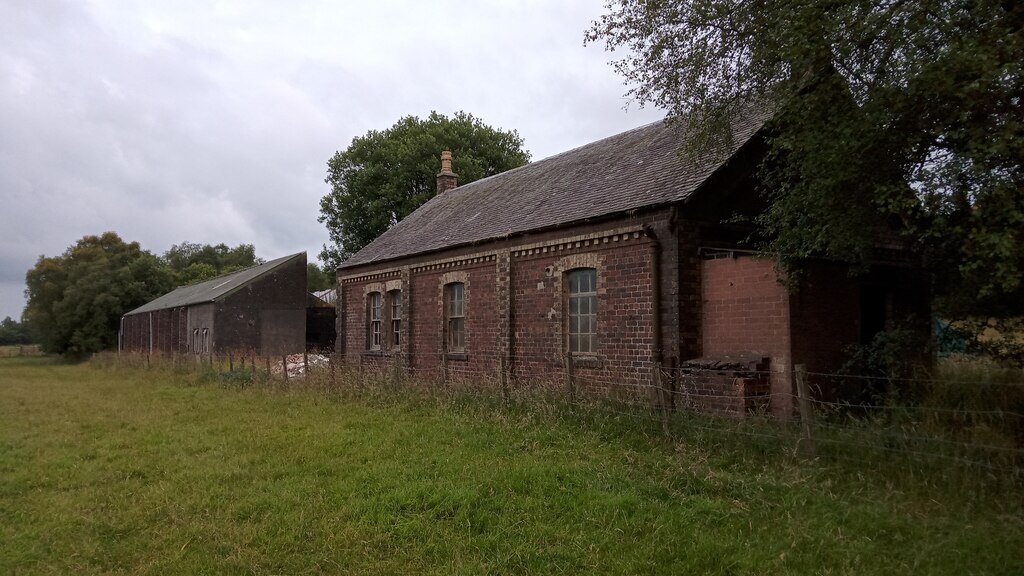
The office and other minehead buildings survive and the area is used for farm storage.
The mine office and a stores building, photographed in 2012 and 2021.
Related mines
- Addiewell Oil Works — Baads coal fuelled the Addiewell chemical works and other Scottish Oils plants.
- Burngrange Oil Shale Mine — Neighbouring Young's Company workings near West Calder, shale at Burngrange and coal at Baads.
- Pumpherston Oil Works — Baads was opened to supply Pumpherston's retorts with coal and closed with the oil works in 1962.
Nearby mines
- Addiewell Oil Works — 1.9 km NW
- Burngrange Oil Shale Mine — 2.4 km NE, Midlothian
- Loganlea Colliery — 3.0 km W
- Foulshiels Colliery — 3.5 km NW
- Whitrigg Colliery — 5.0 km NW
Straight-line distance, within 15 km. Show on the map.
Recorded claims
Individual factual claims, each attached to the source(s) that support it below. Where sources disagree, both are kept.
- Opened about 1908 and closed in 1962. 1,2
- Opened to supply Pumpherston Oil Works with coal for its retorts; Scottish Oils remained the principal customer after nationalisation. 1,2
- Two inclined mines, the Main Mine at 1 in 3.8 for 44 metres and the South Slope Mine at 1 in 4 for 41 metres, worked stoop and room. 1
- 189 employed in 1910, 315 in 1923, 300 in 1948, 371 in 1954 and a peak of 491 in 1955; about 400 at closure. 3,1,2
Photographs & further reading
Owners, employment and the Hurlet seam from 1910 to 1954 and two named deaths.
View sourceThe museum's page with the 1920s company reports, the 1948 list entry, photographs of the surviving buildings and the 1962 closure report.
View sourceHistoric Environment Scotland's record with the 1948 National Coal Board register entry.
View sourceSources
- (primary) Baads Colliery — Canmore (with the 1948 NCB register entry) — Historic Environment Scotland
- (secondary) Baads No.42 mine — Scottish Shale — Scottish Shale (Museum of the Scottish Shale Oil Industry)
- (primary) Baads Colliery — Durham Mining Museum — Durham Mining Museum
- (secondary) Baads (lands) — Scottish Shale — Scottish Shale (Museum of the Scottish Shale Oil Industry)
- (secondary) Baads No.9 pit — Scottish Shale — Scottish Shale (Museum of the Scottish Shale Oil Industry)
Record created: 12 September 2026 · Last researched: 12 September 2026