 MineArchive
Pumpherston Oil Works
| Location | Pumpherston, West Lothian — 55.8967, -3.4919 (approximate) |
|---|---|
| Commodity | Oil Shale |
| Type | Mineral |
| Worked | 1883-84–1964 (refinery) |
| Operators | Pumpherston Oil Company (1883–1919) |
Overview
The historic heart of Scotland's shale oil industry, and namesake of the standard Pumpherston retort design used across the entire trade, from a works that grew into one of the five founding companies of Scottish Oils Ltd.
History
Pumpherston Oil Works was established in 1883-84 as a new industrial settlement built specifically around oil shale extraction, following the 1858 discovery of oil-bearing shale near Broxburn and West Calder that had already made James 'Paraffin' Young's name. Crude oil retorted at nearby Westwood and Winchburgh was refined at Pumpherston into the paraffin that gave Young his nickname, and the works went on to give its name to the Pumpherston retort, the standard design used across much of the Scottish shale industry — over 1,500 were in use nationally by 1910. In 1919 the Pumpherston Oil Company merged with four other major Scottish shale firms — Young's Paraffin Light and Mineral Oil Company, the Lothian Oil Company, the Shotts Iron Company, and the Broxburn Oil Company — to form Scottish Oils Ltd, backed by the Anglo-Persian Oil Company, the forerunner of BP. The main refinery finally closed in 1964, though a detergent plant on the site continued operating into the early 1990s.
Geology
Pumpherston worked the oil-bearing Lothian (cannel) shales of the West Lothian shale field, the historic centre of the entire Scottish shale oil industry.
Workings
Shale was mined underground and brought to purpose-built retort banks for heating, including the Pumpherston-type retort developed here and adopted as a standard design across much of the wider industry.
Closure
The main refinery closed in 1964, though a detergent plant on the same site continued operating into the early 1990s.
What remains
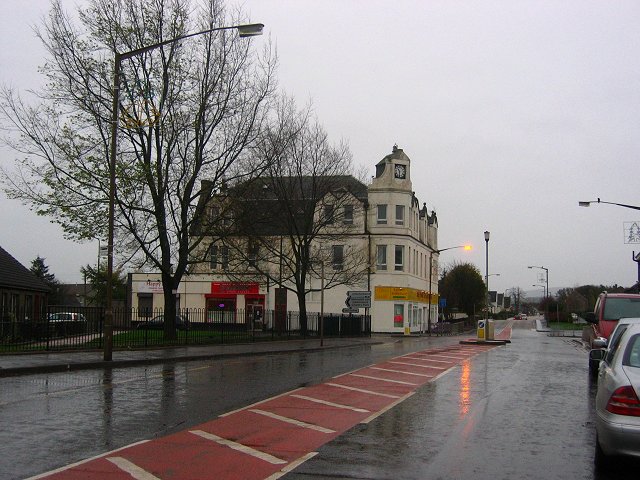
The former works site and its surrounding settlement survive as part of the village of Pumpherston, within the wider West Lothian shale-mining landscape.
Shale waste bings characteristic of the wider industry survive in the surrounding area, alongside the settlement built to house the works' employees.
Related mines
- Baads Colliery — Baads was opened to supply Pumpherston's retorts with coal and closed with the oil works in 1962.
Nearby mines
- Broxburn Oil Works — 2.7 miles (4.4 km) N
- Burngrange Oil Shale Mine — 4.6 miles (7.4 km) SW, Midlothian
- Hilderston Silver Mine — 5.4 miles (8.6 km) W
- Riddochhill Colliery — 5.8 miles (9.4 km) W
- Addiewell Oil Works — 5.9 miles (9.5 km) SW
Straight-line distance, within 9 miles (15 km). Show on the map.
Recorded claims
Individual factual claims, each attached to the source(s) that support it below. Where sources disagree, both are kept.
- Pumpherston Oil Works was established in 1883-84, following the 1858 discovery of oil-bearing shale near Broxburn and West Calder. 1,2
- Pumpherston gave its name to the Pumpherston retort, a standard design used widely across the Scottish shale oil industry, with over 1,500 in use nationally by 1910. 3
- In 1919 the Pumpherston Oil Company merged with Young's Paraffin Light and Mineral Oil Company, the Lothian Oil Company, the Shotts Iron Company and the Broxburn Oil Company to form Scottish Oils Ltd, backed by the Anglo-Persian Oil Company (later BP). 1,4
- The main refinery closed in 1964, though a detergent plant on the site continued operating into the early 1990s. 3
Sources
- (secondary) Pumpherston — Wikipedia
- (secondary) The West Lothian Oil Rush — Lothian Life Magazine
- (primary) Pumpherston Oil Works — Scottish Shale
- (secondary) The Heart of the Shale Oil Industry — Shale Trail
Record created: 21 August 2026 · Last researched: 21 August 2026