 MineArchive
Arley Colliery
| Location | Arley, north Warwickshire — 52.5069, -1.6169 (approximate) |
|---|---|
| Commodity | Coal |
| Type | Coal |
| Worked | Company formed 1901 or 1902; coal from late 1905–30 March 1968 |
| Maximum depth | 957 feet to the Two Yard seam |
| Operators | Arley Colliery Co., Ltd. (1901–1946), National Coal Board (1947–1968) |
Overview
The colliery that made New Arley. The Arley Colliery Company sank two shafts 957 feet to the Two Yard seam west of the old village and began raising coal in earnest at the end of 1905, but faulted ground drove it into the Rider seam instead. With too few local men, it recruited from coalfields across the country and built a village of six hundred houses at Gun Hill, with a church of its own and a miners' welfare hall. An explosion on 28 April 1931 killed four men. By 1940 it employed around 1,500 and raised close to half a million tons a year; nationalised in 1947 and mechanised through the 1960s, it was judged uneconomic and closed on 30 March 1968.
History
Coal was found in the valley west of Arley and the Arley Colliery Company was formed to work it -- in 1901 by Our Warwickshire's account, in 1902 by the Victoria County History, which names its founder as George Fowler of Basford Hall in Nottinghamshire, who came to live at Arley Hall. Two shafts were sunk to the Two Yard seam at 957 feet and coal production began in earnest at the end of 1905. The plan had been to work both sides of the Arley Fault, but the Two Yard faces ran into fault after fault and often stopped altogether, and the management found that profit lay in the Rider seam instead; the Durham Mining Museum's returns have the colliery working the Ryder and Slate seams in 1905, the Two Yard in 1910 and 1915, and all three by 1950. Arley was a small village and the pit needed men. Miners were recruited from coalfields across the country, and with nowhere to live many settled miles away and drifted to pits nearer home. The shortage grew worse through the First World War and did not end with it, so in the 1920s the company built houses on what had been Fir Tree Farm, creating New Arley; the Victoria County History, writing in 1951, describes the colliery company as the principal landowners, with a village of six hundred houses at Gun Hill, St Michael's church, seating 250 and built by the company in 1928, a Roman Catholic church and a Miners' Welfare Hall. Employment rose from 367 in 1905 to 887 in 1910 and 1,703 by 1923, when the colliery raised 335,600 tons of household and manufacturing coal. On 28 April 1931 an explosion killed four men and injured three more. The inquiry found the cause to be an accumulation of inflammable gas from inadequate ventilation, but never established what ignited it. Pithead baths and a canteen were built in 1940, when the colliery had about 1,500 employees and an output approaching 500,000 tons a year. The Arley Colliery Company was nationalised in 1947 and the manpower shortage returned: experienced men were brought in from declining coalfields and everyone available was put on the coalfaces, so the underground roadways were neglected and it grew hard to get supplies to the faces. The steam winder was dismantled in 1957 when the colliery went over entirely to electricity, cage winding gave way to skip winding, and a mechanised coalface programme followed in 1961. With demand for household coal falling and the labour shortage unresolved, the National Coal Board judged the pit no longer viable and closed it on 30 March 1968.
Geology
Warwickshire coalfield measures cut by the Arley Fault, which the company had hoped to work from both sides. The Two Yard seam lay at 957 feet but its faces proved badly faulted; the Rider (Ryder) seam carried the colliery instead, with the Slate seam also worked. The coal was household and manufacturing quality, with steam coal appearing in the 1950 return.
Geological setting: Faults and Fractures (historical documentary reference), Sedimentary Beds and Seams (well documented example)
Workings
Two shafts sunk to the Two Yard seam at 957 feet. Steam winding until 1957, when the colliery became wholly electric and the winding cages were replaced by skip winding; a mechanised coalface programme followed in 1961. Pithead baths and a canteen were added in 1940.
Closure
Falling demand for household coal and a chronic shortage of men left the colliery unprofitable: with the best effort going into the faces, the underground roadways were neglected and supplies became hard to move, and the National Coal Board judged the pit no longer economically viable. It closed on 30 March 1968.
What remains
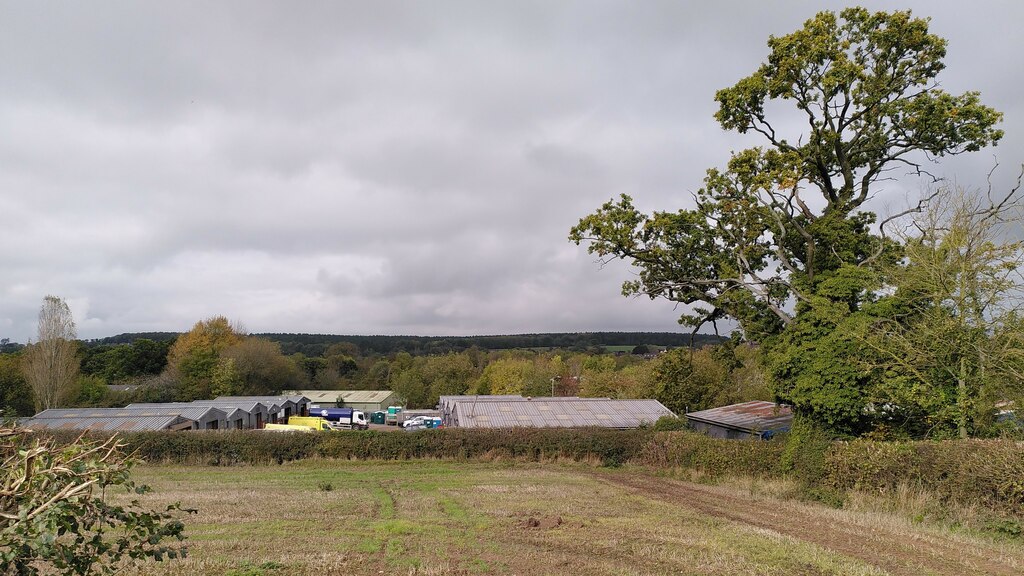
The colliery site is occupied by an industrial estate at Arley, with Arley Wood -- replanted with conifers in the 1960s, according to Geograph's photographer, to provide pit props for the mine -- on the horizon behind it.
Nothing of the colliery is visible on the site, which is built over by industrial units.
Redevelopment
Arley industrial estate, on the colliery's surface site.
Nearby mines
- Daw Mill Colliery — 5.6 km SE
- Ansley Hall Colliery — 5.9 km NE
- Baddesley Colliery — 7.4 km N
- Coventry Colliery — 7.5 km SE
- Kingsbury Colliery — 8.4 km NW
Straight-line distance, within 15 km. Show on the map.
People
- Joseph Axon (d. 1924) · victim, from 1924 — Road repairer, who struck his head on a steel roof girder walking out at the end of his shift on 28 October 1924 and went home without having the wound dressed; erysipelas set in and he died on 6 November. Aged 53.
- Arthur Henry Blakemore (d. 1906) · victim, from 1906 — Dayman, killed on 15 May 1906 by a large fall of roof while building a pack in a stall in the Ryder coal. Aged 26.
- George Fowler · founder, from 1902 — Of Basford Hall, Nottinghamshire; founded the Arley Colliery Company and lived at Arley Hall. His son, Lt.-Col. G. Herbert Fowler, was killed in the First World War.
- Lamech Hartshan (d. 1906) · victim, from 1906 — Stallman, killed instantly on 8 March 1906 when a stone fell from the roof as he pushed a loaded tub along a gateway in the Ryder coal. Aged 32.
- John Jeffs (d. 1924) · victim, from 1924 — Getter, killed on 13 May 1924 after coming out of his stall early to eat his snap. Aged 26.
- Samuel Lee (d. 1907) · victim, from 1907 — Deputy, killed on 16 March 1907 when a twelve-ounce charge of Monobel powder exploded as he was coupling up a second shot in a stone heading. Aged 44.
- Edward Marsh (d. 1913) · victim, from 1913 — Road repairer, killed on 26 February 1913 passing along the coal face at a narrow place where the roof had fallen some days before. Aged 26.
- John William Mitchell (d. 1906) · victim, from 1906 — Loader, aged seventeen, injured on 9 June 1906 while putting a full tub back on the rails in an inclined roadway; he died the following day. Aged 17.
- William Henry Rylance (d. 1912) · victim, from 1912 — Banksman, injured on 12 June 1912 while looking after the boys picking stone from the coal on a canvas belt; he died a week later. Aged 48.
- Ambrose Woods (d. 1906) · victim, from 1906 — Dataller, run over on 9 April 1906 by two empty tubs that broke away from a train being lowered down a steep inclined roadway; he died the next day. Aged 32.
What's uncertain
Points where sources disagree or the record could not be settled; both accounts are kept. All open questions in the archive.
- The Arley Colliery Company was formed after coal was found in the valley west of the village -- in 1901 according to Our Warwickshire, in 1902 according to the Victoria County History, which credits its founding to George Fowler of Basford Hall. (disputed) 1,2
Recorded claims
Individual factual claims, each attached to the source(s) that support it below. Where sources disagree, both are kept.
- The Arley Colliery Company was formed after coal was found in the valley west of the village -- in 1901 according to Our Warwickshire, in 1902 according to the Victoria County History, which credits its founding to George Fowler of Basford Hall. (disputed) 1,2
- Two shafts were sunk to the Two Yard seam at a depth of 957 feet and coal production began in earnest at the end of 1905. 1
- The company had planned to work both sides of the Arley Fault, but the Two Yard faces ran into so many faults that production often stopped and profitable working was found only in the Rider seam. 1,3
- Unable to find enough local men, the company recruited from coalfields across the country and built houses in the 1920s on the former Fir Tree Farm, creating New Arley; by 1951 the Victoria County History described a company village of six hundred houses at Gun Hill with St Michael's church, built by the company in 1928, a Roman Catholic church and a Miners' Welfare Hall. 1,2
- An explosion on 28 April 1931 killed four men and injured three; the inquiry blamed an accumulation of inflammable gas from inadequate ventilation but never established what ignited it. 1
- Employment rose from 367 in 1905 to 887 in 1910 and 1,703 in 1923, when output was 335,600 tons of household and manufacturing coal; by 1940 the colliery employed about 1,500 men and raised close to 500,000 tons a year. 1,3
- The steam winder was dismantled in 1957, skip winding replaced cage winding and a mechanised coalface programme began in 1961, but the National Coal Board judged the colliery uneconomic and closed it on 30 March 1968. 1,3
Photographs & further reading
The county record office's account of the sinking, the recruitment of miners and the building of New Arley, the 1931 explosion and the 1968 closure.
View sourceOwners, output, employment and seams by Lists of Mines year, with the names and circumstances of nine men killed between 1906 and 1924.
View sourceSources
- (secondary) Arley Colliery — Our Warwickshire, Warwickshire County Council
- (secondary) Parishes: Arley, in A History of the County of Warwick, Volume 6 (1951) — Victoria County History, via British History Online
- (secondary) Arley Colliery (UK) — Durham Mining Museum
Record created: 20 September 2026 · Last researched: 20 September 2026