 MineArchive
Nuneaton Colliery
| Also known as | Stanley's Pit, Nuneaton Old Colliery, Nuneaton New Colliery |
|---|---|
| Location | Nuneaton Common and Whittleford Road, Nuneaton, Warwickshire — 52.5208, -1.4981 (approximate) |
| Commodities | Coal, Fireclay |
| Type | Coal |
| Worked | 1877–1920 or 1922 |
| Maximum depth | Unknown. |
| Operators | Heath, Chadwick and Co. (1864–1870), Stanley Brothers (1877–1922) |
Overview
Stanley Brothers' colliery at Nuneaton: an 'Old' pit on Nuneaton Common worked from 1877 to 1899 and a 'New' pit on Whittleford Road that employed over a thousand men until the early 1920s.
History
Nuneaton Colliery was the coal side of Stanley Brothers, the Nuneaton brick and tile makers built up by Reginald Stanley. Coal had been dug on the old colliery land on Nuneaton Common since at least the eighteenth century, and Heath, Chadwick and Co. worked it from 1864 to 1870. When the property came up for sale or lease it had a clay pit, drying sheds, seven ovens and two coal shafts about thirty yards deep on twenty-six acres.
Stanley Brothers worked this 'Old' Colliery from 1877, their biggest investment to that date, with William Standley of Wednesbury as manager and Joseph Hutt as under-manager; about 240 men worked underground and 70 on the surface. The government lists returned 315 in 1894, working the Slate and Ryder seams for household and manufacturing coal. Old workings and faults defeated it, and the mine was closed on 26 April 1899.
The men moved to a 'New' Colliery that Stanley Brothers opened close by on Whittleford Road, known locally as Stanley's Pit. It employed 1,120 in 1905 and 1,217 in 1915, working the Ryder, Seven Feet, Slate and Blue Coal seams and raising ironstone and fireclay with the coal. The New Colliery closed in the early 1920s. A colliery building with the Nuneaton Colliery employees' war memorial survives on Whittleford Road, and the Old Colliery site is covered by housing behind the Cherry Tree pub.
Geology
Warwickshire Coal Measures. The Slate and Ryder (Two Yard) seams were worked in the 1890s, with the Bench and Blue; the New Colliery added the Seven Feet and Blue Coal and raised ironstone and fireclay with the coal by 1915.
Workings
The Old Colliery on Nuneaton Common had two shafts about thirty yards deep when Stanley Brothers took it; its Two Yard (Ryder), Bench and Blue workings were abandoned on 26 April 1899. The New Colliery on Whittleford Road was worked alongside the firm's brickyards.
Closure
The Old Colliery closed on 26 April 1899 because of old workings and faults. The New Colliery closed in the early 1920s, given as 1920 in the Lists of Mines index and 1922 locally.
What remains
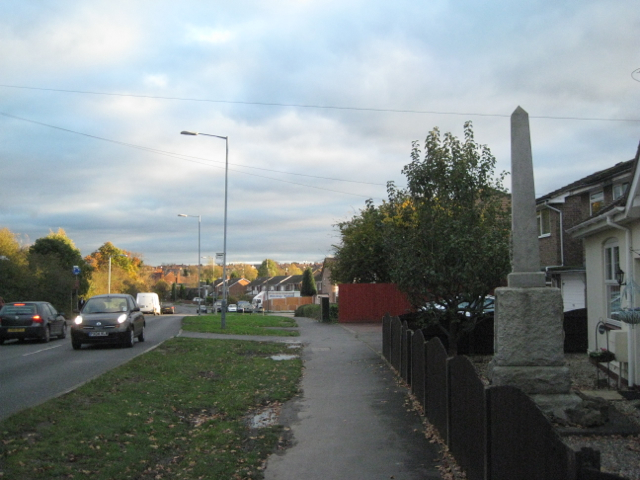
A 2013 photograph shows the Nuneaton Colliery employees' war memorial in the front garden of a former colliery building just inside the old entrance on Whittleford Road.
A former colliery building with the employees' war memorial on Whittleford Road (2013).
Redevelopment
The Old Colliery site on Nuneaton Common is covered by housing behind the Cherry Tree pub.
Nearby mines
- Haunchwood Colliery — 0.5 miles (0.8 km) NE
- Midland Quarry — 1.0 miles (1.6 km) NE
- Griff Colliery — 2.0 miles (3.2 km) SE
- Newdigate Colliery — 2.3 miles (3.7 km) S
- Ansley Hall Colliery — 2.5 miles (4.0 km) NW
Straight-line distance, within 9 miles (15 km). Show on the map.
What's uncertain
Points where sources disagree or the record could not be settled; both accounts are kept. All open questions in the archive.
- Nuneaton Colliery closed in 1920. (disputed) 3
- Stanley's Pit, the Nuneaton (New) Colliery, closed in 1922. (disputed) 4
Recorded claims
Individual factual claims, each attached to the source(s) that support it below. Where sources disagree, both are kept.
- Stanley Brothers worked the Old Colliery from 1877 with about 240 men underground and 70 on the surface, and closed it on 26 April 1899 because of old workings and faults. 1
- The land was worked by Heath, Chadwick and Co. from 1864 to 1870 and had two coal shafts about thirty yards deep. 1
- The Two Yard (Ryder), Bench and Blue workings at Nuneaton were abandoned on 26 April 1899. 2
- Under Stanley Brothers the colliery employed 315 in 1894, 1,120 in 1905 and 1,217 in 1915, when it raised ironstone and fireclay with its coal. 3
- Nuneaton Colliery closed in 1920. (disputed) 3
- Stanley's Pit, the Nuneaton (New) Colliery, closed in 1922. (disputed) 4
- A 2013 photograph shows the Nuneaton Colliery employees' war memorial at a former colliery building on Whittleford Road. 5
Photographs & further reading
A 2013 photograph of the war memorial at the former colliery building on Whittleford Road.
View sourceA family-history account of the Old Colliery, its managers, workforce, closure and site, with maps and photographs.
View sourceOwners, output, employment and seams from 1894 to 1915.
View sourceSources
- (secondary) Nuneaton 'Old' Colliery 1877-1899 - Reginald Stanley — reginaldstanley.com
- (primary) BGS mine plans: Nuneaton (Two Yard (Ryder), Bench & Blue, abandoned 26 Apr 1899) — British Geological Survey / Mining Remediation Authority
- (primary) Durham Mining Museum - Nuneaton Colliery (UK) — Durham Mining Museum
- (secondary) Brickyards, quarries and collieries of Nuneaton and north Warwickshire — The Nuneaton and North Warwickshire Local and Family History Web Site
- (observational) Nuneaton Colliery Employees' War Memorial, Whittleford Road (Geograph, Robin Stott, 2013) — Geograph
Record created: 1 October 2026 · Last researched: 1 October 2026