 MineArchive
Haematite
| Category | Commodities |
|---|
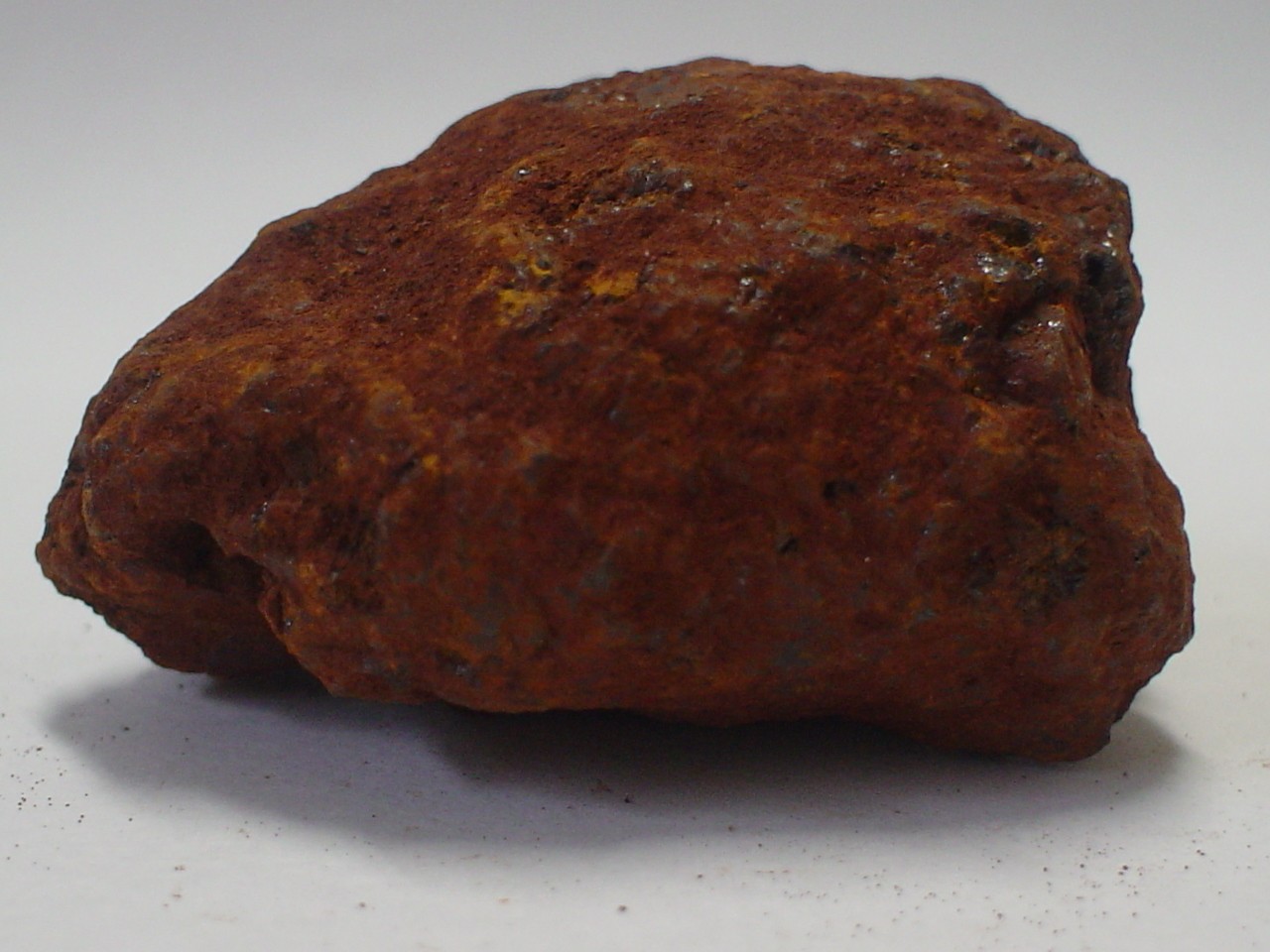
The principal ore mineral of iron, a form of iron oxide (Fe2O3) ranging in colour from steel-grey to deep red, and the source of the exceptionally pure, high-grade iron ore that made west Cumbria's iron industry so significant.
Historical usage
Cumbrian haematite mining flourished through the 19th and early-to-mid 20th centuries, feeding the region's own ironworks and, from the mid-19th century, the new Bessemer steelmaking process — since haematite's naturally low phosphorus content made it ideal for that process, which could not tolerate phosphorus-rich ore without embrittling the finished steel. The last Cumbrian haematite mine, Florence Mine, closed in 2007, and was described as the last haematite mine working anywhere in Europe.
How it worked
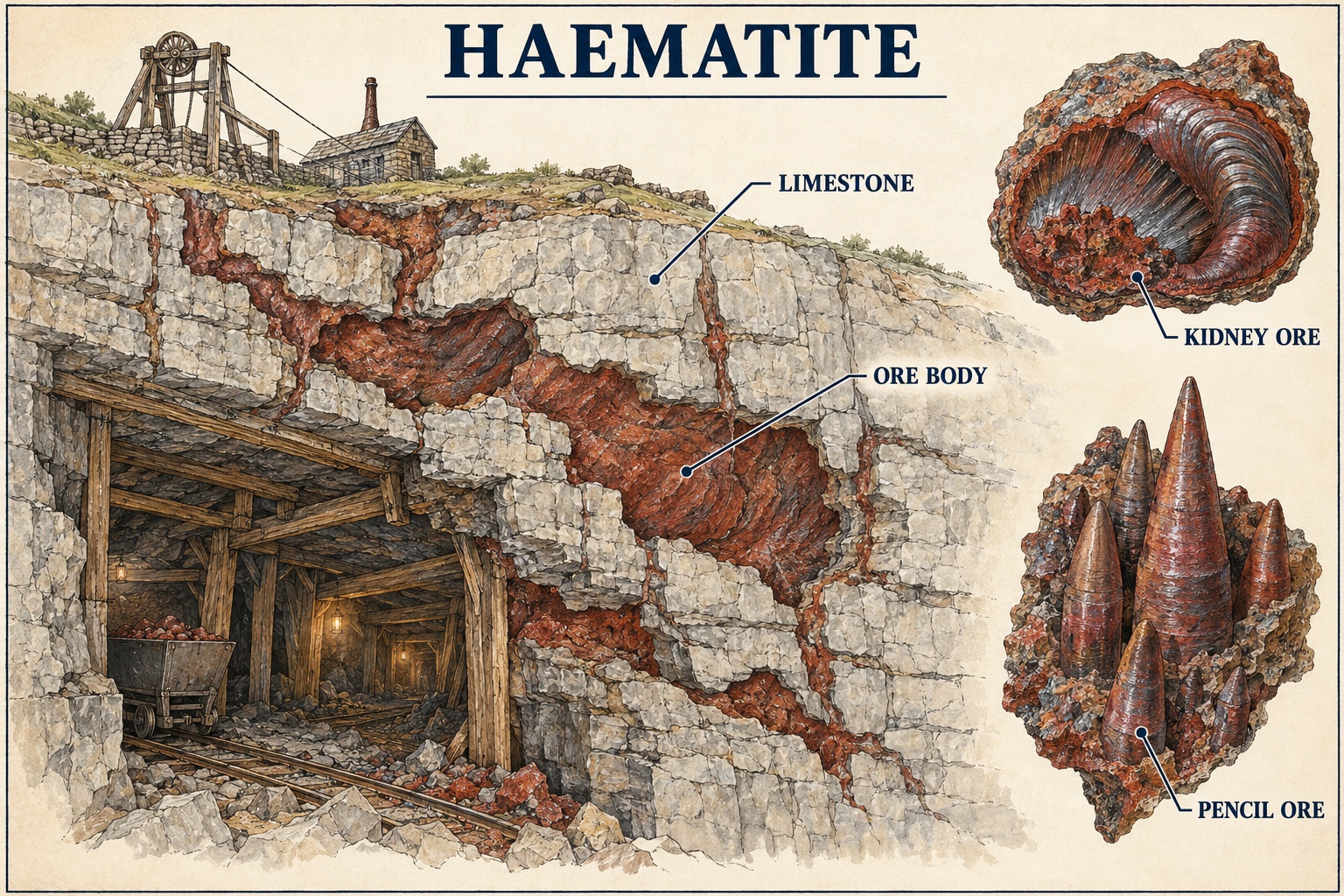
Cumbrian haematite typically formed where iron-rich mineralising fluids replaced pockets and fissures within Carboniferous limestone, producing large, irregular ore bodies rather than a regular seam or vein. The ore itself occurs in several recognisable forms, including the fibrous, rounded 'kidney ore' variety, with distinctive conical broken fragments known as 'pencil ore'.
Why it was used
Cumbrian haematite's combination of high iron content — typically 50 to 60 per cent — and exceptionally low phosphorus (below 0.02 per cent) made it specifically prized for the acid Bessemer steelmaking process, giving the region's iron industry a real competitive advantage for decades until steelmaking technology elsewhere caught up and reduced that natural edge.
Risks & limitations
Because it occurs in large but irregular replacement deposits rather than a predictable seam, haematite ore bodies could be difficult to locate and follow consistently, making exploration and steady production genuinely harder than working a well-defined vein or coal seam.
Regional variation
Distinct from magnetite, a different and more strongly magnetic iron oxide, and from the sedimentary blackband ironstone worked in districts such as Rosedale in Yorkshire — haematite replacement deposits, sedimentary ironstone beds and magnetite ores are three genuinely different kinds of iron ore, not regional names for the same thing.
Related terminology
Bessemer Process, Kidney Ore, Micaceous Haematite, Ochre
Mines associated with this term
5 examples chosen from 34 linked records — the term page is not an index.
- Bonawe Iron Furnace — Argyll and Bute (well documented example)
Named twice in this record, first in the summary: “…later the Lorn Furnace Company. It ran for over a century smelting haematite ore shipped in from Cumbria and Lancashire using charcoal produced…” - Burrow Farm Mine — Somerset (well documented example)
Named in this record’s geology: “…into the Brendon anticline and syncline, and consisted of goethite, haematite and siderite. It suited the Bessemer process that Ebbw Vale took up…” - Little Garth Mine — Cardiff (well documented example)
Named 8 times in this record, first in the summary: “Little Garth was a haematite mine at the top of Lesser Garth Hill, the ridge running east from…” - Ullcoats Mine — Cumbria (well documented example)
Named 5 times in this record, first in the summary: “A West Cumbrian haematite mine registered in 1897 by a company financed by London MPs and…” - Ban Garth Mine — Cumbria (well documented example)
Named 4 times in this record, first in the summary: “A haematite mine on the fell top above Fisherground in Eskdale, worked as an…”
Disasters associated with this term
Included only where MineArchive's own research gives a reasonable evidential basis, with the nature of the relationship stated — not every disaster where this term might plausibly apply.
- Eskett Pit Fall of Roof, 1873 (contextual relationship)
Named in this record’s contributing factors: “…for most of the twenty-one recorded deaths at these workings, the haematite being taken from the sides of chambers held up by timber sets.” - Stank Mine rock fall, 1883 (contextual relationship)
Named 3 times in this record, first in the summary: “On 13 March 1883 the overhanging side of a wide haematite vein at the Stank mine, near Barrow-in-Furness, gave way and crushed…” - Whinney Hill Colliery explosion, Cleator Moor, 1848 (contextual relationship)
Named in this record’s summary: “An explosion of firedamp at the Haematite Mining Company's Whinney Hill Pit, Cleator Moor, on 28 October 1848…”
Sources
- (primary) Haematite deposits of Cumbria — BGS Earthwise
- (secondary) Hodbarrow Mines — Industrial History of Cumbria
Record created: 24 August 2026 · Last researched: 24 August 2026