 MineArchive
Bessemer Process
| Also known as | Bessemer converter, Bessemer steel |
|---|---|
| Category | Ore Processing |
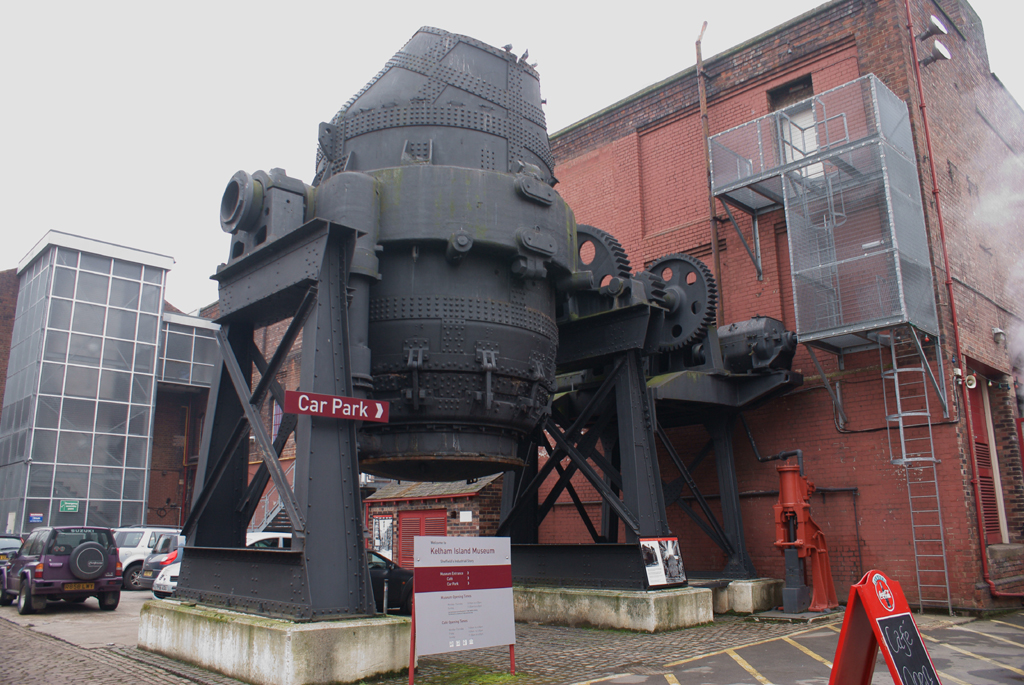
The first cheap method of making steel in bulk, patented by Henry Bessemer in 1856. Air was blown through molten pig iron in a vessel called a converter, burning out the carbon and other impurities; the heat of the reaction kept the metal molten. In its original 'acid' form it could not remove phosphorus, so it needed iron made from low-phosphorus ore, above all the haematite of West Cumberland and Furness.
Historical usage
Steel had been too dear for anything larger than tools and cutlery. The Bessemer process cut its cost from about £40 a ton to £6-7, and together with the Siemens open-hearth furnace of the 1860s it created an enormous demand for non-phosphoric ore. Cumberland and Furness haematite, the Brendon Hills ores of Somerset and imported Spanish haematite all boomed, while coalfield ironworks built on phosphoric clay ironstone declined. In the early 1870s, with the Franco-Prussian War adding to demand, Cumbrian ore reached 35 shillings a ton. Bessemer steel output in Cumberland rose from about 127,000 tons in 1879 to 580,000 tons by 1900, and Moss Bay at Workington, the last of the county's works, made rail steel until 1974.
How it worked
Molten pig iron was charged into the converter, a vessel with a refractory lining, and air was blown through it. The oxygen burned out silicon, manganese and carbon as gas or slag, and the heat of the reaction kept the charge molten. A 'blow' took about twenty minutes, its progress judged by the flame at the converter's mouth, and a converter treated 5 to 30 tons at a time, usually worked in pairs. Carbon, and manganese as spiegeleisen, were then added back and the steel poured into ladles, leaving the slag behind.
Why it was used
It turned pig iron into steel in minutes and in batches of several tons, without the fuel and labour of earlier methods, making steel cheap enough for rails and bulk engineering.
Risks & limitations
The acid process could not remove phosphorus, so phosphoric ores such as the Jurassic ironstones were no use for it. That problem was solved only by the Gilchrist-Thomas 'basic' process, patented in 1878, which used a dolomite or limestone lining; it later opened up Cleveland ironstone for steelmaking. Nitrogen from the air blast could make the steel brittle, and by the 1890s the open-hearth furnace had overtaken the process in Britain.
Regional variation
Moss Bay at Workington first sold its haematite pig as 'Bessemer iron' to steelworks at home and abroad, then built its own converters in 1877. The basic version was worked out at Blaenavon in South Wales.
Related terminology
Mines associated with this term
5 examples chosen from 8 linked records — the term page is not an index.
- Burrow Farm Mine — Somerset (well documented example)
Named in this record’s geology: “…and consisted of goethite, haematite and siderite. It suited the Bessemer process that Ebbw Vale took up in the 1860s, which is what made carting it…” - Birker Moor Mine — Cumbria (well documented example)
Named in this record’s history: “…War drove demand for steel, only Cumbrian haematite suited the Bessemer process in quantity, and ore reached 35 shillings a ton against mining costs…” - Crossfield Mine — Cumbria (well documented example)
Named twice in this record, first in the summary: “…Iron Ore Company, of Moor Row. The pits belong to the boom that the Bessemer steel process set off in West Cumberland, whose low-phosphorus haematite…” - Dowlais Ironworks — Merthyr Tydfil (well documented example)
Named in this record’s history: “…— becoming the first organisation to do so — and rolled its first Bessemer steel in 1865, a crucial technological head start that let it survive as…” - Forge Slope Colliery — Torfaen (well documented example)
Named in this record’s history: “…to convert iron made from phosphoric ores into steel — something the Bessemer process could not do.”
Sources
- (secondary) Bessemer process — Wikipedia
- (secondary) Boot Iron Mines, Eskdale — Northern Mine Research Society (Albyn Austin)
- (secondary) Iron and Ironstone — National Association of Mining History Organisations
- (secondary) Iron and Steel — Cumbria Industrial History Society
Record created: 18 September 2026 · Last researched: 18 September 2026