 MineArchive
Dowlais Ironworks
| Location | Dowlais, Merthyr Tydfil — 51.7604, -3.3499 (exact) |
|---|---|
| Commodities | Iron, Coal |
| Type | Iron |
| Worked | 19 September 1759–1987 (steel production ended) |
Overview
Founded a few years before its Merthyr neighbour Cyfarthfa, Dowlais eventually eclipsed it: under the Guest family it became the world's largest iron producer by the 1840s, adapted early to Bessemer steelmaking when Cyfarthfa could not, and — as part of Guest, Keen and Nettlefolds — went on producing steel until 1987, more than sixty years after its old rival closed for good.
History
Dowlais Ironworks was founded on 19 September 1759 by a partnership of nine investors with £4,000 of capital; Thomas Lewis provided the mineral leases and Isaac Wilkinson brought patented blast-furnace technology, building the second coke-fired blast furnace in south Wales. John Guest of Broseley was appointed manager in 1767 and discovered coal on Lewis's land that could replace charcoal for smelting; he became a partner in 1782, and on his death in 1807 his son Thomas Guest took over, introducing steam power to the works in 1795.
The works reached its greatest fame under John Josiah Guest, who took control in 1815 and had built up a controlling nine of sixteen shares by 1815; Michael Faraday visited the works in 1819. Guest's ironworks supplied rails for the pioneering Stockton and Darlington Railway in 1821 and exported widely to European railways as the age of steam spread across the continent. By 1845 Dowlais was operating 18 blast furnaces, employing 7,300 people, and producing around 88,400-89,000 tons of iron a year, making it the largest ironworks in the world — larger even than its Merthyr rival Cyfarthfa. On Guest's death in 1852 his widow, Lady Charlotte Guest, took over as overall manager of the works during a period of trusteeship, a striking role for a woman in Victorian heavy industry.
Where Cyfarthfa struggled to adapt to the coming of steel, Dowlais moved early: under the management of G. T. Clark and William Menelaus the company licensed the new Bessemer steelmaking process in the 1850s — becoming the first organisation to do so — and rolled its first Bessemer steel in 1865, a crucial technological head start that let it survive as its rivals declined. In 1857 the works built the 'Goat Mill', described as the world's most powerful rolling mill of its day. The business merged with the Patent Nut and Bolt Company in 1900 to form Guest, Keen and Co, becoming Guest, Keen and Nettlefolds (GKN) in 1902; King George V and Queen Mary visited in 1912, and King Edward VIII made a notable visit to the by-then largely idle works during the Depression on 18 November 1936, reportedly remarking that 'something must be done to get them back to work' — a comment widely read as political interference just before his abdication. The company passed into the nationalised British Steel Corporation in 1973, and steelmaking at Dowlais finally ended in 1987.
Geology
Iron and coal of the South Wales field at Dowlais, the raw materials that put the ironworks where it stands.
Workings
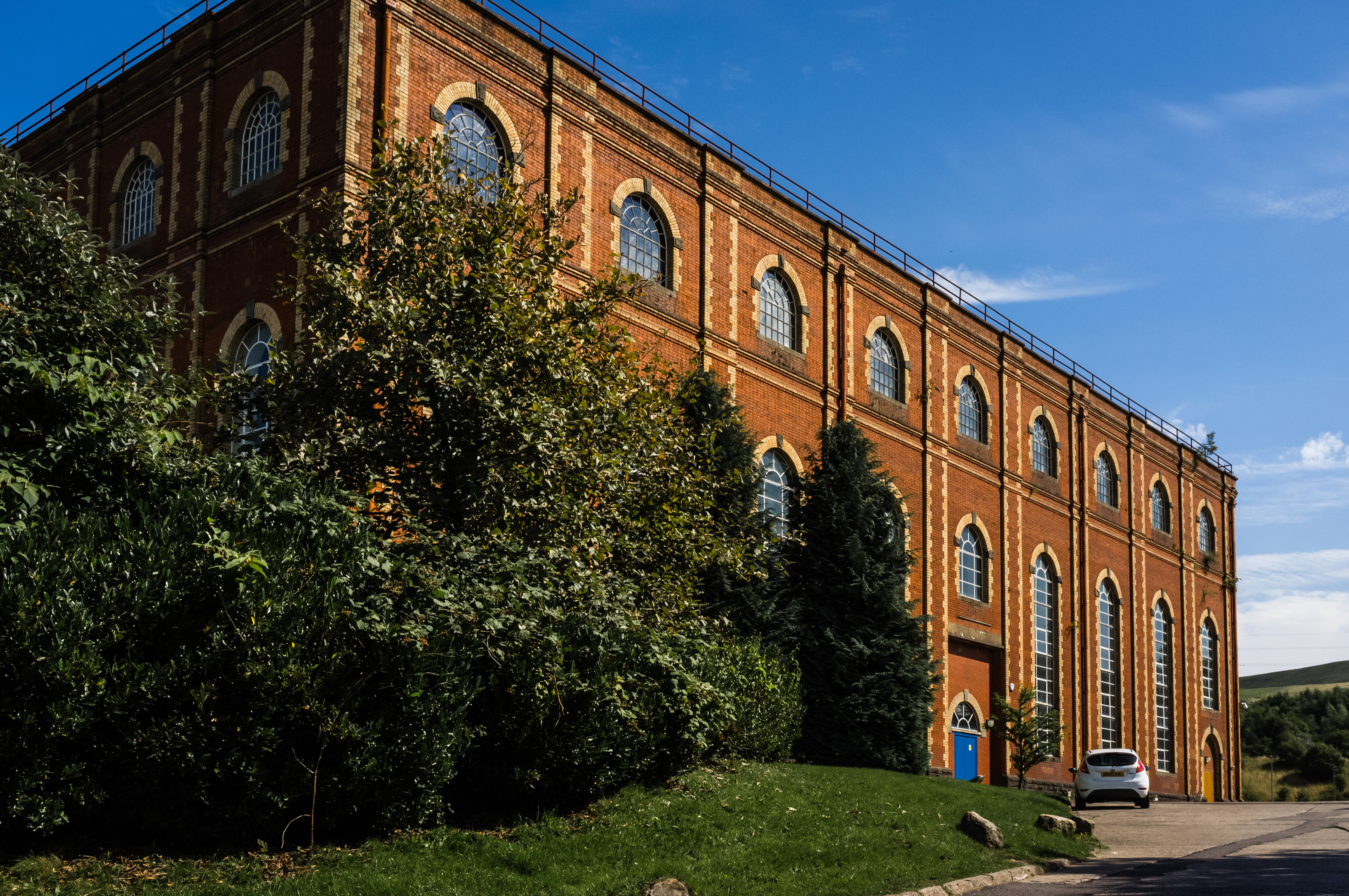
Grew from a single blast furnace in 1759 to 18 furnaces by 1845, producing around 500 tons of iron a year at the outset against roughly 88,400-89,000 tons annually at its 1845 peak. The 'Goat Mill', built in 1857, was the world's most powerful rolling mill of its time; the surviving Blast Engine House dates from a later, 1907 phase of the works.
Closure
Steel production at Dowlais ceased in 1987, ending an industrial history stretching back over two centuries.
What remains
The Grade II* listed Blast Engine House of 1907 survives as one of the works' principal remaining structures. Steel production at Dowlais ceased in 1987, ending an industrial history stretching back over two centuries.
Related mines
- Banwaun Colliery — One of the Dowlais Iron Company levels that fed the Dowlais Ironworks with coal and iron ore.
- Blaen Dowlais Colliery — One of the scores of small Dowlais Iron Company levels driven to exploit the coal reserves outcropping around the Dowlais Ironworks.
- North Tunnel Colliery — One of the Dowlais Iron Company levels working the Big Vein (Four-Feet) seam to feed the Dowlais Ironworks.
- Tommo Colliery — One of the many Dowlais Iron Company levels that fed the Dowlais Ironworks with iron ore and coal.
- Vanwain Colliery — One of the many Dowlais Iron Company levels that fed the Dowlais Ironworks.
Nearby mines
- Vanwain Colliery — 0.1 miles (0.2 km) SE
- Penyard Colliery — 0.3 miles (0.4 km) SW
- Twyn-y-Waun Colliery — 0.3 miles (0.5 km) E
- Coslet Colliery — 0.5 miles (0.8 km) NE
- Banwaun Colliery — 0.6 miles (0.9 km) NE
Straight-line distance, within 9 miles (15 km). Show on the map.
Recorded claims
Individual factual claims, each attached to the source(s) that support it below. Where sources disagree, both are kept.
- The ironworks was founded on 19 September 1759 by a partnership of nine investors with £4,000 capital, Thomas Lewis providing the mineral leases and Isaac Wilkinson the blast-furnace technology. 1,2
- By 1845 Dowlais was operating 18 blast furnaces, employing 7,300 people, and producing around 88,400-89,000 tons of iron a year, the largest ironworks in the world. 1,2
- On John Josiah Guest's death in 1852, his widow Lady Charlotte Guest took over as overall manager of the works during a period of trusteeship. 1
- Dowlais became the first organisation to licence the Bessemer steelmaking process in the 1850s, rolling its first Bessemer steel in 1865. 1,2
- The business merged with the Patent Nut and Bolt Company in 1900 to form Guest, Keen and Co (Guest, Keen and Nettlefolds from 1902), passed into British Steel in 1973, and steel production ended in 1987. 1,2
- King Edward VIII visited the largely idle works on 18 November 1936, reportedly remarking that 'something must be done to get them back to work', a comment widely read as political interference shortly before his abdication. 2
- Located at about 51.760 N, 3.350 W. 2
Sources
- (secondary) Dowlais Ironworks — Grace's Guide to British Industrial History
- (secondary) Dowlais Ironworks — Wikipedia
Record created: 26 August 2026 · Last researched: 26 August 2026