 MineArchive
Ullcoats Mine
| Location | Egremont, Cumbria — 54.4720, -3.5350 (approximate) |
|---|---|
| Commodity | Iron |
| Type | Iron |
| Worked | 1897–1959 (Ullcoats) |
| Operators | Millom and Askam Co (1917–1951) |
Overview
A West Cumbrian haematite mine registered in 1897 by a company financed by London MPs and grain merchants, which grew into what one contemporary account called 'the most prosperous and productive iron mine in West Cumberland' before being permanently linked underground to its neighbour, Florence Mine.
History
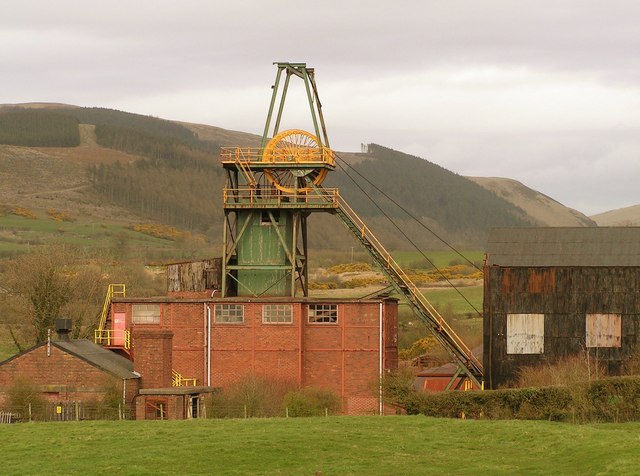
The Ullcoats Mining Company was registered on 20 August 1897, its founders including Augustus Helder MP, grain merchant John Pattinson and mining engineer W. E. Walker. Walker's own borehole struck a good seam of haematite by September 1897, and the company took a lease on the Ullcoats land, owned by John Moore, that same year. The first shaft was sunk in 1900 — by May it had gone through 30ft of ore and was still sinking in ore — with a further lease taken that September on minerals under Baron Leconfield's land at Beckermet, and a 23½-year lease with Moore signed that December at £200 a year plus royalties. Eventually seven shafts were sunk in total, three of them abandoned part-way through because of difficult glacial deposits lying immediately above the orebody.
By 1902 Ullcoats was already being described as the most prosperous and productive iron mine in West Cumberland, and under manager Myles Richardson (1900-1924) output grew steadily: 100,285 tons in 1912, rising to a peak of 238,037 tons in 1930. In 1917 three companies — the Millom and Askam Hematite Iron Company, the Barrow Hematite Steel Company and the North Lonsdale Iron and Steel Company — acquired around three-quarters of Ullcoats' shares between them, and by 1927 the mine, producing 150,000 tons a year, was jointly owned by all three, with G. Mure Ritchie chairing each. Millom and Askam took full control of North Lonsdale in 1931 to secure Ullcoats outright.
Nationalisation under the Iron and Steel Act brought Ullcoats into the Iron and Steel Corporation of Great Britain in 1951; a winding-up motion followed in 1959 and a receiver was appointed. By then the mine had been connected underground to the neighbouring Florence Mine — sunk separately in 1914 — and the two were worked from the 1950s onward as a single Florence-Ullcoats complex. That combined operation closed in 1968, reopened in 1969, closed again in 1980, reopened once more with a visitor centre in 1992, and finally closed for good in 2007, when the cost of pumping water out of the workings became unsustainable.
Geology
Ullcoats lies within the West Cumbrian haematite orefield, a belt of Carboniferous limestone extending between Lamplugh and Calder Bridge. Its ore formed as large, irregular or flat-lying replacements of the limestone, typically associated with faults, and includes the fibrous, mammillated variety long prized by collectors as 'kidney ore'. The accepted formation model has hot, hypersaline brines — heated by a probable heat source beneath the Irish Sea and carrying iron leached from Permo-Triassic sediments or Lake District granites — rising through faults to replace the limestone on a large scale; the exact age of mineralisation remains debated. Baryte, fluorite, calcite, aragonite, dolomite, pyrolusite and quartz all occur alongside the haematite.
Workings
A deep shaft mine, eventually worked through seven shafts (three abandoned during sinking due to glacial deposits over the orebody), connected underground to the neighbouring Florence Mine — sunk in 1914 — from the 1950s onward and thereafter operated as a single complex.
Closure
Nationalised in 1951; a winding-up motion followed in 1959. The combined Florence-Ullcoats complex it had become part of was closed and reopened repeatedly (1968, 1969, 1980, 1992) before finally closing in 2007 owing to the cost of pumping the workings dry.
What remains
The wider Florence-Ullcoats site later operated as a mining heritage visitor attraction with a mineral and geology museum, reflecting the complex's renown among collectors for fine haematite and associated mineral specimens.
Surface remains are shared with the combined Florence Mine site nearby.
Related mines
- Florence Mine — Connected underground and worked as a single Florence-Ullcoats complex from the 1950s onward.
Nearby mines
- Florence Mine — 0.6 miles (0.9 km) SE
- Gillfoot Park Mine — 1.1 miles (1.8 km) N
- Pallaflat Iron Mine — 1.9 miles (3.1 km) N
- Beckermet Mine — 2.4 miles (3.9 km) SE
- Bigrigg Mine — 2.5 miles (4.1 km) N
Straight-line distance, within 9 miles (15 km). Show on the map.
Recorded claims
Individual factual claims, each attached to the source(s) that support it below. Where sources disagree, both are kept.
- The Ullcoats Mining Company was registered in August 1897; its first shaft was sunk from 1900, eventually followed by six more, three of which were abandoned during sinking due to glacial deposits over the orebody. 1,2
- Three companies — Millom and Askam Hematite Iron Co, Barrow Hematite Steel Co and North Lonsdale Iron and Steel Co — acquired majority control in 1917; output peaked at 238,037 tons in 1930. 1,2
- Ullcoats was nationalised in 1951, wound up in 1959, and by then had been connected underground to Florence Mine, the combined complex closing for good in 2007. 1,2
- Ullcoats lies within the West Cumbrian haematite orefield, where iron-rich brines replaced Carboniferous limestone along faults, producing the mammillated 'kidney ore' the district is known for. 3
Sources
- (secondary) Ullcoats Mining Co — Grace's Guide to British Industrial History
- (secondary) Ullcoats Mines — Grace's Guide to British Industrial History
- (primary) Haematite deposits of Cumbria — BGS Earthwise
Record created: 27 August 2026 · Last researched: 27 August 2026