 MineArchive
Florence Mine
| Location | Egremont, Cumbria — 54.4661, -3.5253 (approximate) |
|---|---|
| Commodity | Iron |
| Type | Metal |
| Worked | 1914–2007 |
| Maximum depth | c. 1,000 ft (305 m) at the shaft |
| Operators | Millom and Askam Co (1913–1968), British Steel Corporation (1969–1980), Egremont Mining Company (1980–2007) |
Overview
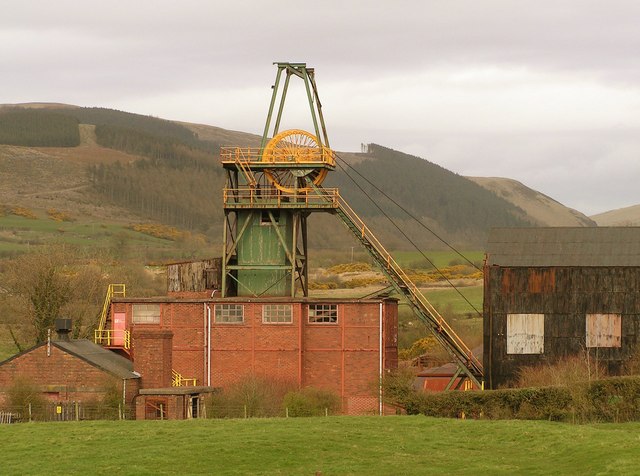
Florence Mine, at Egremont in west Cumbria, was the last deep working iron ore mine in England, kept going at the very end by its own redundant workers after British Steel walked away — a haematite mine that finally closed in 2007, nearly a century after it was first sunk.
History
Florence was first sunk in 1913-1914 by the Millom and Askam Co to work a rich haematite body — the biggest then found in the district — the mine taking its name from the wife of the chairman of the Millom Haematite Ore and Iron Company. The company took over the neighbouring Ullcoats Mines in 1917 and linked the workings underground; a second shaft, Florence No. 2, was begun in 1945 to reach deeper ground. The mine closed for the first time on 13 September 1968, but the newly nationalised British Steel Corporation bought it in 1969, pumped out the flooded workings and resumed blasting, drawing ore up the Beckermet shaft for Workington's steelworks. British Steel closed the mine a second time on 3 October 1980 during cost-cutting, but a group of redundant miners invested their own redundancy payments to reopen part of the workings as the Egremont Mining Company, working the mine on a small scale — mainly grinding haematite into 'Egremont Red' pigment — until it finally closed for good in 2007, by then the last deep working iron ore mine in England.
Geology
The mine worked a major haematite (iron ore) body in west Cumbria's Furness orefield, connected underground to the neighbouring Ullcoats mine.
Geological setting: Iron Replacement Deposits (well documented example)
Workings
Two shafts served the mine — the original 1913-1914 shaft and Florence No. 2, sunk from 1945 — reaching underground workings linked to the neighbouring Ullcoats Mines; ore was also drawn via the Beckermet shaft during the British Steel period.
Closure
The mine closed for good in 2007 after the small-scale Egremont Mining Company operation, run by former redundant workers since 1980, finally wound down.
What remains
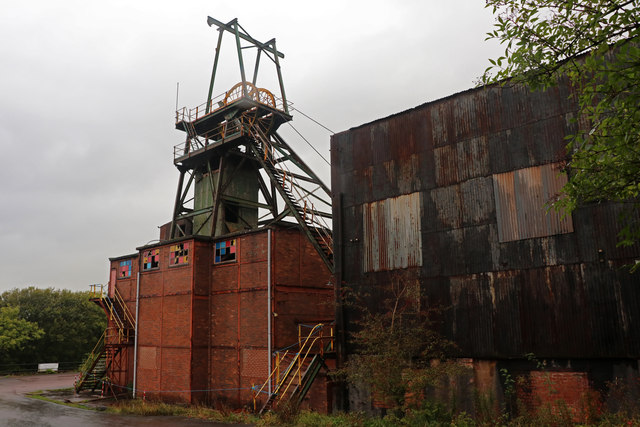
Surface buildings survive and now house the Florence Arts Centre; some underground workings are accessible to permitted visits and are documented by regional mine-exploration groups. The shaft and the whole of the underground workings are flooded. A 2020 permission visit records that the pumps were switched off in the mid-2000s once Sellafield stopped buying the mine water, and that everything underground is stained orange by the haematite. The surface buildings house the Florence Arts Centre, and guided visits are led by former mineworkers.
Related mines
- Beckermet Mine — Beckermet took over the flooded Florence Mine in 1969, pumped it dry and linked the two workings underground.
- Ullcoats Mine — Connected underground and worked as a single Florence-Ullcoats complex from the 1950s onward.
Nearby mines
- Ullcoats Mine — 0.6 miles (0.9 km) NW
- Gillfoot Park Mine — 1.6 miles (2.5 km) N
- Beckermet Mine — 1.9 miles (3.1 km) S
- Pallaflat Iron Mine — 2.4 miles (3.9 km) NW
- Bigrigg Mine — 2.9 miles (4.7 km) N
Straight-line distance, within 9 miles (15 km). Show on the map.
Recorded claims
Individual factual claims, each attached to the source(s) that support it below. Where sources disagree, both are kept.
- Florence was sunk in 1913-1914 by the Millom and Askam Co, which took over the neighbouring Ullcoats Mines in 1917 and linked the two underground. 1,2
- The mine closed for the first time on 13 September 1968; British Steel Corporation, which bought it in 1969, closed it a second time on 3 October 1980. 2
- A group of redundant workers reopened part of the mine as the Egremont Mining Company from 1980, working it on a small scale, mainly for haematite pigment ('Egremont Red'), until final closure in 2007 — by then the last deep working iron ore mine in England. 2,3
- The 1,000 ft shaft and the whole of the Florence workings are flooded, the pumps having been switched off in the mid-2000s when Sellafield ceased buying the mine water for its reactors. 4
- Florence was worked on a grid of levels with pillars left standing between them; the pillars were later robbed inwards from the outer limits of the highest workings towards the shaft, the ground behind either collapsing or left as unsupported caverns, with the pillars around the shaft usually too dangerous to take. 4
Photographs & further reading
A guided underground visit led by a former Florence miner, with photographs of the flooded workings and an account of the mine's history and method.
View sourceSources
- (secondary) Florence Mine — Grace's Guide to British Industrial History
- (secondary) The colourful history of Florence Arts Centre in Cumbria — Great British Life
- (secondary) Florence Iron Mine, Cumbria — Shropshire Caving and Mining Club
- (observational) Florence Iron Ore Mine, Egremont, Cumbria — permission visit, March 2020 — 28DaysLater
- (primary) BGS mine plans catalogue: Florence Mine — British Geological Survey
Record created: 20 August 2026 · Last researched: 9 September 2026