 MineArchive
Engineman
| Also known as | Winding Engineman (The engineman who worked the winding engine.), Brakesman (North East England), Engine-keeper (Scottish), Engine Tenter (The North Staffordshire word for the winding engineman.) |
|---|---|
| Category | Labour & Roles |
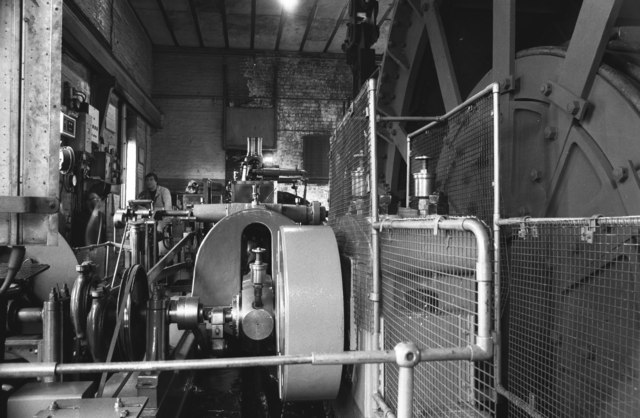
The man in charge of a colliery engine: above all the winding engineman, or winder, who raised and lowered the cages, but also the drivers of hauling, pumping and fan engines.
Historical usage
Gresley's 1883 glossary defines the engine-man simply as one who works a winding, hauling, fan, pumping or other engine, and Barrowman's Scottish glossary of 1886 has engineman, or engine-keeper, as a man in charge of an engine. The North East had its own word for the winding engineman: the brakesman, from the days when the engine was controlled with a brake-staff, and braking meant working the winding engine; in North Staffordshire he was the engine tenter. Above the enginemen stood the enginewright, a thoroughly practical man, in Gresley's phrase, who inspected the machinery and ropes daily, controlled the smiths and surface workmen and superintended the erection of new plant; after 1967 the title became mechanical engineer.
The twentieth-century glossaries narrow the word. The Apedale glossary has the engineman as the person who operates a haulage system, and the Wikipedia coal glossary distinguishes the engineman, who drove a haulage engine, from the winding engineman or winder, who drove the winding engine; winder served for both the engine and the man.
How it worked
The winding engineman sat at the engine with the depth indicator before him and the shaft out of sight, working to signals struck by the banksman at the surface and the onsetter at the pit bottom. He had to bring a loaded cage up a shaft hundreds of yards deep at speed, slow it before the bank and land it exactly, then do the same in reverse, for every wind of the shift; when men rode the cage the speed was limited and the margin for error smaller still. The haulage engineman worked an engine plane, the underground roadway along which tubs were drawn by main-and-tail or endless rope, and the pumping and fan enginemen kept their engines running continuously whatever happened elsewhere in the pit.
Why it was used
Once steam replaced the horse gin, everyone and everything that went down or came up a pit did so in the engineman's hands. The responsibility was out of proportion to the pay, and the law recognised it: the Coal Mines Act of 1911 and its regulations laid down who might work a winding engine, and an overwind, when the cage was drawn into the headgear, was the engineman's own failure unless the engine's safety gear caught it first.
Risks & limitations
The engineman's errors were the pit's accidents. An overwind, a cage lowered too fast onto the keps, a wind started on a wrong signal or with men on the cage, each has its place in the inspectors' reports, and the detaching hook and the automatic overwind preventer were built to take the worst consequences out of a moment's inattention. Hours were long, the work demanded unbroken concentration, and the engineman could see neither the cage nor the men who signalled to him.
Regional variation
Brakesman is the North East word, from the brake-staff of the early engines; engine tenter is North Staffordshire; engine-keeper is Barrowman's Scottish alternative; winder came to mean the man as well as the machine. The engineplaneman of the Healey Hero glossary was the haulage engineman's own title in some districts, and the enginewright the man above them all.
Related terminology
Banksman, Engine House, Onsetter, Overwind, Winding Engine, Winding Rope
Mines associated with this term
5 examples chosen from 54 linked records — the term page is not an index.
- Aitkenhead Colliery — Glasgow (well documented example)
Named twice in this record, first in the history: “…falling a prop set to support it. The exception is Henry Kerr, the engineman, fifty-seven, who in 1884 got entangled with the fan while it was in…” - Ashgill Colliery — South Lanarkshire (well documented example)
Named twice in this record, first in the history: “…January 1869, and on 30 June 1874 a fireman, John Findlayson, and an engineman, Andrew Forrest, were killed by an explosion of firedamp ignited…” - Avonhead Colliery — North Lanarkshire (well documented example)
Named twice in this record, first in the history: “…shot, three sinkers climbed back on to the kettle to be lowered. The engine-keeper had not put the machinery into winding gear, and the kettle ran…” - Balquhatstone Colliery — Falkirk (well documented example)
Named in this record’s history: “…fell back into the pit. In 1867 a collier named Baird, thinking the engineman was winding too fast, jumped from the cage at the surface and fell…” - Barglachan Colliery — East Ayrshire (well documented example)
Named in this record’s history: “…it was doubled, probably around 1883. In 1857 John Stirling, an engineman, was killed when he fell down the shaft. In 1896 Barglachan…”
Disasters associated with this term
5 examples chosen from 94 linked records, most direct relationship first.
- Agecroft Colliery shaft accident, 1859 (contextual relationship)
Named 3 times in this record, first in the summary: “…after a shaft-position indicator's signal band slipped loose and the engineman, with no other way to judge the cage's position, relied on hearing…” - Aldwarke Main Colliery shaft accident, 1904 (contextual relationship)
Named twice in this record, first in the investigation: “…a third of its strength by wear and internal corrosion, and that the engineman must have jerked it, probably with the brake; the engineman, John…” - Alexandra Colliery overwinding accident, 1879 (contextual relationship)
Named 5 times in this record, first in the summary: “On the morning of 22 October 1879 the engineman at Alexandra Colliery, St Helens, started the winding engine the…” - Arthur and Edward Colliery inundation, 1949 (contextual relationship)
Named in this record’s narrative: “…rode up and down the shaft on top of the cage to signal to the winding engineman, and by 11 a.m. 177 men had been brought up. Frank Bradley, a…” - Balbardie Colliery runaway carriage, 1866 (contextual relationship)
Named in this record’s narrative: “…got into the carriage, or boggie, and the signal was sent to the engineman at the pithead. The brothers ran down the incline and found…”
Sources
- (primary) A Glossary of Terms Used in Coal Mining, by William S. Gresley, 1883 — Internet Archive
- (primary) Glossary of Scotch Mining Terms — James Barrowman (1886), via Scottish Mining Website
- (secondary) Glossary of coal mining terminology — Wikipedia
- (secondary) Glossary of mining terms (E) — North Staffordshire Miners' Group — Apedale Heritage Centre
- (secondary) Pit Terminology — Healey Hero
Record created: 6 October 2026 · Last researched: 6 November 2026