 MineArchive
Arsenic Flue
| Also known as | Arsenic Labyrinth (The zig-zag flue design is often called a labyrinth, as at Botallack.) |
|---|---|
| Category | Ore Processing |
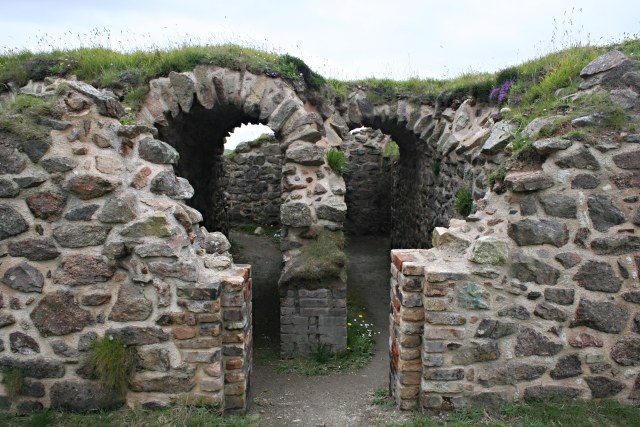
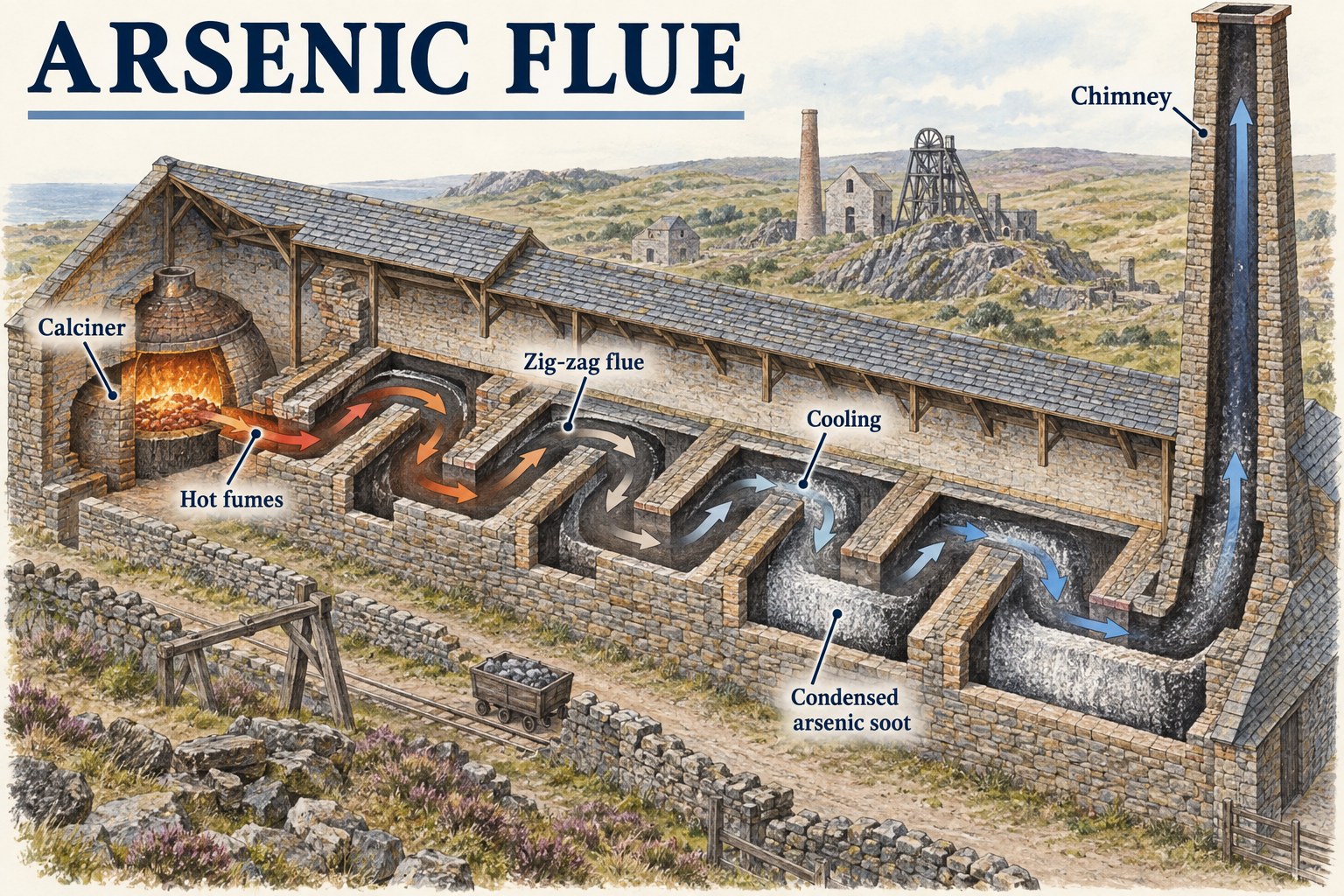
A long, often zig-zagging brick or stone tunnel — sometimes called an arsenic labyrinth — built to carry poisonous arsenic-laden fumes away from a calciner and cool them slowly enough that the arsenic condensed out as a solid soot on the flue's own walls, rather than simply venting straight into the air.
Historical usage
Arsenic flues became a major feature of Cornish and west Devon mining from the 1870s onward, as tin and copper mines increasingly turned to refined arsenic — used as an insecticide and pigment — as a valuable by-product or, at some sites, a primary product in its own right once metal prices fell. Devon Great Consols became the 19th century's largest arsenic producer this way, and the south-west of England was for a time the world's leading source of refined arsenic.
How it worked
Tin and copper ore often naturally contained arsenic as an impurity, which had to be roasted out in a calciner before the ore could be smelted cleanly. The calciner's exhaust, laden with arsenic vapour, was drawn along a flue built to run uphill wherever possible and often folded back and forth in a zig-zag or 'labyrinth' pattern within a long, low building, maximising the distance the hot gases had to travel. As the fumes cooled along this route, arsenic oxidised and condensed out onto the flue's own walls as a fine white or grey soot, leaving cleaner, less toxic gas to be dispersed from a tall chimney at the far end. Once a burn was complete, workers wearing heavy protective clothing entered the flue to scrape the condensed soot from the walls for collection and refining.
Why it was used
Flues let a mine both remove a genuinely toxic waste product from its ore economically and capture that same waste as a saleable commodity, turning what would otherwise be a pure processing cost into an additional source of revenue.
Risks & limitations
The work of scraping condensed arsenic soot from a flue's walls was extremely hazardous, and despite protective clothing and masks, arsenic poisoning was a real and recognised occupational hazard for the men who did it; flues also needed regular structural maintenance given the corrosive nature of what passed through them, and several of the best-surviving examples today required serious 20th- and 21st-century conservation work after decades of neglect and, in places, vandalism.
Related terminology
Mines associated with this term
5 examples chosen from 8 linked records — the term page is not an index.
- Botallack Mine — Cornwall (well documented example)
The mine's own recorded history and workings explicitly describe the 1906 'arsenic labyrinth' flues drawing fumes to a chimney stack. - Gawton Mine — Devon (well documented example)
Named in this record’s summary: “…rare surviving Brunton calciners and the longest, most impressive arsenic flue in England, ending in a distinctively leaning chimney. A fatal rock…” - Gunnislake Clitters Mine — Cornwall (well documented example)
Named in this record’s workings: “…shaft. The steep wooded slope carried sheds, settling ponds and arsenic labyrinths as well as the engine houses. A tramroad ran to wharves at…” - Wheal Friendship — Devon (well documented example)
The mine's own recorded history explicitly describes enormous arsenic condensing chambers and flues built from the 1870s. - New Consols Mine — Cornwall (well documented example)
The mine's own recorded workings explicitly describe the associated arsenic flue system used to capture arsenic driven off during roasting.
Sources
- (primary) Gawton arsenic mine and flue, Gulworthy — Historic England (Scheduled Monument List Entry 1002667)
- (secondary) Devon Great Consols — Wikipedia
Record created: 22 August 2026 · Last researched: 22 August 2026