 MineArchive
Kit Hill Mine
| Also known as | Kit Hill Consols, Kit Hill United Mines, Kit Hill Great Consols, South Kit Hill Mine |
|---|---|
| Location | Kit Hill, near Callington, Cornwall — 50.5189, -4.2936 (exact) |
| Commodities | Tin, Arsenic, Copper, Tungsten |
| Type | Metal |
| Worked | From 15th-16th centuries–1884 (main working ceased) |
Overview
Tin and, later, wolfram workings beneath a landmark granite hill near Callington, worked from open surface pits in the medieval period to deep shafts in the 19th century, and topped by an 1858 ornamental engine-house chimney that remains one of Cornwall's best-known mining landmarks.
History
Tin was worked at the surface on Kit Hill from the 15th and 16th centuries through long, narrow open workings and closely spaced pits following the shallow lodes; by the 18th century miners had moved underground, and adits are scattered across the hill from this period. Mechanisation began in the 1830s, when a windmill was introduced to power pumping and winding as shafts reached around 30 fathoms.
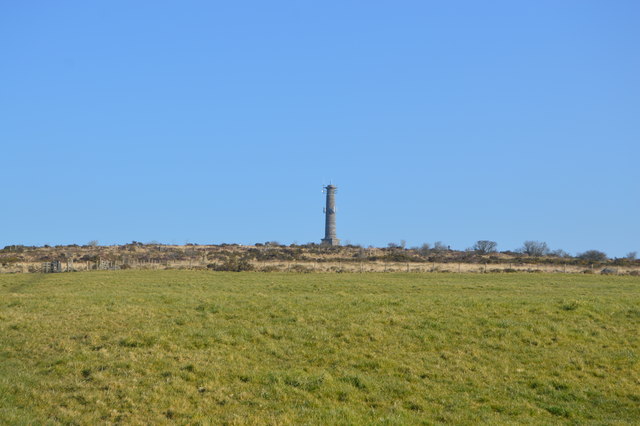
Kit Hill United began major reworking of the ground in 1852 with a 30-inch beam engine handling winding, pumping and stamping. South Kit Hill Mine, a separate sett on the same hill, opened in 1856 and reached depths of over 100 metres, with six circular buddles for ore dressing. In 1858 a distinctive ornamental chimney was built for the Kit Hill Great Consols/Kit Hill United complex, on the site of what may have been an earlier 18th-century folly earthwork, serving the steam engines that had by then replaced the windmill. The North Engine Shaft eventually exceeded 200 metres in depth. In 1864 the main engine's cylinder split from overwork, forcing closure; the sett saw limited further working as Kit Hill Consols from 1881, with a new 30-inch rotative engine installed, but mining ceased for good in 1884, hampered by the sheer hardness of the granite. Cassiterite (tin ore) and wolframite continued to be worked in smaller quantities into the First World War, when wolfram was in particular demand.
The Duke of Cornwall transferred Kit Hill to Cornwall County Council in 1985, and the hill is now a country park containing around 1,000 recorded shafts and trial workings.
Geology
Tin and, later, wolfram in the granite of Kit Hill, worked from long narrow surface openings following the shallow lodes to deep shafts beneath.
Workings
Shallow surface pits and open workings gave way to shafts and adits as tin lodes were followed underground; South Kit Hill Mine alone exceeded 100 metres depth with six circular buddles for ore dressing, and the North Engine Shaft eventually passed 200 metres. A 30-inch beam engine (from 1852) and later a 30-inch rotative engine (from 1881) handled winding, pumping and stamping.
Closure
The hardness of the granite made deep working increasingly uneconomic; main operations ceased in 1884 after the engine cylinder failure of 1864 had already forced an earlier closure.
What remains
Kit Hill is now a country park with around 1,000 recorded shafts and trial workings across its surface. The 1858 engine-house chimney remains standing as a Grade II listed landmark visible for miles around, one of the most recognisable mining monuments in east Cornwall.
Related mines
- Excelsior Mine — Excelsior was driven in 1877 specifically to drain Kit Hill's North Engine Shaft and explore for its tin and copper lodes.
Nearby mines
- Holmbush Mine — 1.2 miles (1.9 km) W
- Prince of Wales Mine — 1.7 miles (2.7 km) E
- Bedford United Mine — 2.7 miles (4.3 km) E, Devon
- Excelsior Mine — 2.7 miles (4.3 km) NW
- Hingston Down Quarry — 2.8 miles (4.5 km) E
Straight-line distance, within 9 miles (15 km). Show on the map.
Recorded claims
Individual factual claims, each attached to the source(s) that support it below. Where sources disagree, both are kept.
- A windmill was introduced in the 1830s to power pumping and winding as shafts reached around 30 fathoms. 1
- Kit Hill United began major reworking of the ground in 1852, using a 30-inch beam engine for winding, pumping and stamping. 1
- South Kit Hill Mine opened in 1856 and reached depths exceeding 100 metres, with six circular buddles for ore dressing. 1
- The ornamental summit chimney was built in 1858 for the Kit Hill Great Consols/Kit Hill United complex, serving the steam engines that had replaced the earlier windmill. 1
- The engine cylinder split in 1864 from overwork, forcing closure; limited further working took place as Kit Hill Consols from 1881, with mining finally ceasing in 1884 owing to the hardness of the granite. 1
- Cassiterite and wolframite continued to be exploited in smaller quantities through the First World War. 1
- Kit Hill Country Park, around 400 acres, has been managed as public land by Cornwall Council since the Duke of Cornwall's 1985 transfer. 2
- Neighbouring setts on the hill included East Kit Hill Mine (1855-1909) and the earlier Hingston Down Mine, worked westward toward Kit Hill from possible 17th-century origins until 1885. 2
- Located at about 50.519 N, 4.294 W. 2
Sources
- (secondary) Kit Hill United Mine, Cornwall — Cornwall Calling
- (secondary) Kit Hill — Wikipedia
Record created: 26 August 2026 · Last researched: 26 August 2026