 MineArchive
Gunnislake Clitters Mine
| Location | Gunnislake, Calstock parish, Cornwall — 50.5283, -4.2278 (exact) |
|---|---|
| Commodities | Copper, Arsenic, Tin, Tungsten |
| Type | Metal |
| Worked | c. 1820–1919 |
| Maximum depth | At least 188 fathoms (1,128 feet) below adit, the level at which a man was killed east of the engine shaft in 1883. |
| Operators | Gunnislake Clitters Mining Co. (1877–1889), Clitters United Mines Co. Ltd (1900–1908) |
Overview
Gunnislake Clitters worked the steep wooded slope running down to the Tamar below Gunnislake, on the Cornish bank opposite Devon. It began about 1820 with an adit driven in from the river and a waterwheel to pump it, and went deeper with steam engines from the 1860s. Copper and tin were the first products; when those were worked out the mine turned to arsenic, and tungsten was raised as well. Its best years came in the early 1880s, when it employed nearly two hundred people and raised well over 2,500 tonnes of ore a year. The site is now a scheduled monument, and an engine house, a wheelpit and the labyrinths of the arsenic works still stand among the trees.
History
The Tamar valley was mined for copper long before Gunnislake Clitters: Old Gunnislake just to the south and Wheal Tamar had been worked for it in the 1700s, and uranium was found in both though never mined. Gunnislake Clitters itself was worked from about 1820, first by an adit driven from the valley side to drain the ground, with a waterwheel doing the pumping, and later by shafts. Steam engines installed in the 1860s allowed working below adit level. In 1858 the sett, then known as Clitters Adit, was sold as a going concern. T. C. Isaacs and others held it in 1875-76 and the Gunnislake Clitters Mining Co. from 1877 to 1889, the period the Durham Mining Museum records as its working life: 161 people in 1883 raising tin and copper, 89 in 1885 raising manganese, and 59 in 1887 raising copper. In its heyday in the early 1880s the mine employed almost two hundred and raised an average of more than 2,500 tonnes of ore a year. John Rodda, chief agent from 1859 to 1863 and later assistant overseer for the parish of Calstock, is one of a long line of named agents and managers running to 1908. Joseph Paull held the mine in 1899 and the Clitters United Mines Co. Ltd from 1900 to 1908; the Duchy of Cornwall took it in 1919, and the sett forms part of the estate of the Duke of Cornwall. Before the East Cornwall Mineral Railway was built a tramroad linked the mine to wharves on the Tamar at Gunnislake.
Geology
Gunnislake Clitters lies in the Tamar valley mineral belt on the eastern edge of the Dartmoor and Bodmin granite country, where hydrothermal lodes carry copper and tin at shallower levels with arsenic and tungsten among them. The mine's sequence of products — copper and tin first, then arsenic once the metal ores were exhausted — follows what the lodes gave up rather than any change of plan. Uranium was found in the neighbouring Old Gunnislake and Wheal Tamar setts but never mined.
Geological setting: Hydrothermal Deposits (well documented example), Veins and Lodes (well documented example)
Workings
An adit driven in from the valley side at river level did the early draining, with a waterwheel pumping; shafts and steam engines came later, and by 1883 men were working at the 188-fathom level east of the engine shaft. The steep wooded slope carried sheds, settling ponds and arsenic labyrinths as well as the engine houses. A tramroad ran to wharves at Gunnislake before the East Cornwall Mineral Railway reached the mine.
Closure
Sources differ on how long the mine ran. The Durham Mining Museum gives 1860 to 1889, which matches the life of the Gunnislake Clitters Mining Co.; Cornwall Calling gives the working period as 1820 to 1919 and lists later owners through the Clitters United Mines Co. Ltd to 1908 and the Duchy of Cornwall in 1919. The site was neglected after closure, and the Cornwall Archaeological Unit has since strengthened weakened buildings, fenced dangerous areas and made safe routes through.
What remains
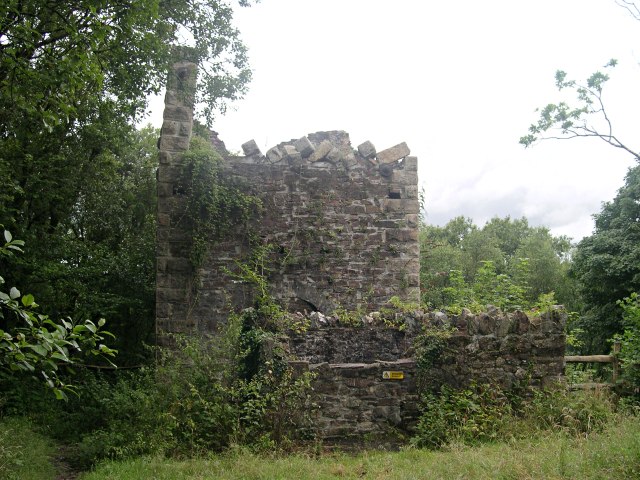
The mine is a scheduled monument and sits on the Historic England Heritage at Risk Register, with conservation work funded by Historic England and the National Lottery Heritage Fund. The wheelpit and the Riverside engine house survive, and a ruined engine house stands on the Skinner's part of the site. A waymarked circular walk from Gunnislake station takes in the mine along with Drakewalls, the East Cornwall Mineral Railway and a Victorian brickworks; the ground carries the usual hazards of a mining site.
The wheelpit and the Riverside engine house survive, and a ruined engine house stands on the Skinner's part of the site; the whole is a scheduled monument.
Related mines
- Hawkmoor Mine — Hawkmoor was taken into Clitters United in 1900, the company that worked Gunnislake Clitters from 1900 to 1908.
Nearby mines
- Bedford United Mine — 0.3 miles (0.5 km) SW, Devon
- Wheal Frementor — 0.3 miles (0.5 km) NW, Devon
- Hingston Down Quarry — 0.5 miles (0.7 km) S
- Devon Great Consols — 0.7 miles (1.2 km) N, Devon
- Wheal Fanny — 0.8 miles (1.2 km) N, Devon
Straight-line distance, within 9 miles (15 km). Show on the map.
What's uncertain
Points where sources disagree or the record could not be settled; both accounts are kept. All open questions in the archive.
- Cornwall Calling gives the mine as worked from 1820 to 1919, first by an adit from the valley side and later by shafts; the Durham Mining Museum records it as opened in 1860 and closed in 1889, which matches the life of the Gunnislake Clitters Mining Co. (disputed) 1,2
- The BGS mine-plans catalogue holds a Mining Remediation Authority abandonment plan titled 'Gunnislake Clitters' (catalogue OMR63A, Tin Copper And Arsenic Ores, dated 1889); the catalogue gives no location and the plan's details do not clearly tie it to this working, so it may belong to another of the same name. (uncertain) 3
Recorded claims
Individual factual claims, each attached to the source(s) that support it below. Where sources disagree, both are kept.
- Cornwall Calling gives the mine as worked from 1820 to 1919, first by an adit from the valley side and later by shafts; the Durham Mining Museum records it as opened in 1860 and closed in 1889, which matches the life of the Gunnislake Clitters Mining Co. (disputed) 1,2
- The mine produced copper, arsenic, tin and tungsten; tin and copper are returned in 1883, manganese in 1885 and copper in 1887. 1,2
- The Lists of Mines record 161 people in 1883, 89 in 1885 and 59 in 1887. 1
- Known owners run from the sale of Clitters Adit as a going concern in 1858 through T. C. Isaacs and others, the Gunnislake Clitters Mining Co., Joseph Paull, the Clitters United Mines Co. Ltd to 1908, and the Duchy of Cornwall in 1919. 2
- Before the East Cornwall Mineral Railway was built, a tramroad linked the mine to wharves at Gunnislake. 2
- The site was neglected after closure and the Cornwall Archaeological Unit has strengthened weakened buildings, fenced dangerous areas and provided safe routes through it. 2
- The BGS mine-plans catalogue holds a Mining Remediation Authority abandonment plan titled 'Gunnislake Clitters' (catalogue OMR63A, Tin Copper And Arsenic Ores, dated 1889); the catalogue gives no location and the plan's details do not clearly tie it to this working, so it may belong to another of the same name. (uncertain) 3
Photographs & further reading
The working period, the products, the tramroad to the Tamar wharves and a full list of the mine’s owners, chief agents and managers from 1858 to 1919.
View sourceA waymarked circular route from Gunnislake station past Drakewalls, the mine, the East Cornwall Mineral Railway and Skinner’s Shaft, with what survives at each.
View sourceSources
- (primary) Durham Mining Museum: Gunnislake Clitters — Durham Mining Museum, from the Mines Inspectors Reports and the Lists of Mines
- (secondary) Gunnislake Clitters Mine — Cornwall Calling
- (primary) BGS / Mining Remediation Authority mine plans: GUNNISLAKE CLITTERS — British Geological Survey / Mining Remediation Authority
- (observational) Gunnislake Clitters Mine: walks in the Tamar Valley — Tamar Valley National Landscape
- (observational) Ruined engine house on the Skinner's site, Gunnislake Clitters (photographed 2006) — Geograph Britain and Ireland, Tony Atkin
Record created: 10 September 2026 · Last researched: 10 September 2026