 MineArchive
Devon Great Consols
| Location | Gulworthy, near Tavistock, Devon — 50.5383, -4.2227 (exact) |
|---|---|
| Commodities | Copper, Arsenic, Tin, Tungsten |
| Type | Metal |
| Worked | 1844–1903 |
| Maximum depth | 200 fathoms (about 360 m) by 1864 |
| Operators | Devonshire Great Consolidated Copper Mining Company (1845–1903) |
Overview
Devon Great Consols was, for a time, the largest copper mine in the world, and later the largest producer of arsenic — a byproduct that kept it profitable long after its copper had stopped being competitive. Now part of the Cornwall and West Devon Mining Landscape World Heritage Site, it also carries a serious legacy of arsenic contamination.
History
A lease was taken from the Duke of Bedford on 26 July 1844 by six investors led by Josiah Hugh Hitchens — among them the father of the designer William Morris, whose son later served as a company director from 1871 to 1875. Working initially as North Bedford Mines, or Wheal Maria, the venture struck a rich copper vein at about 20 fathoms depth within months, and the company was formally incorporated as the Devonshire Great Consolidated Copper Mining Company on 25 March 1845. Nearly 90,000 tons of copper ore were raised in the first six years alone, and by 1864 — with the mine down to 200 fathoms and employing 1,284 people — it was considered the most productive copper mine in the world.
The mine built its own 5-mile railway to Morwellham Quay on the River Tamar, completed in November 1858, with its own locomotives and wagons. When copper prices collapsed in the mid-1860s as Australian, American and Chilean ore reached the market, many smaller Devon mines failed outright; Devon Great Consols survived by diversifying into arsenic production from 1867, becoming the 19th century's largest arsenic producer. The mine finally closed in 1903, having produced around 700,000 tons of copper ore and 72,000 tons of refined arsenic over its roughly 60-year life; smaller-scale 20th-century rework extracted tin and tungsten from the dumps, continuing sporadically as late as the 1970s, with arsenic processing on the site continuing until 1930. The 1844 lease cost £1,024, and the venture repaid its backers on a scale few Cornish or Devon mines ever matched: £818,824 in dividends by 1864, the year the mine employed its greatest workforce of 1,284 people — 861 men, 203 boys and 220 women. No dividend was paid after June 1899.
Geology
The mine worked rich copper lodes within the Tamar Valley, alongside significant quantities of mundic (arsenical pyrite) that made the site's later arsenic industry possible.
Geological setting: Veins and Lodes (well documented example)
Workings
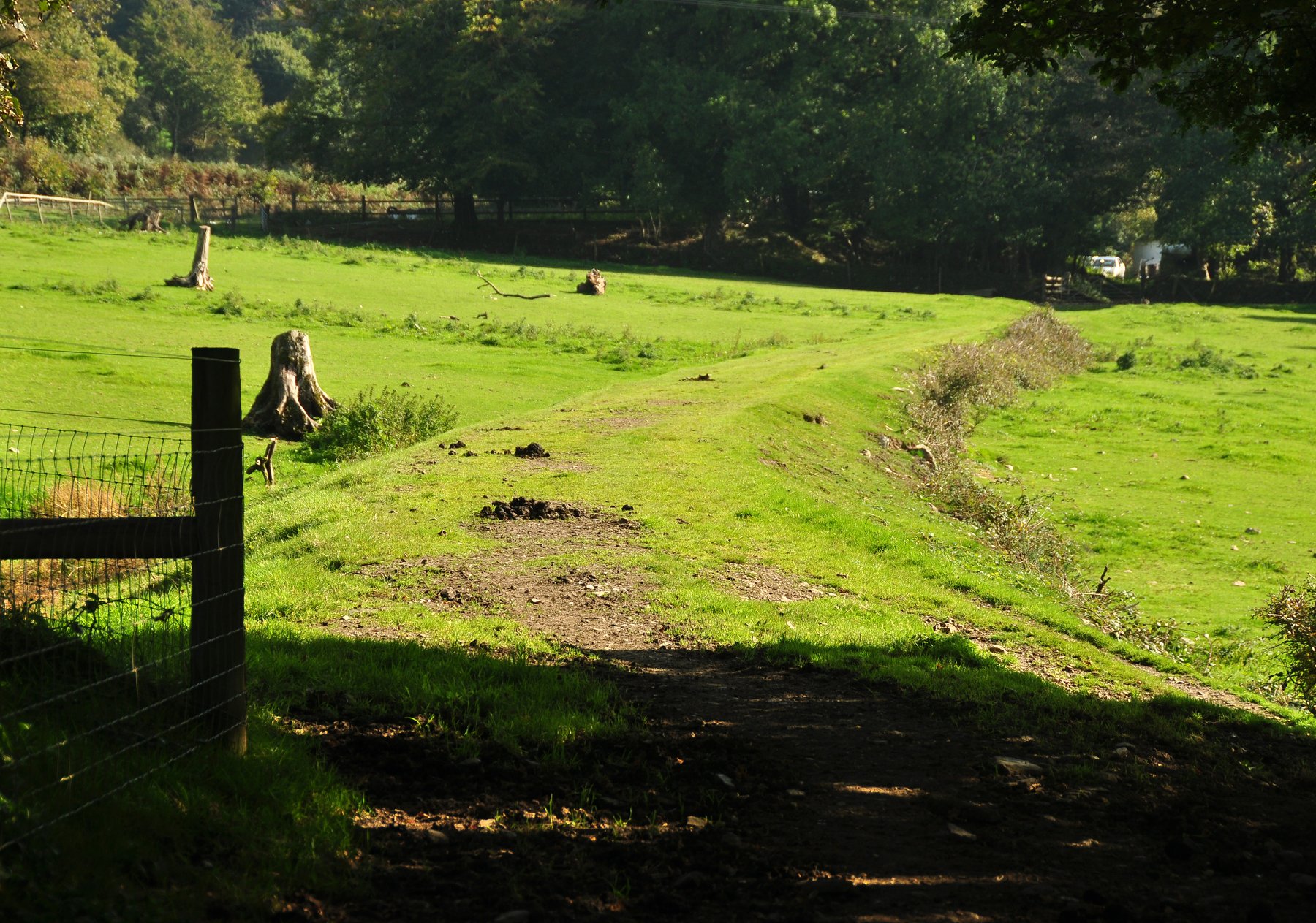
Workings reached around 200 fathoms (roughly 360 m) by 1864. Ore and refined arsenic moved out via the mine's own 5-mile railway to Morwellham Quay, opened in 1858 and worked with the company's own locomotives.
Closure
The mine closed in 1903 as the ore and arsenic that had sustained it for six decades were worked out and cheaper foreign copper undercut what remained; the Coal Authority's plan catalogue records the abandonment as 1902. Working did not stop for good: the site reopened during the First World War for arsenic, some of it destined for chemical warfare agents, with short-lived tin and tungsten working alongside it. Arsenic production continued until 1930, and the dumps were picked over again for copper around 1950.
What remains
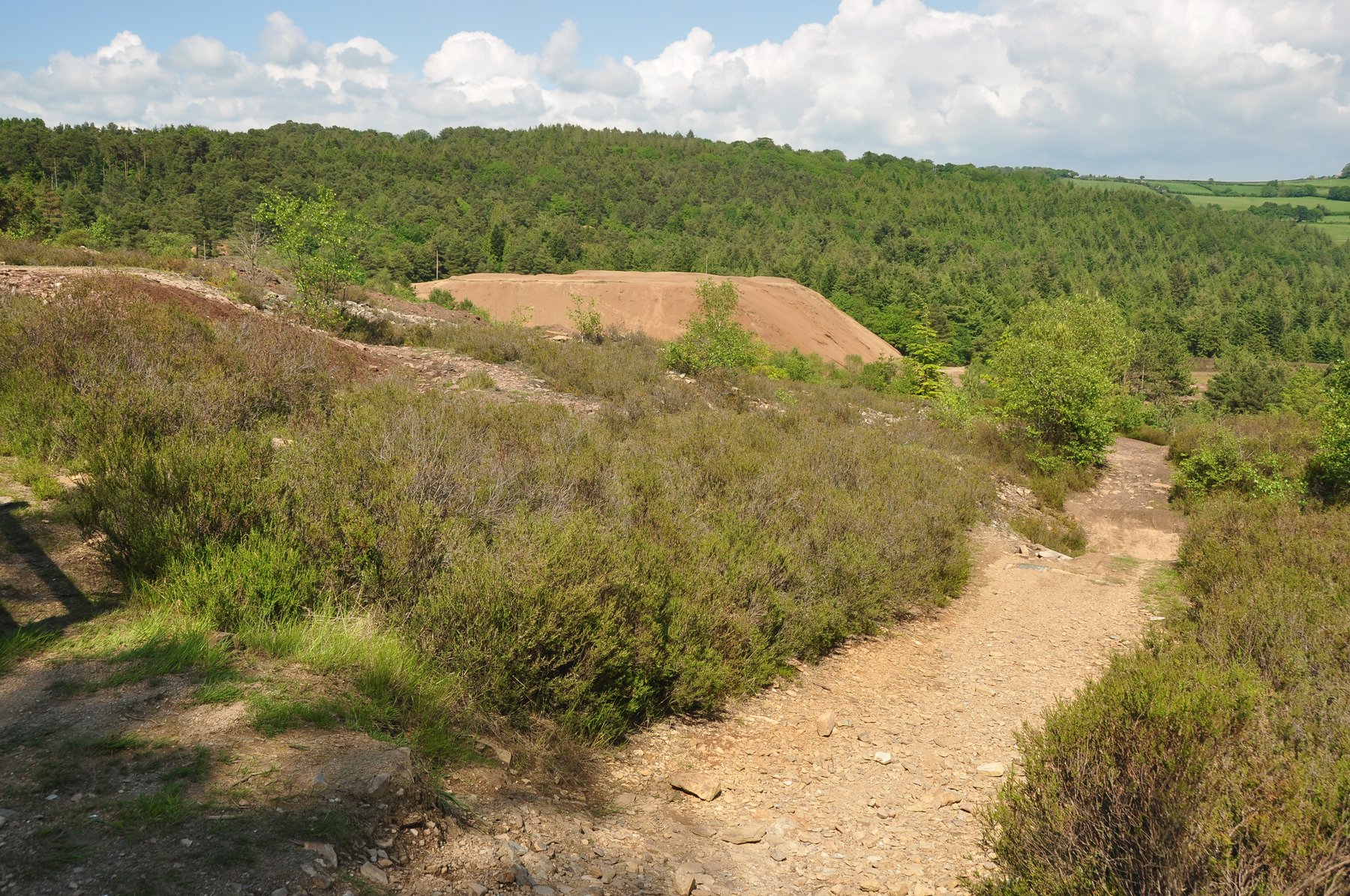
The site is part of the Cornwall and West Devon Mining Landscape UNESCO World Heritage Site and reopened to public access in 2009. A 2020 University of Plymouth study found arsenic concentrations at 98 sampled locations across the site exceeding screening levels, and the land remains heavily contaminated in places.
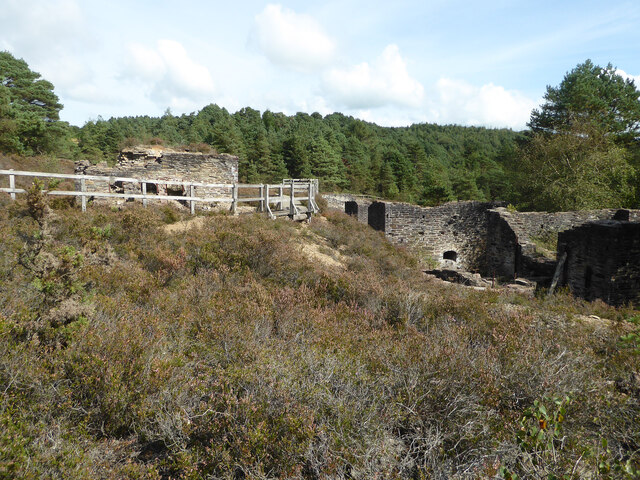
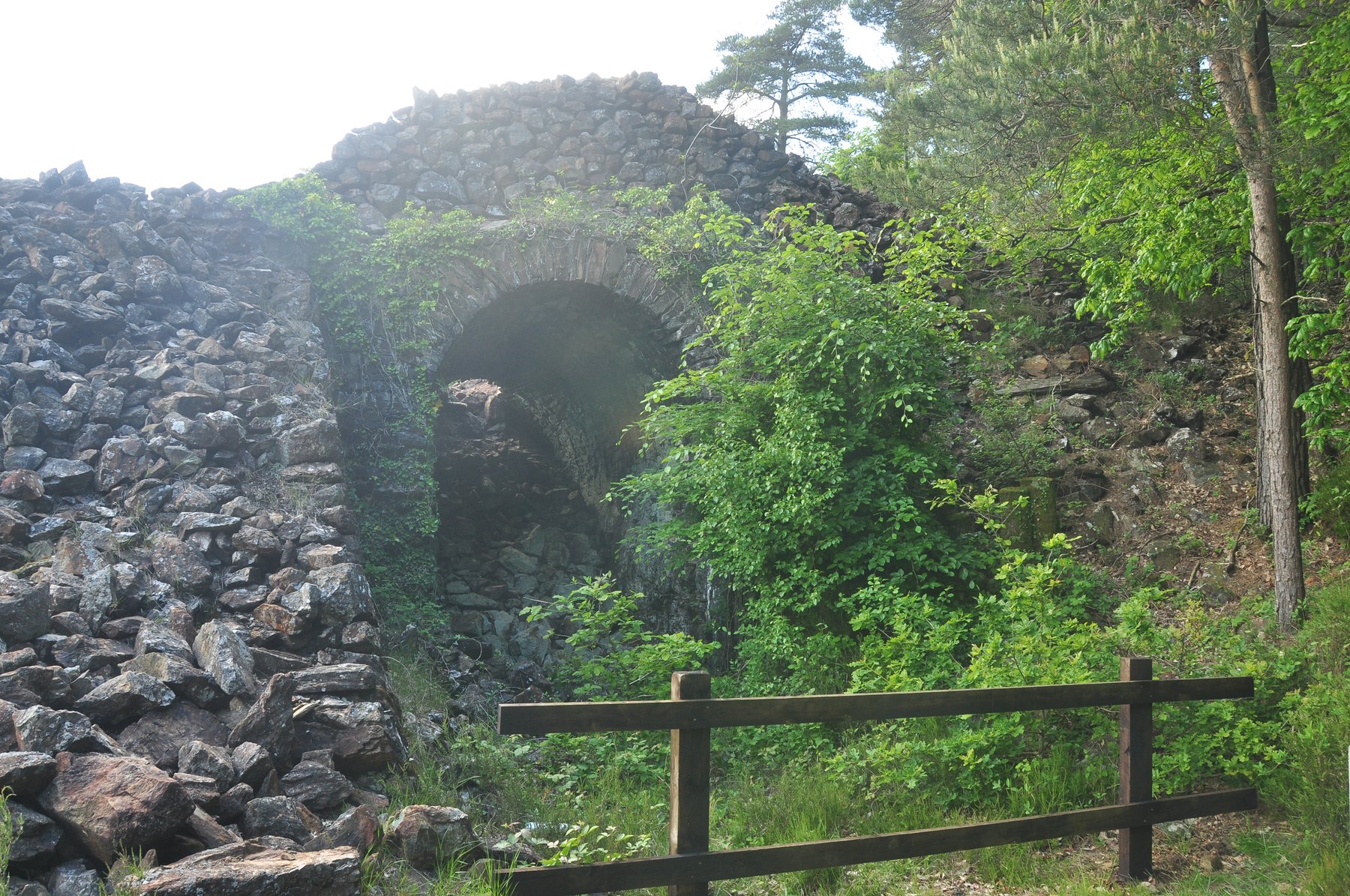
Surviving structures include mine captains' houses (Grade II listed, 13 January 1986), the Wheal Josiah arsenic works and associated cottages (Grade II listed, 23 January 1987), and 20th-century arsenic works designated a scheduled monument on 24 July 2002.
Redevelopment
The site is open for public access and forms part of the wider Tamar Valley Mining Heritage Project; no other redevelopment has taken place given the ongoing arsenic contamination.
Related mines
- Bedford United Mine — Bedford United worked copper lodes lying immediately south of, and next door to, Devon Great Consols' own main lode.
- Devon United Mine — The Geological Conservation Review names Devon Great Consols and the Botallack area as the only places where copper ores carry arsenopyrite on the scale seen at Devon United, and puts the same control behind all of them: mafic intrusives inside metamorphosed sediments on the flank of a granite.
- Gawton Mine — Devon Great Consols took over Gawton's arsenic works in 1895, and together the two were the region's largest arsenic producers.
- George and Charlotte Copper Mine — The 1844 discovery of Devon Great Consols upriver transformed Morwellham Quay, which George and Charlotte mine also used to ship its own ore.
- Pennerley Mine — Peter Watson, a director of Devon Great Consols, formed the Tankerville Great Consols combine that took over Pennerley.
- Potter's Pit — Peter Watson, a director of Devon Great Consols, formed the Tankerville Great Consols combine that took over Potter's Pit.
- Wheal Fanny — Wheal Fanny was one of the five original setts that together made up Devon Great Consols.
- Wheal Frementor — Wheal Frementor lay on the southern part of the Devon Great Consols site and was worked as part of it.
Nearby mines
- Wheal Fanny — 0.4 miles (0.6 km) W
- Wheal Frementor — 0.6 miles (1.0 km) SW
- Gunnislake Clitters Mine — 0.7 miles (1.2 km) S, Cornwall
- Bedford United Mine — 1.0 miles (1.7 km) SW
- Hingston Down Quarry — 1.2 miles (1.9 km) S, Cornwall
Straight-line distance, within 9 miles (15 km). Show on the map.
Recorded claims
Individual factual claims, each attached to the source(s) that support it below. Where sources disagree, both are kept.
- Over its roughly 60-year working life the mine produced around 700,000 tons of copper ore and 72,000 tons of refined arsenic, and was considered the most productive copper mine in the world around 1864. 1
- A 2020 University of Plymouth study found arsenic concentrations at 98 sampled locations across the site exceeding Category 4 Screening Levels, and the land remains heavily contaminated in places. 1
- The Coal Authority's abandonment plan catalogue holds four sheets for Devon Great Consols under catalogue number OM4406, naming the constituent setts — Fanny, South Watson's, Wheal Anna Maria, Wheal Emma, Wheal Josiah and Wheal Maria — and recording a date of abandonment of 1902, a year before the closure date usually given. 2
- At its peak in 1864 the mine employed 1,284 people — 861 men, 203 boys and 220 women. 1
- The 1844 lease from the Duke of Bedford cost £1,024; by 1864 the company had paid its shareholders £818,824 in dividends, and no dividend was paid after June 1899. 1
- The mine's own five-mile railway to Morwellham Quay was completed in November 1858 and worked with three locomotives and around 60 wagons. 1
- The site reopened during the First World War to produce arsenic, some of it for chemical warfare agents, alongside short-lived tin and tungsten working; arsenic production continued until 1930, and minor copper recovery took place around 1950. 1
Photographs & further reading
Background on the site's conservation as part of the wider World Heritage Site.
View sourceFurther freely-licensed photographs of the calciner complex, spoil heaps and Tamar Valley views.
View sourceSources
- (secondary) Devon Great Consols — Wikipedia
- (primary) Devon Great Consols abandonment plans (catalogue OM4406) — British Geological Survey / The Coal Authority
- (primary) Early 20th century arsenic works at the Devon Great Consols Mine, Gulworthy — Historic England
Record created: 19 August 2026 · Last researched: 28 August 2026