 MineArchive
Winsford Rock Salt Mine
| Also known as | Meadow Bank Mine, Meadowbank Mine |
|---|---|
| Location | Winsford, Cheshire — 53.1936, -2.5225 (approximate) |
| Commodity | Salt |
| Type | Mineral |
| Worked | 1844–Still active |
| Maximum depth | 150 m (490 ft) |
| Operators | Salt Union Ltd (1888–1938), Imperial Chemical Industries (1938–1992), Compass Minerals UK Ltd (2003–?) |
Overview
The UK's oldest working rock salt mine, opened while prospecting for coal in 1844, and today Europe's largest — still producing salt for Britain's winter roads, and, since 1998, using its vast mined-out void as secure document and archive storage.
History
Meadow Bank Mine, as Winsford was originally known, had its access shafts sunk in 1844 after rock salt was discovered while prospecting for coal. By 1897 it was England's largest salt producer. In 1888 most British salt operators, including Winsford, combined to form the Salt Union in an attempt to manage a badly oversupplied market; competition from the brine-pumping works around Northwich nonetheless told against Winsford, and the mine closed in 1892. It reopened in 1928 after the last of the Northwich rock salt mines flooded, and from then on was worked continuously, becoming part of ICI in 1937. Salt Union Ltd, the mine's current operator, now produces around 1.5 to 1.8 million tonnes of rock salt a year, the great majority of it used as winter road grit rather than for food or chemical use. Since 1998 part of the enormous mined-out void beneath the town — around 150m down and, by area, roughly the size of 700 football pitches — has also been used by DeepStore for secure document and archive storage, exploiting the workings' naturally constant temperature and humidity and their freedom from ultraviolet light, vermin and flooding; items stored there have included material from the National Archives.
Geology
The mine works a thick, extensive halite (rock salt) deposit of Triassic age within the Cheshire Basin, considerably more stable to work as a dry, solid rock-salt seam than the brine-pumping and wild-brining methods used historically around nearby Northwich, which caused serious ground subsidence there.
Geological setting: Evaporite Deposits (historical documentary reference), Sedimentary Beds and Seams (well documented example)
Workings
Salt is worked by room-and-pillar mining, cutting wide, tall galleries (around 20m wide and 7.5m high) and leaving regular pillars of unworked salt to support the roof — the same basic method that has left the mine's roughly 140 miles of tunnels navigable today, including by the DeepStore storage operation. The mine now has over 260 km of tunnels, worked room-and-pillar with roughly a quarter of the rock left standing to hold the roof. The rock is about 92 per cent salt. Most output goes to the roads, with some to fertiliser manufacture.
Closure
Still active. Competition from the brine-pumping works around Northwich told against Winsford, and the mine closed in 1892 before later reopening.
What remains
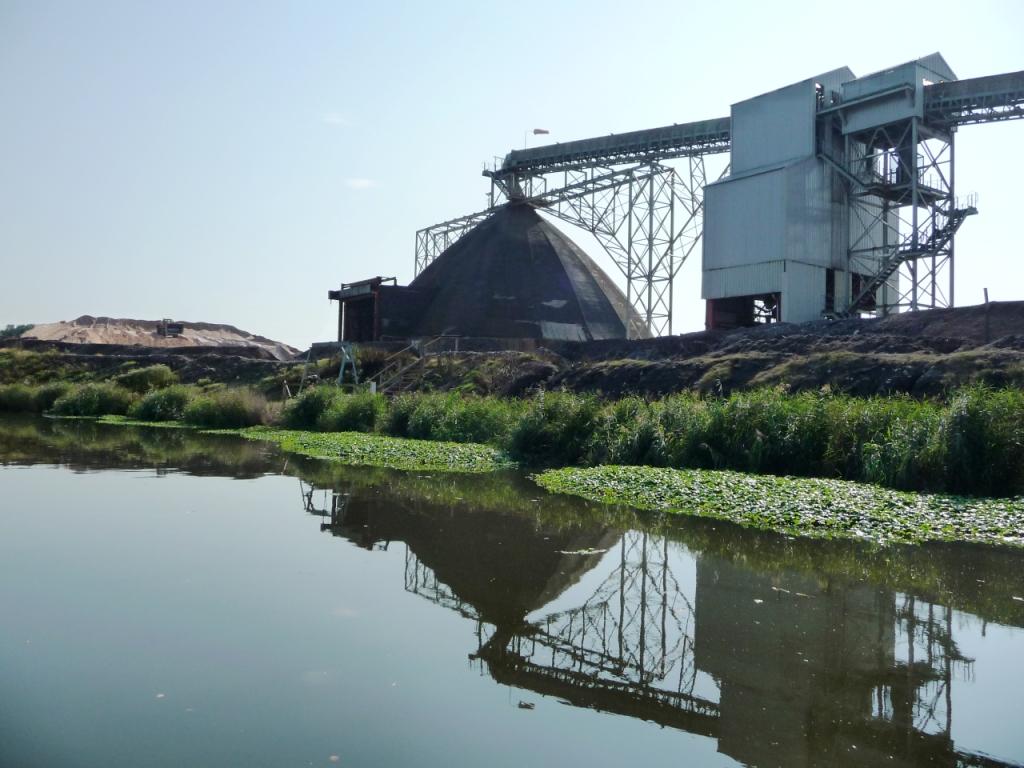
Still a fully operational working mine, producing rock salt for winter road gritting, with a large stored inventory built up each summer ahead of the winter gritting season.
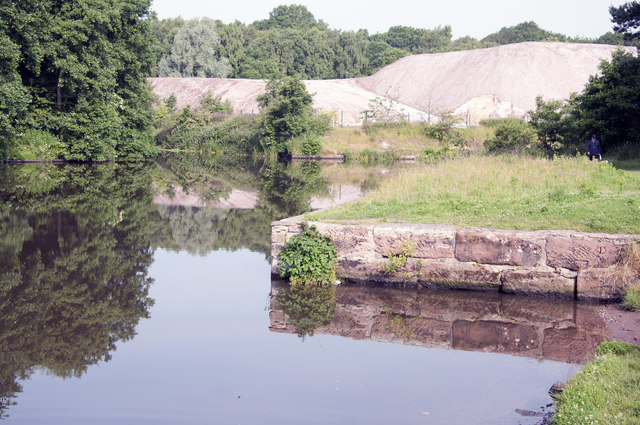
Extensive room-and-pillar underground workings, a surface processing and stockpiling site, and a disused wharf on the River Weaver from the era before road haulage became the dominant means of transporting the salt to market.
Redevelopment
By 2006 the worked-out ground held some 26 million cubic metres of free space, dry, gas-free and at near-constant temperature. DeepStore was established there in 1998 and the National Archives' holdings alone now occupy over 32 km of shelving.
Nearby mines
- Baron's Quay Mine — 4.5 miles (7.3 km) N
- Neumann's Mine — 4.7 miles (7.5 km) N
- New Zealand Mine, Marston — 5.7 miles (9.2 km) N
- Crystal Mine, Marston — 5.8 miles (9.3 km) N
- Lion Salt Works — 5.8 miles (9.3 km) N
Straight-line distance, within 9 miles (15 km). Show on the map.
Recorded claims
Individual factual claims, each attached to the source(s) that support it below. Where sources disagree, both are kept.
- Access shafts (1 and 2 Shaft) sunk in 1844 after rock salt was discovered while prospecting for coal; by 1897 Winsford was England's largest salt producer. 1,2
- Mine closed in 1892 owing to competition from Northwich brine operations; reopened in 1928 after the last Northwich rock salt mine flooded, and has operated continuously since. 1,2,3
- Salt Union Ltd currently produces around 1.5-1.8 million tonnes of rock salt a year, worked to a depth of around 150m, the great majority used as winter road grit. 2,4
- Since 1998, part of the mine's roughly 700-football-pitch void has been used by DeepStore for secure document and archive storage, including material from the National Archives, taking advantage of the workings' constant temperature and humidity. 5,4
- The mine has more than 260 km of tunnels held up by room-and-pillar working that leaves about 25 per cent of the rock salt in place, the mined rock running about 92 per cent salt. 2
Photographs & further reading
BBC News report and video from inside the working mine, including the DeepStore storage area.
View sourceSources
- (primary) Winsford Rock Salt Mine: Its History, Workings and Production — Mine Docs (historic industry document archive)
- (secondary) Winsford Mine — Wikipedia
- (secondary) Rock Salt Mining — Cheshire Brine Subsidence Compensation Board
- (secondary) Inside the UK's largest salt mine — BBC News
- (secondary) History of Our Winsford Salt Mine Facility in Cheshire — DeepStore
- (observational) Winsford Rock Salt Mine, from the River Weaver [3] — Geograph Britain and Ireland
Record created: 20 August 2026 · Last researched: 9 September 2026