 MineArchive
White Grit Mine
| Also known as | West Grit Mine, Whitegritt |
|---|---|
| Location | Shelve, Stiperstones, Shropshire — 52.5708, -3.0075 (exact) |
| Commodity | Lead |
| Type | Metal |
| Worked | 1678–c. 1870 |
| Operators | Whitegritt Mining Company (1760–1785) |
Overview
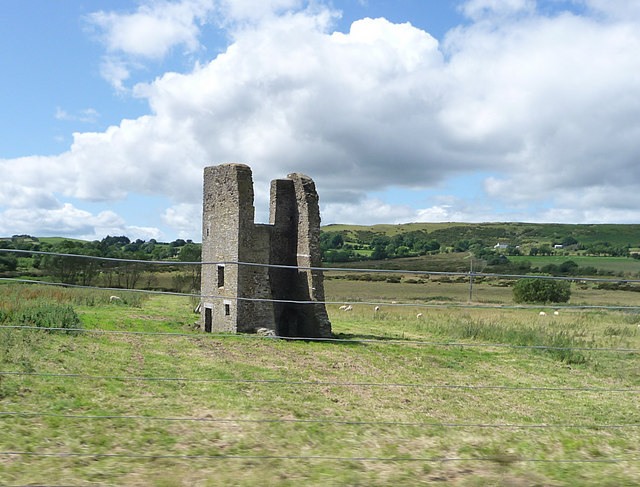
White Grit, part of the Shelve orefield beneath the Stiperstones, claims a genuinely Roman pedigree — a lead pig stamped for the Emperor Hadrian was found there — and preserves what may be one of the oldest Boulton & Watt engine houses left standing anywhere in the country.
History
Lead has been worked intermittently at White Grit since medieval times, and old workings were already recorded there in 1678. Famously, a pig of lead stamped for the Emperor Hadrian was found on the site, evidence of Roman-period working. The mine's main periods of activity ran from around 1830 to 1848, with the wider 'Grit Sett' — fourteen shafts across the district, ten of them at White Grit itself — worked until abandonment around 1870. An engine house dated to 1783, built for a Boulton & Watt engine, survives on the site and is thought to be among the oldest Watt-type engine houses left anywhere in Britain. The engine house owes its existence to the Whitegritt Mining Company, formed by John Lawrence and partners in 1760 on the lease of the Grit and Ladywell mines. In January 1783 Lawrence wrote to Boulton & Watt for an engine to lift water 60 yards from a shaft then only 22 yards deep and drained by a horse gin; the agreement of March 1783 licensed a 30-inch engine, its cylinder cast at Bersham, for a premium of £90 a year, and it was set to work on 10 April. Its career was short: in June 1785 the mine was said to be worked out, the engine was stopped and the company offered it for sale. The ground was split for a time into East Grit (Old Grit) and White Grit (West Grit), and Old Grit, where many veins met, became the centre of activity, with three powder magazines across the site.
Geology
The mine worked lead veins — chiefly galena, alongside steel-grained ore and occasionally white spatous ore — within the Shelve orefield of the Stiperstones hills, a hydrothermal mineralised belt hosted in Ordovician rocks distinct from the granite-related lodes of Cornwall.
Geological setting: Hydrothermal Deposits (well documented example), Veins and Lodes (well documented example)
Workings
The wider Grit Sett included fourteen shafts, ten of them sunk at White Grit itself; an engine house dated to 1783 housed a 30-inch Boulton & Watt beam pumping engine, among the earliest of its type recorded anywhere in the country.
Closure
The wider Grit Sett was abandoned around 1870, following White Grit's main working periods between 1830 and 1848. Wikipedia gives the site's known working life as running to 1935, later than the 1870 abandonment of the Grit Sett recorded elsewhere.
What remains
An engine house of 1783, built for a Boulton & Watt engine, survives on the site and is thought to be among the oldest Watt-type engine houses left anywhere.
The 1783 engine house survives, though the shaft it served is completely blocked; further shaft remains survive across the wider Grit Sett.
Related mines
- Roman Gravels Mine — Lewis & Phillips took the leases of Roman Gravels and the nearby Grit sett together in 1825.
Nearby mines
- Roman Gravels Mine — 1.8 miles (2.8 km) NE
- East Roman Gravels Mine — 2.0 miles (3.3 km) NE
- Pennerley Mine — 2.1 miles (3.4 km) E
- Tankerville Mine — 2.6 miles (4.1 km) NE
- Bog Mine — 2.7 miles (4.4 km) E
Straight-line distance, within 9 miles (15 km). Show on the map.
Recorded claims
Individual factual claims, each attached to the source(s) that support it below. Where sources disagree, both are kept.
- A pig of lead stamped for the Emperor Hadrian was found on the site, evidence of Roman-period working; old workings were already recorded there in 1678. 1,2
- The wider Grit Sett included fourteen shafts, ten of them sunk at White Grit itself; the surviving 1783 engine house housed a 30-inch Boulton & Watt beam pumping engine. 1,3
- In 1760 John Lawrence and partners formed the Whitegritt Mining Company and took the lease of the Grit and Ladywell mines. On 18 January 1783 Lawrence asked Boulton & Watt for an engine to lift water 60 yards, the shaft then being 12 yards below adit (22 yards deep) and drained by a horse gin worked by two horses six hours at a time; the agreement of 27 March 1783, signed for the company by Joshua Blakeway, John Lawrence and Thomas Lloyd Anwyl, licensed a 30-inch engine working a 10.5-inch pump on an 8-foot stroke for a premium of £90 a year, the cylinder cast at Bersham. The engine started on 10 April and, in June 1785, Grit Mine was said to be worked out and the engine stopped, the company offering it for sale. 2
- White Grit is one of a series of 'Grits': the 1650 estate map at Shelve church calls the whole area White Grit, and Old Grit, White Grit and East Grit together made a substantial mine site with three powder magazines; the intersection of many veins at Old Grit, named by the miners The Rider, New Engine, New Britain and Foxholes, made it the centre of activity. The mine lies a mile south-west of Shelve at SO 326 981, with barytes, calcite, lead and zinc, and a known working life from Roman times to 1935. 1,2
- Located at about 52.571 N, 3.007 W. 2
Sources
- (secondary) White Grit Mine - Stiperstones — Stiperstones and Corndon Hill Country Landscape Partnership
- (secondary) White Grit — Wikipedia
- (primary) Leigh Level, Blue, Blue Barn, Dingle, Foxhole, Grit East, Lady, Well, Milne, Rider, Roman, Gravels, White Grit, Wood mine plans (BGS Mine Plans Catalogue) — British Geological Survey / The Coal Authority
Record created: 23 August 2026 · Last researched: 24 September 2026