 MineArchive
Welbeck Colliery
| Location | Meden Vale (formerly Welbeck Colliery Village), Nottinghamshire — 53.2264, -1.1316 (exact) |
|---|---|
| Commodity | Coal |
| Type | Coal |
| Worked | 1912–2010 |
| Maximum depth | 723 yards (NCB, 1967); UK Coal gave both shafts as over 650 metres deep in 2005. |
| Operators | New Hucknall Colliery Company Limited (1912–?), N. H. and B. Collieries Ltd (?–1947), National Coal Board (1947–?), UK Coal (?–2010) |
Overview
A Dukeries colliery sunk on the Welbeck Abbey estate, whose purpose-built village housed its workforce until it was renamed Meden Vale in the 1960s — one of the last deep mines working in England when it finally closed in 2010.
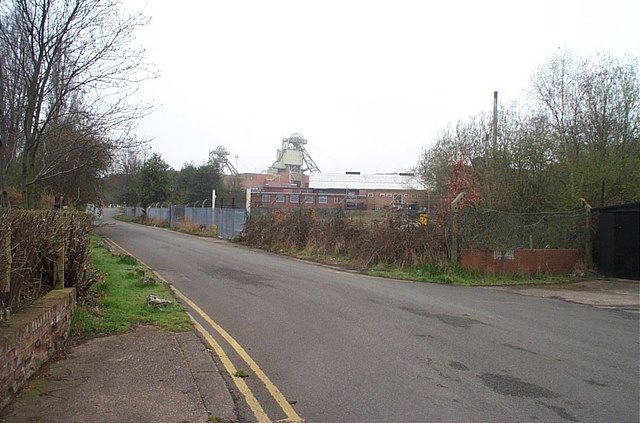
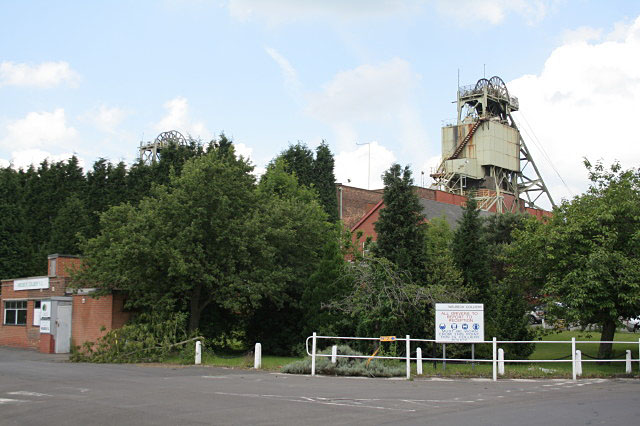
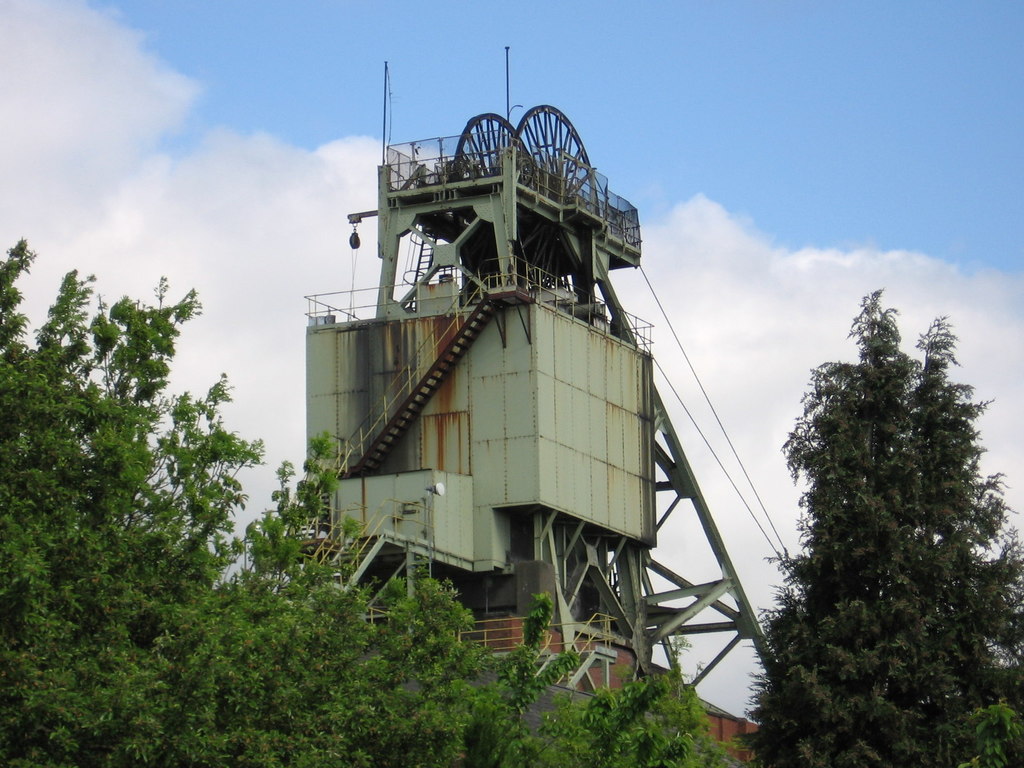
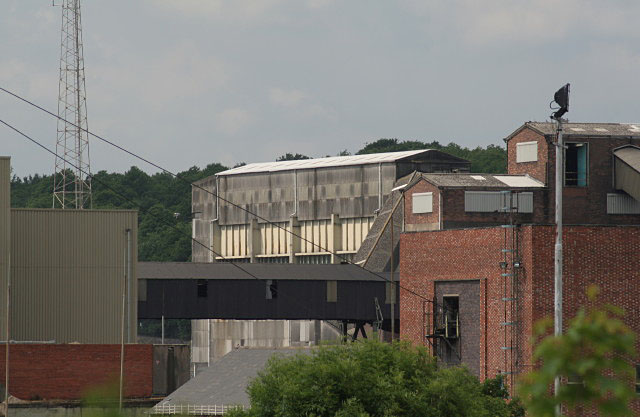
History
Welbeck Colliery was sunk on the Welbeck Abbey estate in the Dukeries area of north Nottinghamshire, its two shafts sunk between 1912 and 1915; the Top Hard seam, in production from 1915, remained the colliery's best seam for over 70 years, worked until around 1992. The colliery belonged to the New Hucknall Colliery Company and then N. H. and B. Collieries until nationalisation in 1947; it employed 1,532 men in 1923, 1,625 in 1933 and 1,397 in 1947, when it raised 533,540 tons. By 1967, after a £1¾ million reorganisation, the shafts were 723 yards deep and 1,300 men produced nearly a million tons a year from the Top Hard. The Deep Soft seam was opened in 1985 and abandoned ten years later, and the Parkgate took over from the Top Hard in 1992. A purpose-built village, originally called Welbeck Colliery Village, was constructed in the 1920s to house the workforce; it was renamed Meden Vale in the late 1960s. At its peak the colliery employed around 1,400 men across two coaling faces, producing about 1.5 million tonnes of coal a year.
The colliery survived long enough to become one of the last deep mines working in England. Geological problems cost it £20 million in 2004 and cut output to 0.8 million tonnes, and in February 2005 UK Coal announced a phased closure; within two weeks the 520-strong workforce had accepted new shift patterns that raised machine time by almost 40 per cent, and the closure was suspended. Under UK Coal ownership, closure was announced in 2007 due to limited remaining reserves; the last coal was produced on 11 May 2010, by which time the workforce had fallen to around 410, most of whom transferred to other UK Coal pits, including Daw Mill near Coventry — a daily commute of around 140 miles for some. The headstocks were demolished by controlled explosion in April 2011. Across the colliery's working life, 84 men were killed both above and below ground. Two falls of roof, in February 1924 and June 1946, each killed two men (see Disasters, below).
Geology
Coal Measures of the concealed Nottinghamshire coalfield: the Top Hard seam was worked from 1915 to 1992, the Deep Soft from 1985 for about ten years, and the Parkgate from 1992; geological faults disrupted production in the colliery's last years.
Workings
Worked from two shafts sunk 1912-15, over 650 metres deep, with the Top Hard seam, in production from 1915 until around 1992, the colliery's principal and longest-worked seam; the Deep Soft was worked from 1985 and the Parkgate from 1992. At its peak, two coaling faces worked simultaneously, and the rail loading bunker sent much of the coal to Ratcliffe power station.
Closure
Closure was announced in 2007 due to limited remaining reserves by one account, or earmarked in 2005 by another; the last coal was produced on 11 May 2010 after 360,000 tonnes in the last six weeks from its last face. Of the 410 men, 70 stayed to salvage £6 million of equipment and seal the mine, 120 transferred to other pits and 60 left the industry. The headstocks were demolished by controlled explosion in April 2011.
What remains
The former colliery site has been redeveloped, including a biogas anaerobic digestion facility opened in 2017 and a nearby solar farm, as the beginning of an intended employment park. On 31 December 2011 two security guards were badly injured in an explosion confined to a surface electrical substation on the site.
Headstocks demolished by controlled explosion in April 2011; no other specific surviving structures are recorded.
Redevelopment
A biogas anaerobic digestion plant, feeding methane into the gas grid, was built on the site in 2017 as the first stage of an intended employment park, with a solar farm nearby.
Related mines
- Kellingley Colliery — Both were UK Coal deep mines after privatisation in 1994.
- Shirland Colliery — N. H. and B. Collieries Ltd pits.
Nearby mines
- Warsop Main Colliery — 2.5 miles (3.9 km) SW
- Langwith Colliery — 3.2 miles (5.2 km) W, Derbyshire
- Thoresby Colliery — 3.7 miles (5.9 km) SE
- Shirebrook Colliery — 3.7 miles (6.0 km) SW, Derbyshire
- Creswell Colliery — 4.1 miles (6.6 km) NW, Derbyshire
Straight-line distance, within 9 miles (15 km). Show on the map.
Disasters & major incidents
-
Welbeck Colliery roof fall, 1924
15 February 1924 · Collapse / Roof Fall · 2 fatalities
On 15 February 1924 two men were killed by a fall of roof at Welbeck Colliery, in Nottinghamshire, early in the morning shift.
What's uncertain
Points where sources disagree or the record could not be settled; both accounts are kept. All open questions in the archive.
- UK Coal earmarked the pit for closure in 2005; at the end, of 410 miners, 70 remained to recover equipment, 120 transferred to other pits and 60 left the industry. (disputed) 5
Recorded claims
Individual factual claims, each attached to the source(s) that support it below. Where sources disagree, both are kept.
- The colliery's two shafts were sunk between 1912 and 1915; the Top Hard seam, its best and longest-worked, was in production from 1915 until around 1992. 1
- At its peak the colliery employed around 1,400 men across two coaling faces, producing about 1.5 million tonnes of coal a year. 1,2
- A total of 84 men were killed both above and below ground across the colliery's working life. 1
- Closure was announced in 2007 due to limited reserves; the last coal was produced on 11 May 2010, with most of the roughly 410-strong remaining workforce transferring to other UK Coal pits including Daw Mill, a commute of around 140 miles for some. 2
- The colliery's headstocks were demolished by controlled explosion in April 2011. 2
- Owned by the New Hucknall Colliery Co. and N. H. and B. Collieries Ltd before the NCB in 1947; employment 1,532 in 1923, 1,625 in 1933, 1,613 in 1940 and 1,397 in 1947, when output was 533,540 tons. 3
- Sunk 1912-15 and 723 yards deep; after a £1¾ million reorganisation, 1,300 men produced nearly 1,000,000 tons from the Top Hard seam (NCB leaflet, April 1967). 3
- The Top Hard seam was worked between 1915 and 1992 and the Parkgate from 1992; the Deep Soft was first accessed in 1985 and abandoned ten years later; both shafts are over 650 metres deep. 4
- After losing £20m in 2004 on geological problems, UK Coal announced phased closure in February 2005; it was suspended when the 520-strong workforce accepted new shift patterns raising machine utilisation by almost 40 per cent. 4
- UK Coal earmarked the pit for closure in 2005; at the end, of 410 miners, 70 remained to recover equipment, 120 transferred to other pits and 60 left the industry. (disputed) 5
- Healey Hero's register for Welbeck names 84 men killed, including George Seal and Richard Henry Straw in a fall of roof on 15 February 1924 and Samuel Rose and Bertie Grainger in a fall of roof on 14 June 1946. 6
- Two security guards were badly injured in an explosion confined to a surface electrical substation at the colliery site on 31 December 2011. 2
- Demolition was under way by the end of 2010 and the headstocks came down in the following months. 7
Photographs & further reading
Photographic report from the surface buildings during demolition after closure.
View sourceOwners, employment and output figures, the 1967 NCB description and a partial list of those killed.
View sourceRegister of the 84 men killed at the colliery, with ages, addresses, inquests and causes.
View sourceSources
- (observational) My History of Welbeck Colliery — Nottinghamshire Mining Museum
- (secondary) Meden Vale — Wikipedia
- (primary) Durham Mining Museum - Welbeck Colliery — Durham Mining Museum
- (primary) Welbeck Reprieve (UK Coal press release, 24 February 2005) — Healey Hero
- (secondary) Century Of Mining Ends At Welbeck Colliery — Healey Hero
- (secondary) Welbeck Colliery fatalities — Healey Hero
- (observational) Report - Welbeck Colliery, Nottinghamshire - December 2010 — 28DaysLater
Record created: 27 August 2026 · Last researched: 21 September 2026