 MineArchive
Creswell Colliery
| Location | Creswell, Derbyshire — 53.2563, -1.2180 (exact) |
|---|---|
| Commodity | Coal |
| Type | Coal |
| Worked | From September 1894 (sinking)–20 September 1991 |
| Maximum depth | Coal reached at around 450 yards |
| Operators | Bolsover Colliery Company (1894–1947), National Coal Board (1947–1991) |
Overview
A Bolsover Colliery Company pit on the Derbyshire/Nottinghamshire border, remembered above all for a conveyor-belt fire on 26 September 1950 that killed 80 men — one of the worst coal-mining disasters in Britain since the Second World War — and for the purpose-built model village raised for its workforce.
History
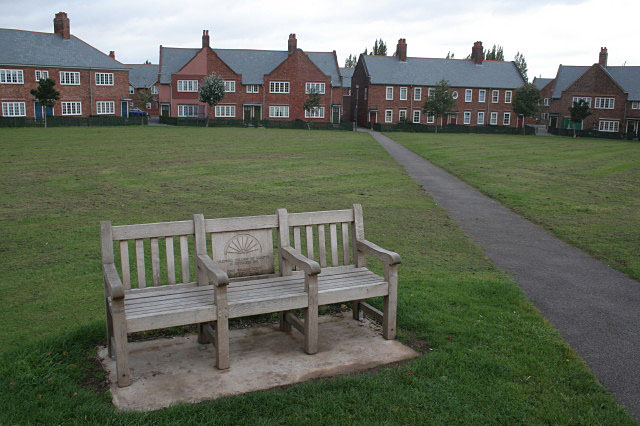
Emerson Muschamp Bainbridge, a Northumberland mine owner, founded the Bolsover Colliery Company and secured leases from the Duke of Portland, Earl Manvers and Lord Savile to develop a group of Derbyshire and Nottinghamshire pits; Creswell's shaft sinking began in September 1894, reaching coal at around 450 yards and starting production in 1897. A model village of a double ring of houses around a large green was built for the workforce from 1896. By 1933 Bolsover's six collieries, including Creswell, employed 9,369 men and raised 4.5 million tons of coal a year between them; Creswell itself set a company record in July 1901 when 3,001 tons were raised to the surface in a single day.
The colliery worked the Top Hard, Waterloo and High Hazel seams. It passed to the National Coal Board on the 1947 nationalisation of the coal industry. On 26 September 1950, a fire in the High Hazel seam's conveyor system killed 80 men — the worst disaster in the colliery's history and one of the deadliest British mining accidents of the post-war era (see Disasters, below). Creswell continued working for four more decades before finally closing, under British Coal ownership, on 20 September 1991.
Geology
Creswell worked the Top Hard, Waterloo and High Hazel seams of the North Derbyshire coalfield, reaching coal at around 450 yards depth after sinking began in 1894.
Workings
Coal was hauled to the surface along intake roadways served by a trunk belt conveyor system; it was a fault in this system, at a transfer point in the South Western Main Intake Haulage Road, that caused the colliery's 1950 disaster.
Closure
Creswell Colliery closed under British Coal Corporation ownership on 20 September 1991, after 94 years of continuous production.
What remains
The colliery site is now partly occupied by an industrial estate and partly used as a mine-water pumping station serving the wider North Derbyshire coalfield. Creswell's model village, built for the workforce from 1896, survives and is a recognised heritage asset. A memorial to the 80 men killed in the 1950 fire stands in Skinner Street Cemetery, Creswell, and a separate memorial garden with a sundial, on land donated by the Duke of Devonshire, was opened in Creswell churchyard in 1953.
The purpose-built model village — a double ring of houses around a large octagonal green, built from 1896 to house the colliery's workforce — survives largely intact and is a recognised heritage asset in its own right.
Related mines
- Bolsover Colliery — Sunk by the same company two to five years after Bolsover, on leases of the Duke of Portland’s coal that Bainbridge acquired together in 1888, and given a larger model village on the New Bolsover pattern.
- Langwith Colliery — After Langwith stopped producing coal in 1978 its shafts were kept to pump water, specifically to stop Creswell colliery flooding — a physical connection through the water in the ground rather than a shared owner.
Nearby mines
- Whitwell Colliery — 1.8 miles (2.8 km) N
- Langwith Colliery — 1.9 miles (3.0 km) S
- Oxcroft Colliery — 3.0 miles (4.9 km) W
- Steetley Colliery — 3.6 miles (5.7 km) NE, Nottinghamshire
- Warsop Main Colliery — 3.6 miles (5.9 km) SE, Nottinghamshire
Straight-line distance, within 9 miles (15 km). Show on the map.
Disasters & major incidents
-
Creswell Colliery fire, 1950
26 September 1950 · Fire · 80 fatalities
A conveyor-belt fire at a transfer point in Creswell Colliery's High Hazel seam killed 80 men by carbon monoxide poisoning on 26 September 1950, after fire cut off the only intake route and toxic smoke filled the sole usable return airway — one of the worst British coal-mining disasters of the post-war era.
Culture
- Tommy Mitchell and Creswell Colliery (Sports)
Tommy Mitchell worked at this colliery as a face worker before playing for Derbyshire.
Recorded claims
Individual factual claims, each attached to the source(s) that support it below. Where sources disagree, both are kept.
- Emerson Muschamp Bainbridge founded the Bolsover Colliery Company and secured leases from the Duke of Portland, Earl Manvers and Lord Savile; Creswell's shaft sinking began in September 1894, reaching coal at around 450 yards and starting production in 1897. 1
- By 1933 the Bolsover Colliery Company's six collieries, including Creswell, employed 9,369 men and raised 4.5 million tons of coal a year between them; Creswell itself set a company record in July 1901, raising 3,001 tons to the surface in a single day. 1
- Creswell worked the Top Hard, Waterloo and High Hazel seams and passed to the National Coal Board on the 1947 nationalisation of the coal industry. 1
- A model village of a double ring of houses around a large octagonal green was built from 1896 to house Creswell Colliery's workforce, and survives today as a recognised heritage asset. 2
- Creswell Colliery closed under British Coal Corporation ownership on 20 September 1991. 2
- A memorial to the 80 men killed in the 1950 fire stands in Skinner Street Cemetery, Creswell, and a separate memorial garden with a sundial, on land donated by the Duke of Devonshire, opened in Creswell churchyard in 1953. 3
Sources
- (secondary) Bolsover Colliery Company — Wikipedia
- (secondary) Creswell Colliery — Northern Mine Research Society
- (secondary) A Tragic Loss of 80 Lives – A Village in Deep Mourning — Nottinghamshire Mining Museum
Record created: 27 August 2026 · Last researched: 27 August 2026