 MineArchive
Shirland Colliery
| Location | Hallfield Gate, Shirland, north-west of Alfreton, Derbyshire — 53.1177, -1.4055 (exact) |
|---|---|
| Commodity | Coal |
| Type | Coal |
| Worked | 1864–May 1965 |
| Maximum depth | 156 yards (143 m), the shafts to the Blackshale seam |
| Operators | Shirland Colliery Company (1866–1877), South Yorkshire Miners' Association (1875–1877), Benton and Woodiwiss (1877–1890), Blackwell Colliery Company (1890–1944), N. H. and B. Collieries Ltd (1944–1947), National Coal Board (1947–1965) |
Overview
A colliery at Hallfield Gate, Shirland, north-west of Alfreton, sunk in 1864-65 to the Blackshale seam and worked for a hundred years. The South Yorkshire Miners' Association bought it in 1875, a venture that failed within two years; the Blackwell Colliery Company owned it from about 1890, and production ceased in May 1965.
History
In July 1864 tenders were invited for sinking a pair of shafts twelve feet across to the Blackshale seam at Shirland, then expected at 120 yards; sunk by Beavan and Bailey in 1864-65, they reached the Blackshale at 156 yards. The Shirland Colliery Company took the pit over in 1866. In 1875 the South Yorkshire Miners' Association, through a Mr Dallas and a company of colliers, bought it for £72,000 and offered the managership to a union man, Philip Casey. The venture failed: in June 1876 miners who had stopped work resolved on a new price list, lower than the old, the company was wound up in the Chancery Division in July 1877, and Benton and Woodiwiss, railway contractors, bought the colliery that year after a Mr Kympton had reopened it. Water broke in during 1888 and the pit stood for sixteen weeks until a Davy pump drained it.
The Blackwell Colliery Company bought it in 1890 (1888 by another account). In 1894 it employed 523 across three pits, No. 1 in the Silkstone, No. 2 in the Deep Hard and No. 3 in the Tupton, and thirty beehive ovens made coke from Low Main and Silkstone coal. The colliery had a miners' welfare, a bowling green and a band, and many of its miners lived at St Leonard's Place. It employed 476 in 1915, and in 1944 it passed to NH and B Collieries, the amalgamation of the New Hucknall and Blackwell companies.
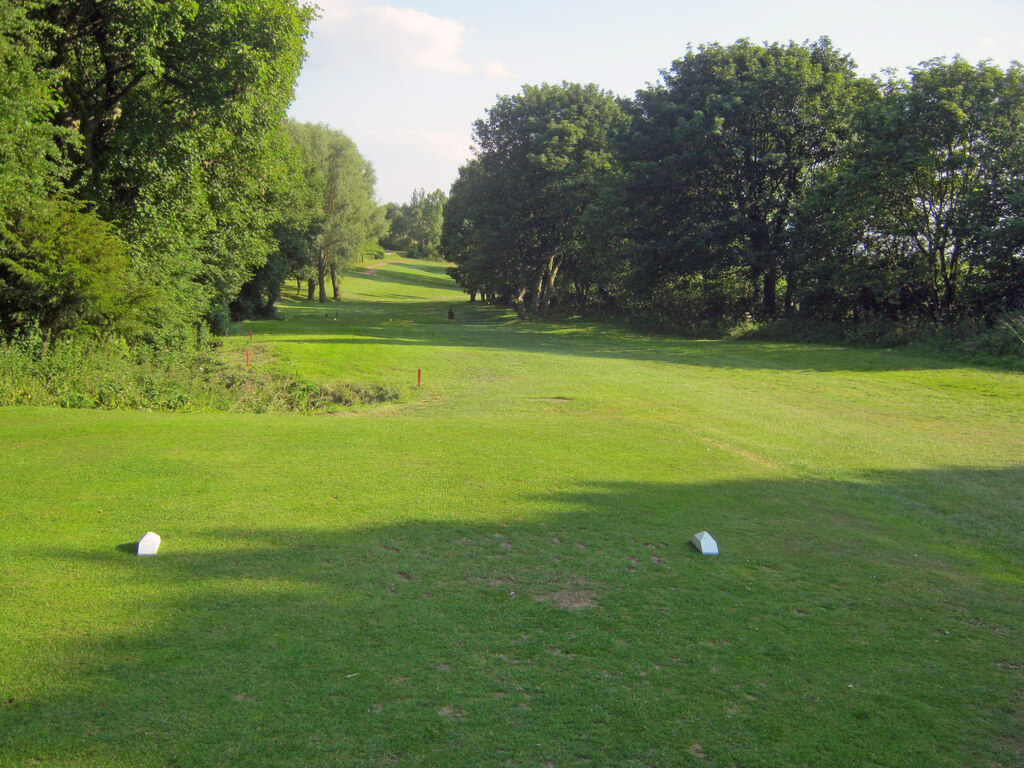
Under the National Coal Board it raised 157,060 tons with 467 men in 1947, its highest output, 295,770 tons, in 1957 and had its largest workforce, 545, in 1961. The Deep Hard was reopened by drifts from the surface in 1945, and in August 1958 the Armstrong airbreaker, compressed-air shotfiring, was introduced on the Deep Hard and Deep Soft faces. Production ceased in May 1965 after a hundred years, and the last workings were abandoned on 24 March 1966. A golf course now covers the site of the waste tip.
Geology
Derbyshire coalfield: the Blackshale or Silkstone, Deep Hard, Deep Soft, Tupton or Low Main, Threequarter and Yard seams, dipping about 1 in 8.
Workings
Two shafts 14 ft across and 40 yards apart, sunk 1864-65 to the Blackshale at 156 yards; Nos. 1 to 4 pits in the 1890s; drifts to the Deep Hard (1945) and headings from the Deep Soft outcrop.
Closure
Production ceased in May 1965; the Deep Hard plans are dated 24 March 1966.
What remains
Unknown.
Redevelopment
A golf course occupies the site of the colliery's waste tip.
Related mines
- Alfreton Colliery — Blackwell Colliery Company pits.
- B Winning Colliery — Blackwell Colliery Company pits.
- Blackwell Colliery — Blackwell Colliery Company pits.
- Welbeck Colliery — N. H. and B. Collieries Ltd pits.
Nearby mines
- Alfreton Colliery — 1.5 miles (2.5 km) SE
- Wingfield Manor Colliery — 1.6 miles (2.6 km) S
- Blackwell Colliery — 2.3 miles (3.7 km) E
- Swanwick Colliery — 2.3 miles (3.7 km) S
- Parkhouse Colliery — 3.2 miles (5.1 km) N
Straight-line distance, within 9 miles (15 km). Show on the map.
Recorded claims
Individual factual claims, each attached to the source(s) that support it below. Where sources disagree, both are kept.
- Shirland Colliery was sunk in 1864-65 by Beavan and Bailey, its shafts reaching the Blackshale seam at 156 yards. 1,2
- The South Yorkshire Miners' Association bought the colliery in 1875 for £72,000; Benton and Woodiwiss bought it in 1877. 1
- The Shirland Colliery Company Ltd was wound up in the Chancery Division in July 1877. 2
- The Blackwell Colliery Company owned Shirland from 1890, or 1888 by another account, until 1944. 3,1
- Shirland employed 523 in 1894 and 476 in 1915; in 1947 it raised 145,000 tons with 457 employed. 3
- Its highest output was 295,770 tons in 1957 and its largest workforce 545 men in 1961. 1
- Production at Shirland ceased in May 1965. 4,1,2
- Shirland's Deep Hard workings were abandoned on 24 March 1966. 5
Photographs & further reading
Pits, owners, employment and seams, with those killed.
View sourceBob Bradley's notes on the shafts, owners, seams, output and managers.
View sourceDerbyshire Times notices of the sinking, an 1876 price list and the 1877 winding-up.
View sourceSources
- (secondary) 1965 - Page 3 (Bob Bradley) — Healey Hero
- (secondary) Shirland - oldminer.co.uk — oldminer.co.uk
- (primary) Shirland Colliery — Durham Mining Museum
- (secondary) NCB Collieries - England (Northern Mine Research Society) — Northern Mine Research Society
- (primary) BGS mine plan: Shirland, Deep Hard, abandoned 24 March 1966 — BGS / Mining Remediation Authority mine plans
Record created: 4 October 2026 · Last researched: 4 October 2026