 MineArchive
Swanwick Colliery
| Location | Swanwick, south of Alfreton, Derbyshire — 53.0866, -1.3841 (approximate) |
|---|---|
| Commodity | Coal |
| Type | Coal |
| Worked | 1833 (first shaft)–September 1968 |
| Maximum depth | 393 yards (New shaft) |
| Operators | William Palmer Morewood (?–1857), C. R. P. Morewood, R. C. A. Palmer-Morewood, Swanwick Collieries Ltd (?–1947), National Coal Board (1947–1968) |
Overview
A Palmer-Morewood colliery south of Alfreton, its shafts sunk from 1833 and the colliery proper in 1866, worked through a dozen seams down to the Black Shale and closed in September 1968.
History
Swanwick Colliery lay south of Alfreton, north-east of Swanwick village and north-west of Somercotes. Coal here goes back to the estate of Charles Turner of Swanwick, who died without an heir in 1736; his executors formed the Swanwick Coal Co. After enclosure the Palmer-Morewood family began mining on what was then Alfreton Common, and they and the Swanwick Colliery Co. sank a string of shafts: the Engine in 1833, the Old in 1851, White's Lane in 1853 and the Deep in 1856. White's Directory of 1857 describes the colliery as the property of William Palmer Morewood, its coal so good that inferior coal was sold under its name.
The colliery itself is dated to a sinking by the Morewoods in 1866, and White's Lane and the Deep were both taken down to the Deep Hard seam in 1867. The Midland Railway opened a branch to the colliery in 1874. The owners were C. R. P. Morewood and then R. C. A. Palmer-Morewood, later Swanwick Collieries Ltd. The Swanwick Common shaft was sunk in 1903, and the New shaft from 1914 went through every seam to below the Black Shale.
In 1923 the Deep Pit employed 1,150 and the Old Pit 250. Nationalised in 1947 with 989 men, the colliery reached its highest output, 472,128 tons, in 1955, and its most men, 1,283, in 1963-64. Wingfield Manor was merged with it in November 1963. By 1967 it was fully mechanised, with 800 men raising over 400,000 tons from the Yard and Black Shale seams.
Swanwick closed in September 1968, 102 years after the 1866 sinking. Its last manager was Ernest Hopkins.
Geology
Derbyshire Coal Measures, worked seam by seam: the Top Hard, about five feet thick in 1857 and 7 feet 11 inches with its partings at the Old Pit; the Waterloo, Deep Soft and Deep Hard; then the Low Main, Three Quarter, Kilburn and Yard; and last the Black Shale, at about 359 metres. The Dunsil and Coombe seams were also worked, and the ground at the Old Colliery was heavily faulted.
Workings
A complex of shafts: the Engine (1833), the Old (1851, 120 yards to the Top Hard and 178 to the Waterloo), White's Lane (1853), the Deep (1856, 295 yards to the Soft coal), the Common (1903) and the New (from 1914, 393 yards). The Damstead pit had three shallow shafts. In 1857 an eight-horsepower engine wound the coal, a forty-horsepower engine pumped, and a rope-worked incline took the waggons to a wharf at Sleet Moor. Seams were closed in turn: the Deep Soft in 1939, the Low Main in 1959, the Kilburn in 1964.
Closure
Production ceased in September 1968, when the colliery raised 158,386 tons in its last year. The Yard seam was worked to the end; the colliery had worked the Black Shale until closure.
What remains
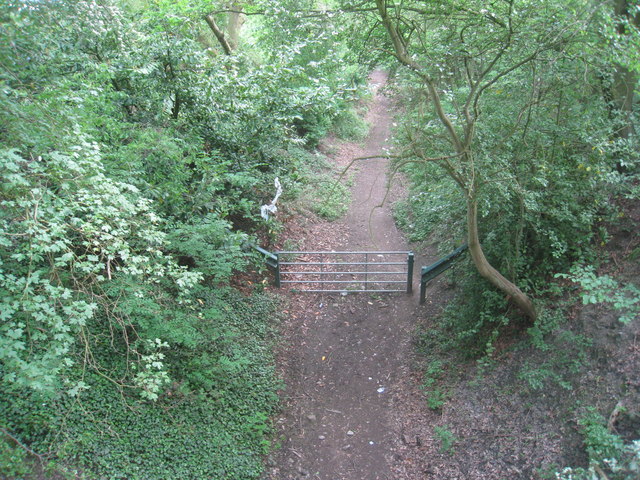
The Midland Railway's Swanwick Colliery branch, opened in 1874 and closed in 1971, survives as a path through woodland near Riddings, and its junction is a station on the Midland Railway - Butterley heritage line.
Redevelopment
Unknown.
Nearby mines
- Alfreton Colliery — 1.1 miles (1.8 km) N
- Pye Hill Colliery — 2.5 miles (4.1 km) SE, Nottinghamshire
- Ripley Colliery — 2.9 miles (4.7 km) S
- Crich Limestone Quarries — 4.1 miles (6.6 km) W
- Underwood Colliery — 4.3 miles (6.9 km) SE, Nottinghamshire
Straight-line distance, within 9 miles (15 km). Show on the map.
Disasters & major incidents
-
Swanwick Colliery cage accident, 1904
1904 · Winding / Shaft Accident · 3 fatalities
On 29 March 1904 a cage carrying six men down the shaft at Swanwick Colliery, Derbyshire, stuck fast in its wooden conductors. Three of the men were thrown out and fell more than seventy yards to the shaft bottom; the other three held on and were rescued about an hour later.
What's uncertain
Points where sources disagree or the record could not be settled; both accounts are kept. All open questions in the archive.
- The New shaft was 393 yards (359 metres) deep. (disputed) 2
- The second shaft, of 1916, was 430 yards deep. (disputed) 1
Recorded claims
Individual factual claims, each attached to the source(s) that support it below. Where sources disagree, both are kept.
- Swanwick Colliery was sunk in 1866 by Morewood. 1,2
- The Swanwick Engine shaft was first sunk in 1833, the Old in 1851 to the Top Hard, White's Lane in 1853 and the Deep in 1856. 3
- In 1857 the colliery was the property of William Palmer Morewood. 3
- The New shaft was 393 yards (359 metres) deep. (disputed) 2
- The second shaft, of 1916, was 430 yards deep. (disputed) 1
- In 1923 the Deep Pit employed 1,150 and the Old Pit 250. 1
- The highest output was 472,128 tons in 1955 with 1,169 men, and the highest manpower 1,283 in 1963-64. 2
- Wingfield Manor Colliery was merged with Swanwick in November 1963. 2
- Swanwick Colliery was closed in September 1968, after 102 years, producing 158,386 tons in 1968/69. 2
- The Black Shale seam was mined until 1968, when Swanwick Colliery closed; the last colliery manager was Ernest Hopkins. 3
- Plans of the Kilburn seam at Swanwick record its abandonment on 13 September 1964. 4
- The Swanwick Colliery branch was opened in 1874 by the Midland Railway and closed in 1971. 5
Photographs & further reading
Bob Bradley's notes on the colliery: shaft positions and depths, seams worked, manpower year by year, agents and managers.
View sourceThe local history society's account of the Swanwick shafts from 1833 to 1914, with White's 1857 description.
View sourceOwners, output and employment for the Old, Deep and New Pits, and the names of those killed at the colliery.
View sourceSources
- (primary) Durham Mining Museum - Swanwick Colliery (UK) — Durham Mining Museum
- (secondary) Swanwick Colliery (North Derbyshire) was closed after 102 years - Bob Bradley, Healey Hero — Healey Hero
- (secondary) Swanwick Colliery, Swanwick - Somercotes History Society — Somercotes Local History Society
- (primary) BGS mine plans: Swanwick (Kilburn seam, abandoned 13 Sep 1964) — British Geological Survey / Mining Remediation Authority
- (observational) The former Swanwick Colliery line (Geograph, Jonathan Thacker, 2012) — Geograph
Record created: 1 October 2026 · Last researched: 1 October 2026