 MineArchive
Trimdon Grange Colliery
| Location | Trimdon Grange, 7½ miles south-east of Durham, County Durham — 54.7150, -1.4286 (approximate) |
|---|---|
| Commodity | Coal |
| Type | Coal |
| Worked | May 1845–16 February 1968 |
| Maximum depth | A fatality report of 1905 records a fall of 144 fathoms (about 263 m) down the shaft, so the workings had reached at least that depth by then; a sinker killed in 1850 fell about 85 fathoms (155 m) in the shaft then being sunk. |
| Operators | Walter Scott Ltd. (1880–1937), East Hetton Collieries Ltd. (1937–1947), National Coal Board (1947–1968) |
Overview
A County Durham colliery sunk in 1845 on the southern edge of the Durham coalfield, worked through six seams and three changes of ownership over 123 years, and remembered above all for the explosion of 16 February 1882, which killed 74 men and boys and was commemorated within days in a ballad by the pitman poet Tommy Armstrong. The colliery outlived the disaster by 86 years, closing — by coincidence — on the same date in 1968.
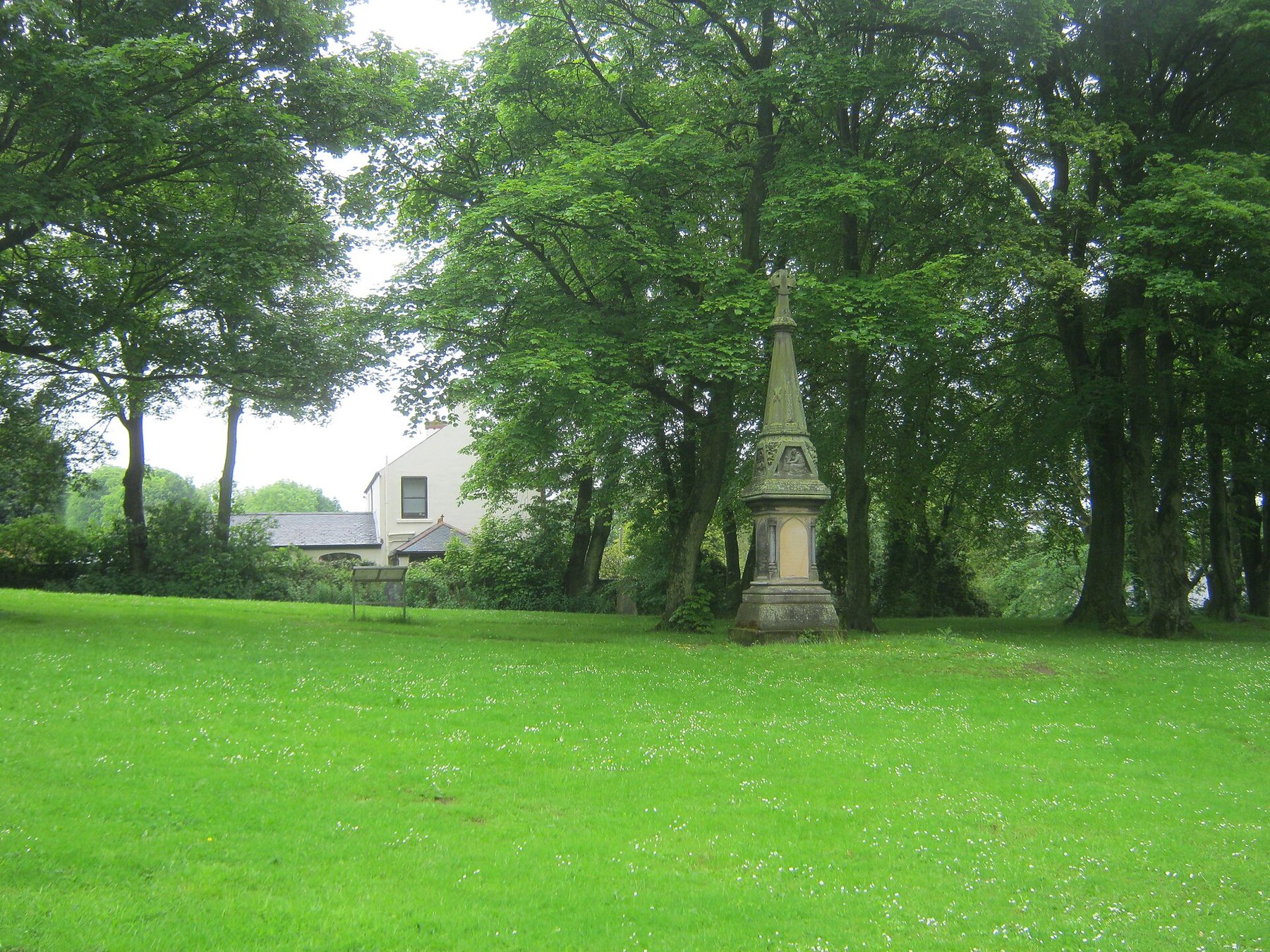
History
Sinking began on 25 May 1845 under Joseph Smith, and the Five Quarter seam was proved and opened out in September of the same year; the Main seam followed in 1847. The colliery passed to Matthew Forster in 1852 and was worked through the 1850s by the South Hetton company. Sinking resumed in 1863 to reach the Low Main, and a new shaft was sunk to the Harvey seam in 1872, opened out the following year. Through all this the pits were worked irregularly and, in the words of a contemporary account, were 'alike unprofitable to owners and unsatisfactory to the men employed'.
In August 1880 Walter Scott, a Newcastle contractor, bought the colliery together with the adjoining East Hetton (Kelloe) pit two miles away, to which Trimdon Grange was connected underground. He invested heavily in new plant, and by 1882 some 700 men and boys were in constant employment across three pits working a three-shift day. The Harvey seam coal was sold on the London market as South Hartlepool Wallsend.
The explosion of 16 February 1882 killed 74, including rescuers overcome by afterdamp that travelled through the connection into the East Hetton workings (see Disasters, below). The colliery reopened and kept growing: employment peaked at 1,430 in 1921, of whom 1,021 worked below ground. It was temporarily closed in February 1925, and closed altogether from about 1930 to 1937 during the depression, the Five Quarter, Hutton, Low Main and Main seams being formally abandoned on 23 August 1938. East Hetton Collieries Ltd. took over in 1937 and the National Coal Board on nationalisation in 1947, after which the pit worked the Busty and Tilley seams. Coking ceased in 1962 and the colliery closed on 16 February 1968.
Geology
Trimdon Grange stood on the southern edge of the Durham Coal Measures, close to where they pass beneath the Permian Magnesian Limestone escarpment. The colliery worked an unusually long list of named seams over its life — Five Quarter, Main, Low Main, Harvey, Busty, Hutton, Maudlin, Brockwell and Tilley — moving progressively deeper and, in its final NCB decades, concentrating on the Bottom Busty and Tilley.
Geological setting: Sedimentary Beds and Seams (well documented example)
Workings
A group of three pits, the original 1845 shaft to the Low Main and the New Pit of 1872 to the Busty among them, connected underground to the East Hetton (Kelloe) colliery two miles away — a connection that carried afterdamp between the two mines in 1882 and killed rescuers on the far side of it. From 1923 the shaft at neighbouring Trimdon Colliery served as part of the downcast for Trimdon Grange. The Harvey seam was worked longwall by 1882, with the Pit Narrow Board district on the northern edge of a large goaf. Coke ovens operated on the site until 1962.
Closure
Closed by the National Coal Board on 16 February 1968, 86 years to the day after the explosion. 692 people were still employed at the colliery in its final year. Following closure some of the terraced streets built for the pit were demolished and replaced with later housing.
What remains
Nothing of the colliery survives above ground. The former colliery site, known as Trimdon Grange Quarry, is now a nature reserve protected by Durham Wildlife Trust, and an adjoining 8.9-hectare reclamation area at NZ36423556 has been planted as publicly accessible woodland. The village itself remains, its pit terraces partly replaced by late 20th-century housing.
None. The site has been reclaimed as nature reserve and woodland.
Redevelopment
The colliery site was reclaimed after 1968 and is now split between the Trimdon Grange Quarry nature reserve and planted woodland; a small industrial estate occupies part of the wider area.
Related mines
- East Hetton Colliery — Linked underground in 1880, both owned by Walter Scott; the man who survived the 1897 East Hetton flood had been the last brought out alive at Trimdon Grange in 1882.
- Trimdon Colliery — From 1923 the Trimdon Colliery shaft served as part of Trimdon Grange's downcast, and their seams were abandoned on one plan in 1938; both were Walter Scott pits.
Nearby mines
- Trimdon Colliery — 0.5 miles (0.7 km) E
- Deaf Hill Colliery — 1.0 miles (1.6 km) NE
- East Hetton Colliery — 1.6 miles (2.6 km) NW
- Thornley Colliery — 1.7 miles (2.7 km) N
- Raisby Hill Quarry — 1.8 miles (2.9 km) W
Straight-line distance, within 9 miles (15 km). Show on the map.
Disasters & major incidents
-
Trimdon Grange Colliery boiler explosion, 1857
20 September 1857 · Machinery · 2 fatalities
On Sunday 20 September 1857 a surface boiler burst at Trimdon Grange Colliery, in County Durham, killing two young workers, one of them a boy of sixteen. -
Trimdon Grange Colliery Explosion, 1882
16 February 1882 · Explosion · 74 fatalities
An explosion in the Harvey seam of Trimdon Grange Colliery on the afternoon of 16 February 1882 killed 74 men and boys, among them rescuers overcome by afterdamp that travelled through the underground connection into the neighbouring East Hetton (Kelloe) colliery.
Culture
- The Trimdon Grange Explosion (Music)
The song is about the explosion at this colliery, and names three of its dead.
What's uncertain
Points where sources disagree or the record could not be settled; both accounts are kept. All open questions in the archive.
- A 1905 fatality report records a fall of 144 fathoms (about 263 m) down the shaft, the only located indication of the colliery's shaft depth. (uncertain) 1
Recorded claims
Individual factual claims, each attached to the source(s) that support it below. Where sources disagree, both are kept.
- Sinking began on 25 May 1845 under Joseph Smith; the Five Quarter seam was proved and opened out in September the same year, and the Main seam in 1847. 1
- Walter Scott, a Newcastle contractor, bought the colliery in August 1880 together with the adjoining East Hetton (Kelloe) colliery. 2,1
- Employment peaked at 1,430 in 1921, of whom 1,021 worked below ground. 1
- The colliery closed on 16 February 1968, the 86th anniversary of the 1882 explosion, with 692 people still employed. 1
- The colliery was temporarily closed in February 1925 and stood closed from about 1930 until 1937; the Five Quarter, Hutton, Low Main and Main seams were formally abandoned on 23 August 1938. 1
- A 1905 fatality report records a fall of 144 fathoms (about 263 m) down the shaft, the only located indication of the colliery's shaft depth. (uncertain) 1
- The former colliery site, Trimdon Grange Quarry, is now a nature reserve protected by Durham Wildlife Trust. 3
Photographs & further reading
The fullest record of the colliery: owners from 1845 to 1968, year-by-year employment and output, seams worked, and a name-by-name list of those killed there, the 1882 victims included.
View sourcePhotographs and inscription of the Grade II listed memorial at St Helen's Church, Kelloe, which names the 26 victims buried there.
View sourceWoodland Trust entry for the 8.9-hectare publicly accessible wood planted on the reclaimed colliery ground at NZ36423556.
View sourceSources
- (primary) Trimdon Grange Colliery — Durham Mining Museum
- (primary) Report of T. W. Snagge on the Explosion at Trimdon Grange Colliery, 16 February 1882 — The National Archives
- (secondary) Trimdon Grange Settlement Character Study — Durham County Council
- (primary) Report on the Explosion which occurred at the Trimdon Grange Colliery on the 16th February 1882 — Durham Mining Museum
- (secondary) Trimdon Grange Colliery Memorial — Co-Curate, Newcastle University
Record created: 3 September 2026 · Last researched: 3 September 2026