 MineArchive
Pikedaw Calamine Mines
| Also known as | Pikedaw Calamine Caverns, Malham Moor Mines |
|---|---|
| Location | Pikedaw Hill, Malham Moor, west of Malham, North Yorkshire — 54.0700, -2.1910 (approximate) |
| Commodities | Zinc, Lead |
| Type | Metal |
| Worked | 1787 or late 1790s (calamine)–Early 19th century (calamine) |
| Maximum depth | Unknown. |
Overview
Workings on Pikedaw Hill above Malham where natural limestone caverns were found filled with calamine, a pure zinc ore raised for brass-making around 1800, alongside small lead workings.
History
Malham was never an important mining district, but lead was won from veins on the limestone hills near the Tarn. At Pikedaw shafts produced lead, but the workings are known for the calamine that was found filling a series of natural caverns. Calamine, the miners' name for smithsonite or zinc carbonate, was used in brass-making, and Pikedaw's was said to be particularly pure; for a few years it kept the Malham mines open. One account has the calamine found in the late 1790s and moderate tonnages raised over the following ten years or so; another says the Pikedaw mines were producing significant amounts of it after 1787, when the first roasting furnace was built 350 metres south-west of Twin Bottom Scar.
The ore was cleaned and roasted before sale to the brass makers, to drive off water and cut the cost of carriage. Around 1800 a new calamine mill was built at Town Head, at the top of Malham village, to replace the Old Calamine House near the mines, and a new furnace followed in 1812; the Calamine House at Town Head was used to store the roasted ore. Some copper ore, malachite, was found in the veins but none appears to have been produced. Lead from Malham was smelted at Grassington between 1747 and 1840, and a small mill near Malham, whose chimney still stands on Dean Moor, served the Pikedaw and Malham Moor mines. Underground, a shaft meets the caverns at a three-way junction, and natural solution pockets hold a mosaic of malachite and azurite.
Geology
Calamine (smithsonite) infilling natural caverns in Carboniferous limestone, with lead veins and some malachite and azurite.
Workings
Shafts into natural calamine-filled caverns, lead shafts, roasting furnaces near the mines and at Town Head.
Closure
The calamine kept the Malham mines open for only a few years.
What remains
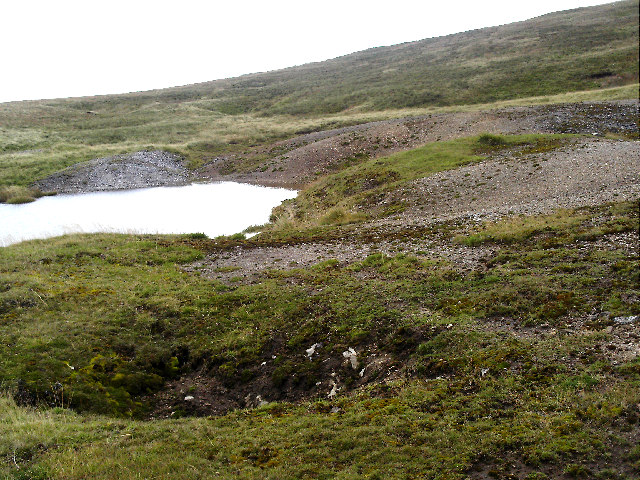
Spoil heaps and pits on open moorland.
Spoil heaps and pits on Pikedaw; the Calamine House at Town Head, Malham; a smelt mill chimney on Dean Moor.
Redevelopment
Unknown.
Nearby mines
- Fountains Fell Colliery — 5.0 miles (8.0 km) N
- Dry Rigg Quarry — 5.7 miles (9.2 km) NW
- Foredale Quarry — 6.0 miles (9.7 km) NW
- Arcow Quarry — 6.2 miles (10.0 km) NW
- Swinden Quarry — 6.6 miles (10.6 km) E
Straight-line distance, within 9 miles (15 km). Show on the map.
What's uncertain
Points where sources disagree or the record could not be settled; both accounts are kept. All open questions in the archive.
- The calamine was found in the late 1790s and moderate tonnages were raised over the next ten years or so. (disputed) 1,2
- After 1787 the Pikedaw mines produced significant amounts of calamine; the first roasting furnace was built about 1787, 350 metres south-west of Twin Bottom Scar. (disputed) 3
Recorded claims
Individual factual claims, each attached to the source(s) that support it below. Where sources disagree, both are kept.
- At Pikedaw calamine was found infilling a series of natural caverns; it was used for brass making and was said to be particularly pure. 1,2
- The calamine was found in the late 1790s and moderate tonnages were raised over the next ten years or so. (disputed) 1,2
- After 1787 the Pikedaw mines produced significant amounts of calamine; the first roasting furnace was built about 1787, 350 metres south-west of Twin Bottom Scar. (disputed) 3
- A new calamine mill was built at the head of Malham village around 1800 to replace the Old Calamine House near the mines, and a new furnace was built in 1812. 3
- The Calamine House at Town Head, Malham, was used as a barn and for storing the roasted calamine ore. 2
- Some malachite was found in the veins, but no copper appears to have been produced from it. 1,4
- Lead ore from Malham was smelted at Grassington between 1747 and 1840; a small mill served the Pikedaw and Malham Moor mines. 3
Sources
- (secondary) Malham Moor — Northern Mine Research Society
- (secondary) Malham — Upper Wharfedale Field Society
- (secondary) Malham Lead Mill; Malham Calamine Old Mill; Malham Calamine New Mill — Northern Mine Research Society
- (observational) Pikedaw Calamine Caverns: meet report, 3 January 1988 — Cumbria Amenity Trust Mining History Society
Record created: 18 October 2026 · Last researched: 18 October 2026