 MineArchive
Arcow Quarry
| Location | Helwith Bridge, Horton-in-Ribblesdale, North Yorkshire — 54.1304, -2.3037 (exact) |
|---|---|
| Commodity | Sandstone |
| Type | Quarry |
| Worked | 18th century–Still active |
| Maximum depth | An open quarry; no depth is recorded. |
| Operators | Tarmac |
Overview
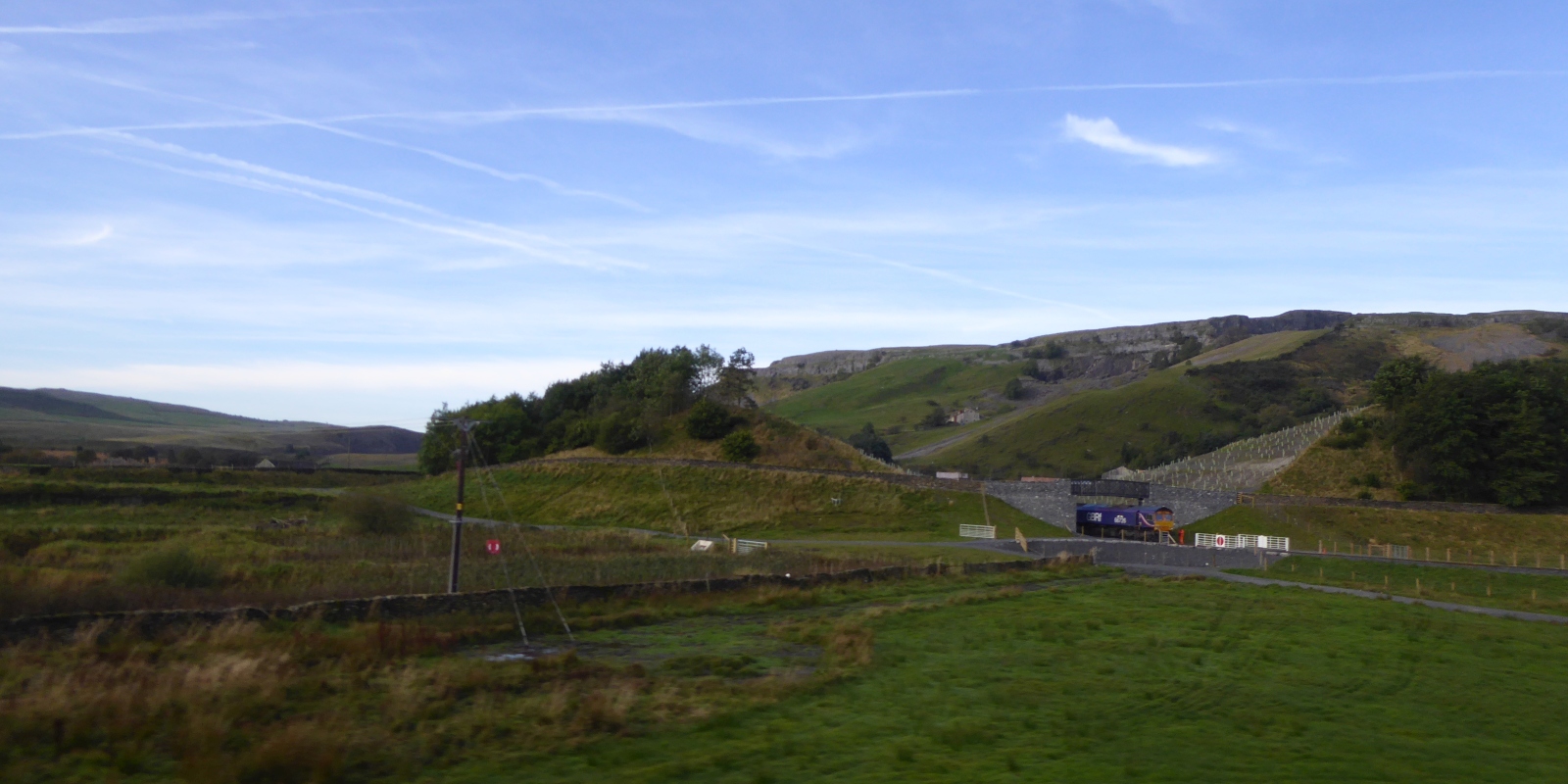
Arcow Quarry works hard rock at Helwith Bridge in Ribblesdale, between Settle and Horton-in-Ribblesdale, and is operated by Tarmac. Quarrying here began in the eighteenth century, when two small workings called Arcow Wood Quarry cut flagstones and 'slates'. A change of ownership in 1878 all but stopped the work as effort moved to the neighbouring Foredale limestone quarry, and it was not until 1931 that the quarry reopened and expanded rapidly into the single Arcow Quarry, switching to crushing rock for roadstone, ballast and aggregate. A rail link opened in 2016 now takes two thirds of the output, including stone brought by road from the neighbouring Dry Rigg Quarry, and in 2026 it was announced that the quarry intends to work until 2045.
History
The earliest quarrying at Arcow was in the eighteenth century, when two small quarries known together as Arcow Wood Quarry were opened to extract flagstones and 'slates'. In 1878 a change of ownership saw work fall to very low levels as effort was concentrated on opening the neighbouring Foredale limestone quarry. Arcow reopened in 1931 and expanded quickly to become a single large working, sometimes recorded as Archa Quarry, and at that point its product changed: instead of dressed flagstones it now crushed the rock for road stone, ballast and aggregate. Output was despatched by rail from a siding originally built to serve the lime kilns below Foredale Quarry. In June 2016 the quarry applied for planning consent to produce high quality roadstone until around 2026, and a new rail link opened that year to carry two thirds of the output — including stone trucked over from Dry Rigg Quarry, whose own road traffic through Ribblesdale had drawn public objection. In July 2026 it was announced that the quarry intends to remain in operation until 2045.
Geology
The quarry works rock of the Austwick Formation. Because it lies on the north side of the Studrigg-Studfold Syncline the beds dip steeply to the south, and above them, separated by an unconformity, lie the horizontal limestones of the Great Scar Limestone Group — the classic Ribblesdale arrangement of steeply tilted older rocks truncated and buried beneath flat-lying Carboniferous limestone. The stone itself is variously described: the Settle-Carlisle conservation survey calls it siltstone, other accounts gritstone or greywacke. All three describe the same hard, tough rock, which is listed as nationally important for road building precisely because it resists polishing under traffic.
Geological setting: Strike and Dip (well documented example)
Workings
An open quarry, worked from the eighteenth century for flagstones and 'slates' cut and dressed on site, and since 1931 as a crushing operation producing roadstone, ballast and aggregate. Rail has served it throughout its modern life: first from a siding built for the lime kilns below Foredale Quarry, and since 2016 from a new rail link built to take two thirds of the output off the Ribblesdale roads.
Closure
The quarry remains in production. Consent was sought in June 2016 to work until about 2026, and in July 2026 it was announced that the quarry intends to be in operation until 2045.
What remains
Working, operated by Tarmac, and supplying gritstone to the road construction and maintenance industries. The rail link opened in 2016 takes two thirds of the output, and also serves Dry Rigg Quarry, whose stone is brought to the Arcow railhead by road.
An active quarry rather than a remain. The neighbouring Foredale lime kilns, whose siding once despatched Arcow's stone, are a separate site.
Related mines
- Dry Rigg Quarry — The two Helwith Bridge quarries are worked together by Tarmac: since 2016 about half the combined output of both has left by rail from the reopened Settle-Carlisle connection at Arcow rather than by road from Dry Rigg.
- Foredale Quarry — The two are Helwith Bridge neighbours working different rocks one above the other: Arcow the Silurian gritstone on the valley floor, Foredale the Carboniferous limestone at the top of the valley side. Foredale is named on the Arcow record.
Nearby mines
- Foredale Quarry — 0.6 miles (1.0 km) NE
- Dry Rigg Quarry — 0.7 miles (1.2 km) S
- Fountains Fell Colliery — 4.0 miles (6.5 km) E
- Ribblehead Quarry — 5.5 miles (8.8 km) NW
- Pikedaw Calamine Mines — 6.2 miles (10.0 km) SE
Straight-line distance, within 9 miles (15 km). Show on the map.
Recorded claims
Individual factual claims, each attached to the source(s) that support it below. Where sources disagree, both are kept.
- The earliest quarrying activity was in the eighteenth century, when two small quarries known as Arcow Wood Quarry were opened to extract flagstones and 'slates'. 1
- In 1878 a change of ownership saw work fall to very low levels as effort was concentrated on opening the neighbouring Foredale limestone quarry; in 1931 the quarry reopened and rapidly expanded to become the single Arcow Quarry, production switching to crushing rock for road stone, ballast and aggregate. 1
- The quarry works rock from the Austwick Formation which, the quarry lying on the north side of the Studrigg-Studfold Syncline, dips steeply south; above it, separated by an unconformity, lie the horizontal limestones of the Great Scar Limestone Group. 1
- A new rail link opened in 2016 to despatch two thirds of the quarry's output; two thirds of the amount produced at the neighbouring Dry Rigg Quarry is taken by road to the Arcow railhead. 1
- In June 2016 the quarry applied for consent to produce high quality road stone until around 2026, and in July 2026 it was announced that it intends to be in operation until 2045. 2,1
Photographs & further reading
Sets Arcow beside its neighbours Foredale, Combs and Dry Rigg and explains the geology they all work — the steeply dipping Austwick and Horton formations beneath the flat Great Scar Limestone — together with each quarry's ownership and rail history.
View sourceSources
- (secondary) SCRCA Knowledge Base: Helwith Bridge Quarries — Settle-Carlisle Railway Conservation Area project, Friends of the Settle-Carlisle Line
- (secondary) Arcow quarry — Wikipedia
Record created: 4 September 2026 · Last researched: 4 September 2026