 MineArchive
Mandale Mine
| Location | Lathkill Dale, Over Haddon, Derbyshire — 53.1846, -1.7639 (approximate) |
|---|---|
| Commodity | Lead |
| Type | Metal |
| Worked | 1797–1851 |
| Maximum depth | pumped from at least 20 fathoms (about 37 m) |
| Operators | Lathkill Company (1834–1851) |
Overview
Mandale Mine, in Derbyshire's Lathkill Dale, is one of the oldest lead mines in the county and now one of its best-preserved. Despite three successive generations of increasingly ambitious pumping technology — two large waterwheels and finally a substantial Cornish steam engine — the mine was ultimately beaten by water and abandoned within a few years of its most expensive investment.
History
Evidence of mining at Mandale dates back to the 16th century, but large-scale working began in 1797, when a sough (drainage level) was driven up the vein. Substantial quantities of ore were found in 1820 and again in 1823, prompting the Lathkill Company to invest heavily in pumping capacity: a 52 ft diameter waterwheel, erected between 1834 and 1836 at a cost of over £500, could pump 4,000 gallons of water a minute from a depth of 20 fathoms, and a second, 35 ft wheel was added further down the valley in 1840. When water problems persisted even after these investments, a Cornish beam engine — built by Grahams of the Milton Ironworks, Elsecar, with a 65-inch cylinder rated at 165 horsepower — was installed in 1847. It made no lasting difference: continuing water influx, a problem shared with the neighbouring Lathkill Dale mine, forced abandonment of the mine in 1851, only four years after the engine's installation.
Geology
The mine worked lead-bearing veins in the Derbyshire limestone of Lathkill Dale, where persistent groundwater ultimately made the workings uneconomic to keep dry.
Geological setting: Veins and Lodes (well documented example)
Workings
Drainage relied successively on a sough driven from 1797, then two waterwheels (52 ft, 1834–36, and 35 ft, 1840) and finally a 165-horsepower Cornish beam engine installed in 1847 — none of which proved sufficient to keep the mine workable in the long run.
Closure
The mine was abandoned in 1851 after continuing water influx overwhelmed even its most recent and expensive pumping investment, the 1847 Cornish engine.
What remains
The site is protected as part of the Lathkill Dale and Mandale Mines and Soughs Scheduled Monument, described by Historic England as an exceptionally well-preserved, multi-phase site of national importance. Underground, roughly 400 metres of workings survive behind four separate level entrances; a visit in June 2026 found the incline level dry and open with visible mineralisation, the aqueduct level narrow and partly blocked by fallen timber, and the sough finely stone-lined but stopped by a collapse a short way in.
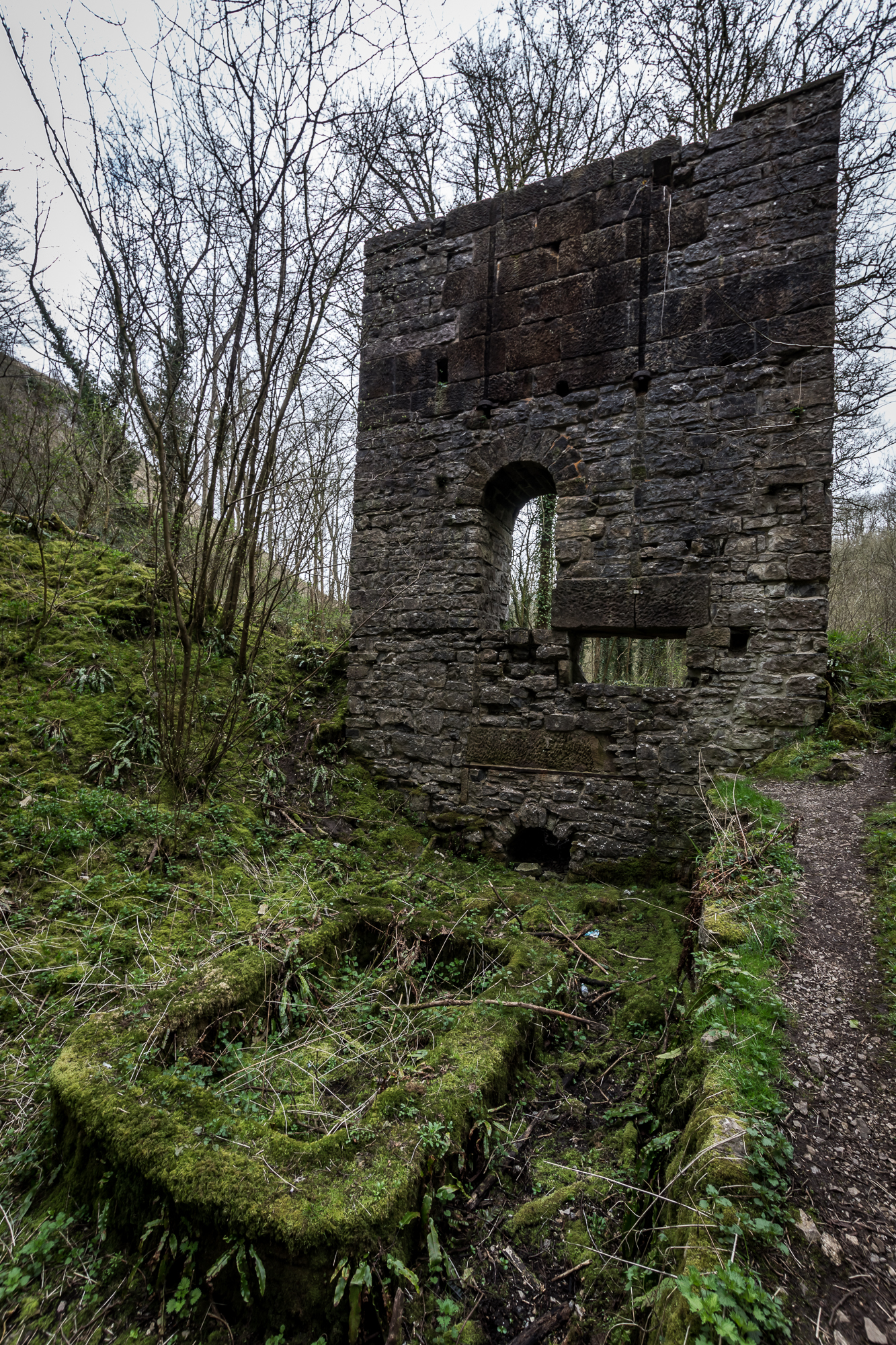
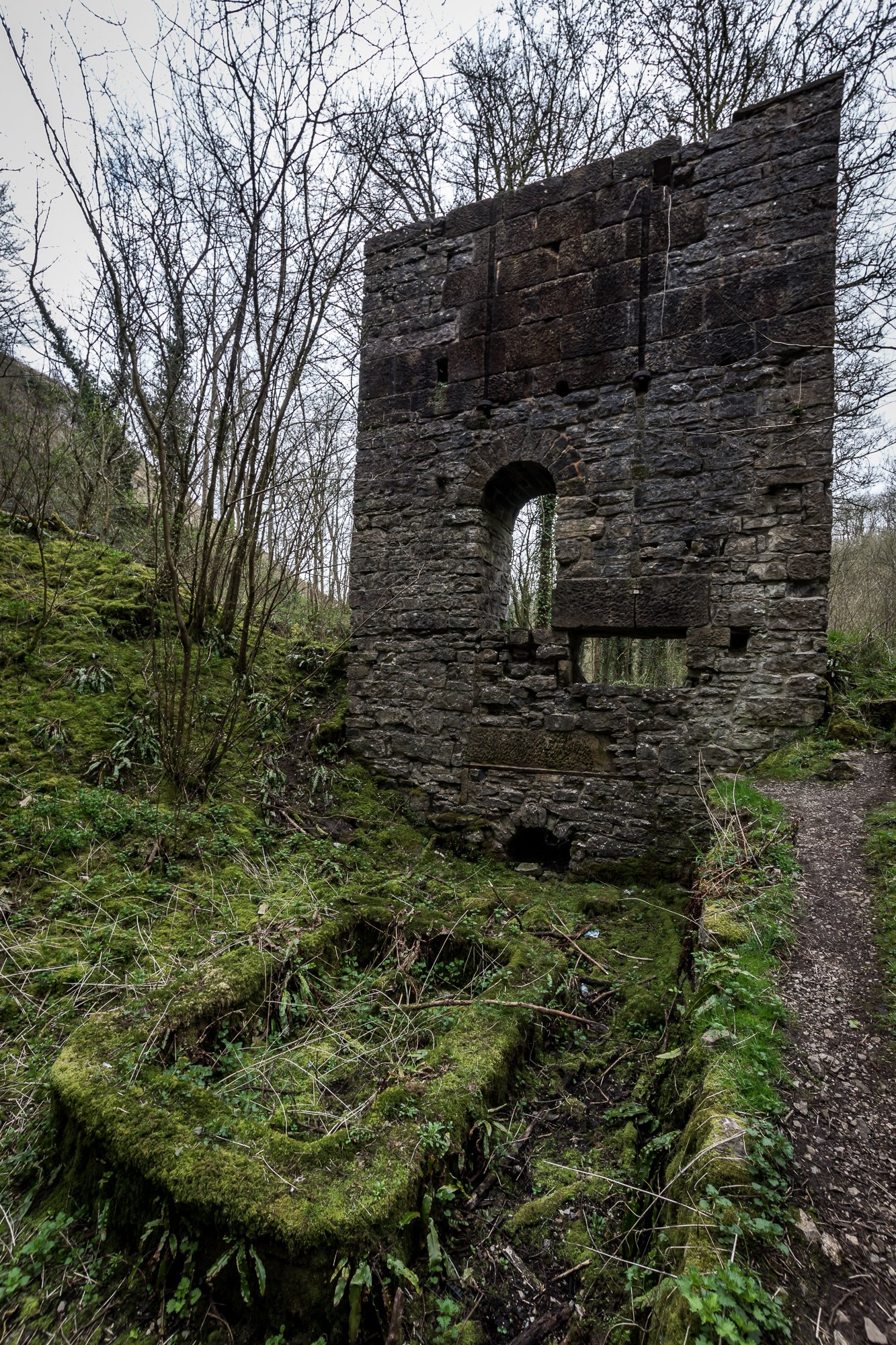
The rectangular, limestone- and sandstone-built Cornish engine house survives to around 6 m in height, with its northern "bob wall" — which supported the engine's beam — the best-preserved part of the structure. Shafts, earthworks, gin circles, stopes, crushing circles, ponds, buddles and an aqueduct and leat also survive across the wider site.
Redevelopment
No redevelopment has taken place; the site is preserved in situ as part of the Lathkill Dale nature reserve and Scheduled Monument.
Related mines
- Lathkill Dale Mine — Worked separately down the same dale, but shared the same water-influx problem that eventually forced Mandale's abandonment.
Nearby mines
- Lathkill Dale Mine — 0.0 miles (0.0 km) N
- Hillocks Mine — 1.5 miles (2.4 km) NW
- Knotlow Mine — 1.6 miles (2.6 km) NW
- Long Rake Spar Mine — 2.1 miles (3.3 km) E
- Magpie Mine — 2.1 miles (3.3 km) NE
Straight-line distance, within 9 miles (15 km). Show on the map.
What's uncertain
Points where sources disagree or the record could not be settled; both accounts are kept. All open questions in the archive.
- A July 2016 report notes that Mandale Mine's main underground entrances were locked at the time of the visit, limiting exploration to the surface remains including the engine house, sough and Bateman's House. (uncertain) 3
- A visit in June 2026 found the incline level dry, with good headroom, open passages and visible mineralisation; the aqueduct level narrow, showing older stoping, and obstructed by fallen timber and boulders; and the sough dry on the day and lined with fine stonework, though a collapse stops progress a short way in. On the surface the engine house, the water course that served the waterwheel and a stone bath-like feature were all still standing. (uncertain) 4
- The surviving accessible workings run to roughly 400 metres, reached through four separate level entrances — Incline, Aqueduct, Upper and Sough — with the Forefield Shaft sealed. The sough lining beyond the foot of that shaft is badly collapsed, and parts of the mine hold unstable boulder ground and fluctuating water levels. (uncertain) 5
Recorded claims
Individual factual claims, each attached to the source(s) that support it below. Where sources disagree, both are kept.
- Historic England describes the Lathkill Dale and Mandale Mines site as an exceptionally well-preserved, multi-phase site of national importance. 1
- The 1847 Cornish engine installed at Mandale had a 65-inch cylinder and was rated at 165 horsepower, but the mine was abandoned only four years later due to continuing water influx. 2
- A July 2016 report notes that Mandale Mine's main underground entrances were locked at the time of the visit, limiting exploration to the surface remains including the engine house, sough and Bateman's House. (uncertain) 3
- A visit in June 2026 found the incline level dry, with good headroom, open passages and visible mineralisation; the aqueduct level narrow, showing older stoping, and obstructed by fallen timber and boulders; and the sough dry on the day and lined with fine stonework, though a collapse stops progress a short way in. On the surface the engine house, the water course that served the waterwheel and a stone bath-like feature were all still standing. (uncertain) 4
- The surviving accessible workings run to roughly 400 metres, reached through four separate level entrances — Incline, Aqueduct, Upper and Sough — with the Forefield Shaft sealed. The sough lining beyond the foot of that shaft is badly collapsed, and parts of the mine hold unstable boulder ground and fluctuating water levels. (uncertain) 5
Photographs & further reading
Further freely-licensed photographs of the engine house and surrounding dale.
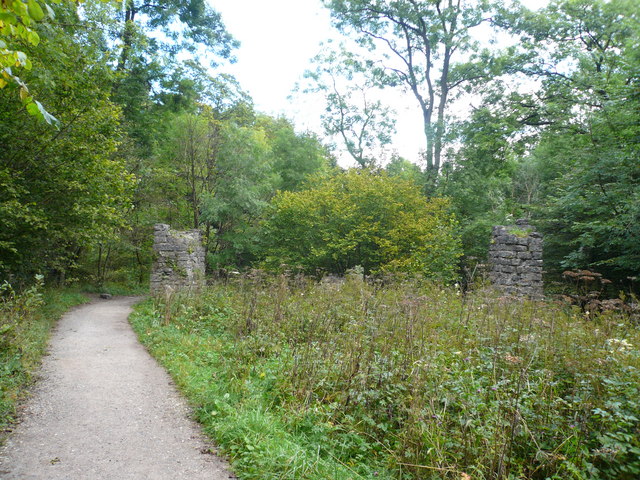
View sourceA surface visit documenting the Cornish engine house, the sough, aqueduct pillars, Bateman's House (the former mine agent's house, in use 1836-1842) and a shaft beneath it; the mine's main entrances were found locked.
View sourceSources
- (primary) Lathkill Dale and Mandale mines and soughs, Youlgreave — Historic England
- (secondary) Mandale mine — Derbyshire Heritage
- (observational) Mandale Mine, Over Haddon, Derbys — July 2016 — 28DaysLater
- (observational) Mandale Mine, Over Haddon, Derbyshire — June 2026 — 28DaysLater
- (observational) Mandale Mine, Lathkill Dale — Peak District Caving
Record created: 19 August 2026 · Last researched: 28 August 2026