 MineArchive
Alport Mines
| Location | Alport, near Youlgreave, Derbyshire — 53.1856, -1.6857 (approximate) |
|---|---|
| Commodity | Lead |
| Type | Metal |
| Worked | 17th century–mid-1800s (mining) |
| Operators | Alport Mining Company (1766–1852) |
Overview
Alport, between Youlgreave and Bakewell, was one of the most intensively worked lead-mining centres in Derbyshire for nearly 300 years, drained by one of the great engineering achievements of the Peak District lead industry: the four-and-a-half-mile Hillcarr Sough.
History
Lead mining at Alport is documented from the 17th century and continued through to the mid-19th century, with the surrounding Alport lead-fields ranking among the most intensely worked ground in Derbyshire during that period. Deep, wet workings were the district's persistent problem, addressed from 1766 by the Hillcarr Sough — a drainage level begun that year, taking twenty-one years and around £32,000 to complete, running some four and a half miles including its branches to carry water off to the River Derwent at Darley Dale and allow mining to continue at greater depth. The Alport Mining Company, formed to work the field, finally folded in 1852. A large smelting works, the Alport Cupola, was built around 1840 to process ore from the surrounding mines and became, for much of the rest of the century, one of the largest and most important lead smelters in the Peak District, reputed to have one of the best-developed flue systems anywhere in the region — the long flues allowed lead particles carried off in the smelting fumes to condense and be collected rather than lost. Mining in the district had effectively ceased by the mid-1800s, and the Cupola itself closed around 1890.
Geology
The mines worked lead-bearing veins within the Peak District orefield's Carboniferous limestone, part of the same broad mineralised belt that produced Derbyshire's other major lead-fields.
Geological setting: Hydrothermal Deposits (well documented example), Veins and Lodes (well documented example)
Workings
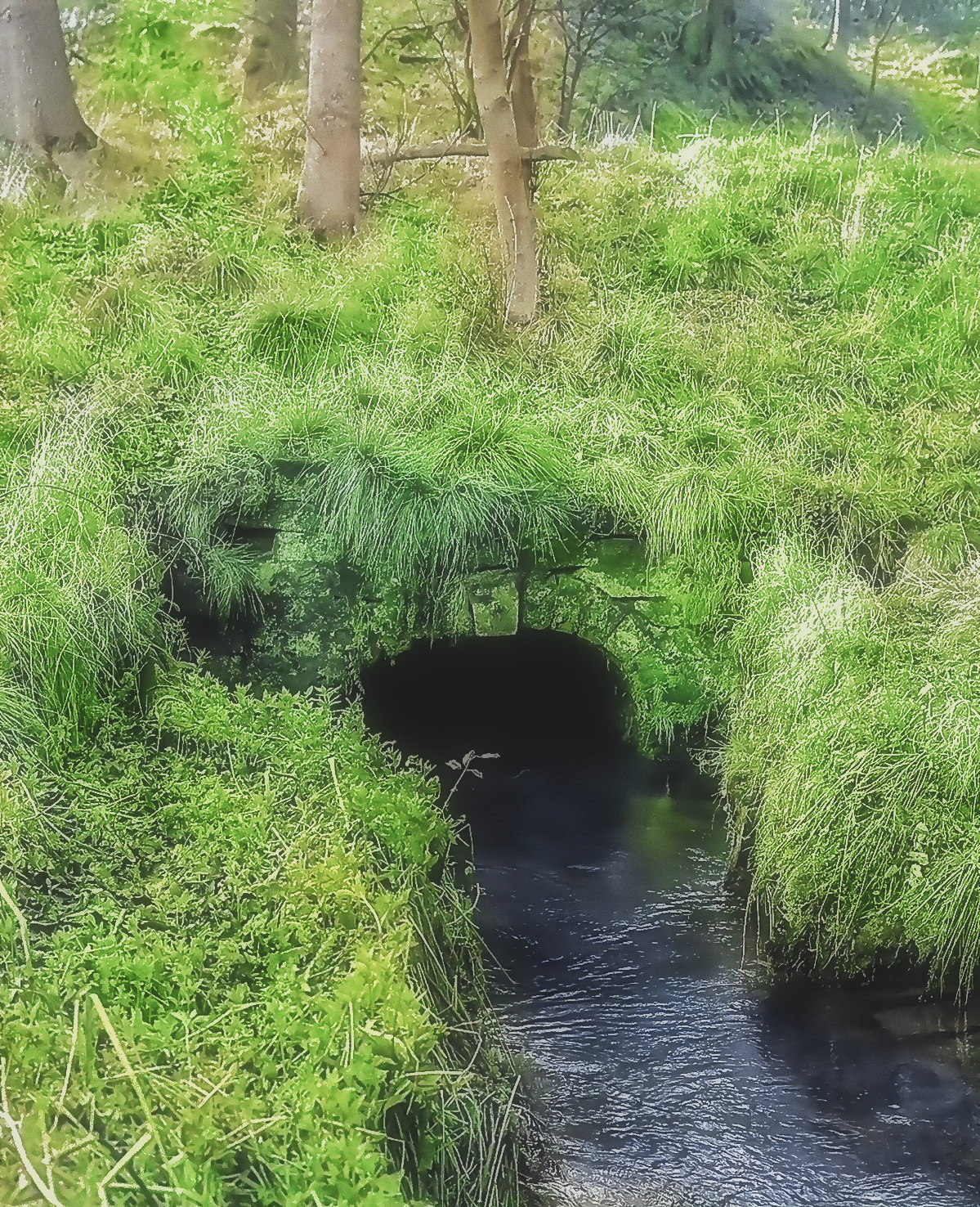
The Hillcarr Sough, its portal a corbelled gritstone arch around 1.5m square, drained the Alport and Youlgreave mines westward to the Derwent, allowing deeper working than would otherwise have been possible. The Alport Cupola's long, well-developed flue system captured lead particles from the smelting fumes for recovery, though this required workers to periodically enter and clean the flues wearing only basic protection — cloth over the nose and mouth, and dedicated work clothes kept on site given how thoroughly the work contaminated everything it touched.
Closure
Mining had effectively ended by the mid-19th century, and the Alport Mining Company folded in 1852; the Alport Cupola smelter continued processing ore from further afield until its own closure around 1890.
What remains
The Alport Cupola site is a Scheduled Monument, and the portal of the Hillcarr Sough survives at Darley Dale.
Surface traces of the extensive former workings survive across the Alport lead-field, alongside the Hillcarr Sough's long drainage course to the Derwent.
Related mines
- Alport Smelt Mill — Named directly in this record's own HER description as the mining concern the smelt mill served, largely a Barker family operation.
Nearby mines
- Dirty Red Soil Mine — 0.8 miles (1.3 km) N
- Horsesteps Mine — 0.8 miles (1.3 km) N
- Alport Smelt Mill — 0.9 miles (1.4 km) SE
- Broadmeadow Lead Mine — 0.9 miles (1.4 km) SE
- Great Red Soil Mine — 0.8 miles (1.4 km) N
Straight-line distance, within 9 miles (15 km). Show on the map.
Recorded claims
Individual factual claims, each attached to the source(s) that support it below. Where sources disagree, both are kept.
- The Hillcarr Sough, begun in 1766, took twenty-one years and around £32,000 to complete, running some four and a half miles including its branches to drain the Alport and Youlgreave mines to the River Derwent. 1,2
- The Alport cupola, a lead smelter built about 1840 at SK 220 646 and now a scheduled monument, condensed lead from its waste gases in long flues that were cleaned out by hand twice a year, the men working masked and eating only spoon food. 1
- The Hillcarr Sough, driven from the Derwent about a mile north of Darley Dale bridge from 1766, had reached Greenfield shaft by 1783 and was carried on along the Black Shale Pitts and Mawstone veins to Mawstone Mine, with a branch along Guy Vein where Guy Shaft housed the largest of five hydraulic engines. 2
- Lead mining ceased in the Alport area in the mid-nineteenth century and smelting followed in the 1890s. 1
Photographs & further reading
A mine-by-mine account of the Alport workings and their soughs from twenty years of exploration by the Nottingham Mines Research and Exploration Group.
View sourceSources
- (secondary) Alport Cupola lead smelter built about 1840 — Derbyshire Heritage
- (secondary) Alport Mines and Soughs — Pegasus Caving Club
- (primary) Alport Mines Plan (BGS Mine Plans Catalogue) — British Geological Survey
Record created: 22 August 2026 · Last researched: 24 September 2026