 MineArchive
Reverberatory Furnace
| Also known as | Cupola (Yorkshire Dales and the Peak), Air Furnace (The Wealden ironworking trade's own name for the same technology when used to remelt scrap, pig iron and flawed castings for casting guns and other ironwork, 17th-18th centuries — sources of the period call it interchangeably 'the reverberatory, or air, furnace'.) |
|---|---|
| Category | Ore Processing |
A smelting furnace in which the fuel and the ore being smelted are kept physically separate, with heat and flame from a coal fire reflected down onto the ore by the furnace's low arched roof — the technology that displaced the older ore hearth in British lead and copper smelting from the mid-18th century onward. Also known, especially in the Yorkshire Dales and Peak District lead fields, as a cupola.
Historical usage
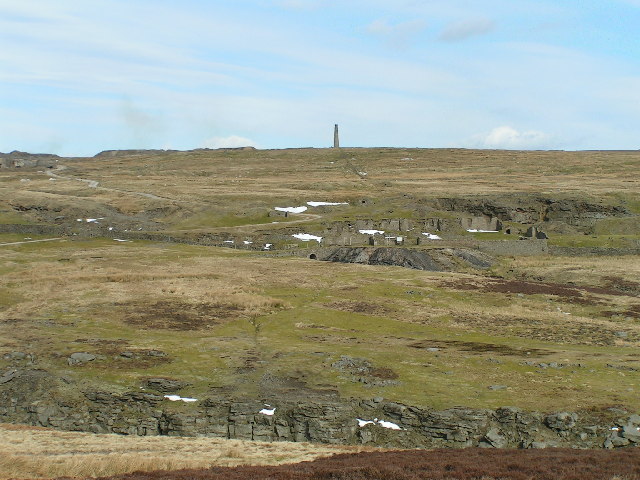
First recorded in medieval glassmaking, the reverberatory furnace was adapted for metal smelting in Britain from around 1678, when Sir Clement Clerke and his son built cupolas in the Avon Gorge near Bristol; the first successful examples for lead and copper smelting followed near Bristol in the 1680s, with further lead cupolas built in Flintshire during the 1690s. The design spread through the 18th and 19th centuries across the Pennine and Peak District lead fields, at sites including the Duke of Devonshire's Cupola smelt mill on Grassington Moor, built in 1792 and worked until the mines there closed in 1882, and Derbyshire's Alport Cupola, built around 1840 and noted for the most complex surviving flue-condensing system of its kind in England.
The same reverberatory principle — keeping fuel and metal apart while still concentrating enough heat to melt it — was independently put to work in the Wealden iron trade under the name 'air furnace'. There it was used from the mid-seventeenth century onward not to smelt ore but to remelt pig iron, scrap and flawed castings for recasting, particularly by gunfounders needing to reuse rejected guns or gunheads without the cost and delay of a full blast-furnace campaign; because it needed no forced blast, an air furnace also required no waterwheel, dam or nearby ore source, and so could be sited flexibly — several Wealden founders kept one at their London yards rather than at their Wealden furnace itself.
How it worked
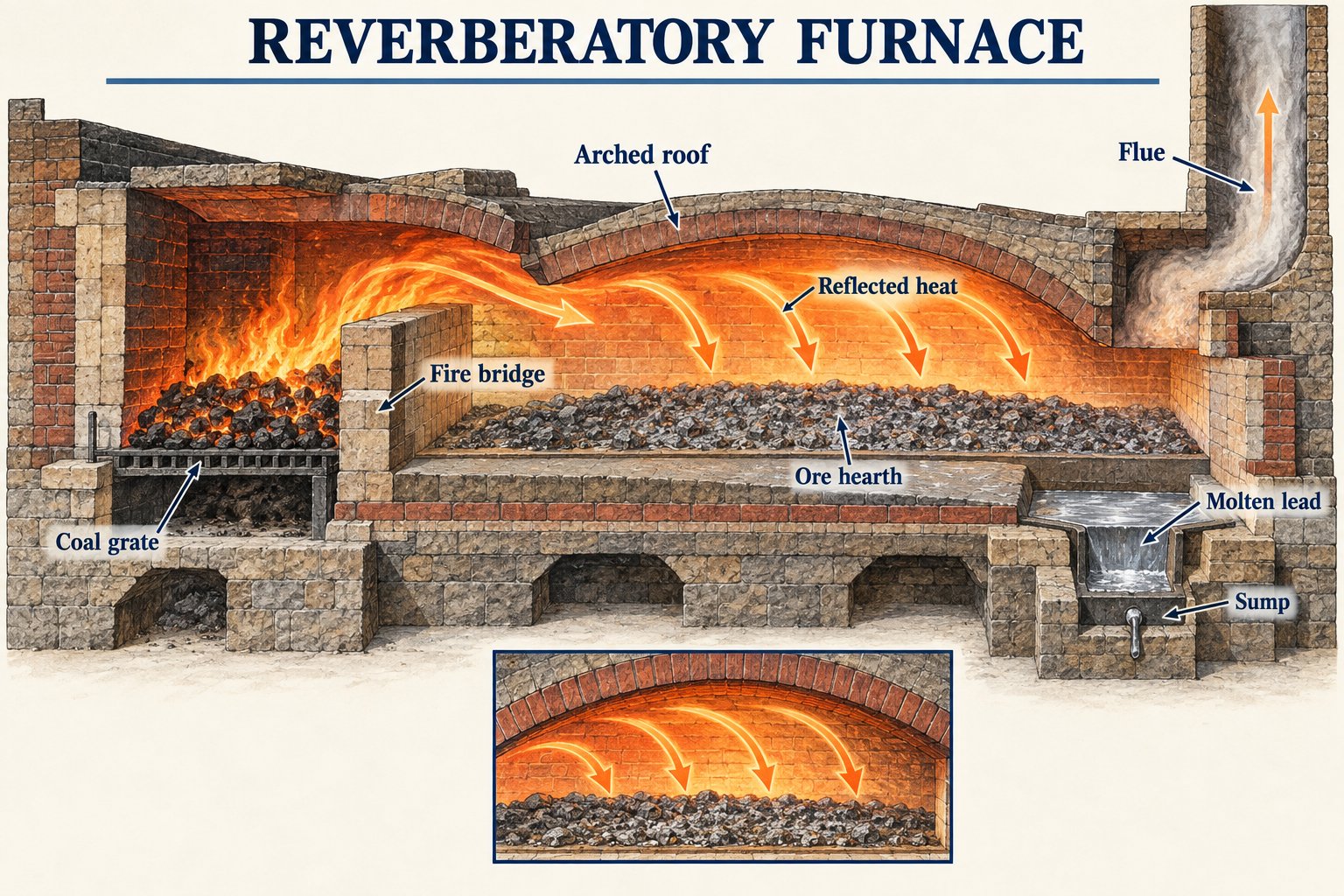
Coal was burned on a separate fire grate rather than in direct contact with the ore; the heat and flame were deflected down onto the ore, loaded onto a shallow hearth, by a low brick fire-bridge and the furnace's arched roof, which kept the coal smoke away from the metal while still concentrating enough heat to smelt it. At Grassington a smelting charge took around seven to eight hours to process, with the resulting molten lead collecting in a sump before being drawn off.
Why it was used
Unlike an ore hearth, a reverberatory furnace could burn ordinary mineral coal rather than the costlier charcoal or dried wood ('white coal') older methods needed, and, built of firebrick rather than a simple open hearth, could run for much longer at a controllable temperature — recovering more lead from a given quantity of ore, at lower fuel cost, than the ore hearth it replaced.
Regional variation
The name varied regionally even as the technology stayed essentially the same: 'cupola' was the everyday term in the Yorkshire Dales and Derbyshire lead fields, while 'reverberatory furnace' was the more formal, technical name used more widely across the industry.
Related terminology
Mines associated with this term
5 examples chosen from 13 linked records — the term page is not an index.
- Cwmavon Copper Works — Neath Port Talbot (well documented example)
Named in this record’s workings: “…than a mine, Cwmavon's 'workings' were surface plant: banks of reverberatory furnaces for copper and iron, rolling and plating mills, a tinplate works,…” - Alport Mines — Derbyshire (well documented example)
The mine's own recorded history, workings and closure notes explicitly describe the Alport Cupola smelting works and its flue system. - Alport Smelt Mill — Derbyshire (well documented example)
Named in this record’s history: “…had by then also been adapted for smelting slag and linnet-ore. The cupola appears on an Ordnance Survey map of around 1845-1850 but is not…” - Beever Mine — North Yorkshire (well documented example)
Named in this record’s history: “…agents were exploiting the veins as intensively as they could. A cupola smelt mill was built for the moor's mines in 1792 and Yarnbury House…” - Copy Pit Colliery — Lancashire (well documented example)
Named twice in this record, first in the history: “…pumped the wet strata. A furnace ventilated it, later through a cupola chimney on the hillside. Tubs crossed Burnley Road on a gantry to…”
Sources
- (primary) Alport smelt mill, Harthill — Historic England (Scheduled Monument record)
- (secondary) Smelting — Northern Mine Research Society
- (secondary) The Cupola Smelt Mill — The Grassington Mines Appreciation Group
- (secondary) The Iron Industry in the Weald in the Period of the Seven Years' War, 1750-1770 (M.A. dissertation) — Jeremy Spencer Hodgkinson, University of Brighton (1993), via the Wealden Iron Research Group
Record created: 24 August 2026 · Last researched: 24 August 2026