 MineArchive
Cwmavon Copper Works
| Location | Cwmavon (Cwmafan), Afan Valley, Neath Port Talbot — 51.6258, -3.7588 (exact) |
|---|---|
| Commodities | Copper, Coal |
| Type | Metal |
| Worked | 1835–1906 |
| Operators | English Copper Company (1841–1876) |
Overview
A major Swansea-district copper smelting works in the Afan Valley, begun in 1835 and at its Victorian peak reputedly the largest copper works in Britain, employing some 4,500 men, women and children. Run for most of its life by the English Copper Company, it survived an 1848 financial crisis serious enough that the Bank of England itself took over the mortgage on the works, before later passing to the Rio Tinto Company and finally closing as a copper producer in 1906.
History
Industry at Cwmavon began in 1820, when John Vigurs established tinworks in the valley; ironworks followed under John Reynolds. Copper smelting arrived in 1835, when the foundation stone of a dedicated copper works was laid, and the works cast its first copper in 1838. In 1841 the whole concern passed to the English Copper Company, a joint-stock smelting company originally chartered in 1691, which expanded it through the 1840s into one of the largest industrial sites in south Wales — combining copper and tin smelting and plating, iron rolling, tinplate manufacture, coal mining and a chemical works producing muriatic and sulphuric acid, naphtha and sugar of lead alongside the metal trades. By 1846 the works employed around 4,500 men, women and children between its various departments, with a monthly wage bill exceeding £10,000, and was said to be the largest copper works in the country.
That scale did not protect it from the wider financial turmoil of the 1840s. By 1848 the English Copper Company was in such serious difficulty that its main creditor, the Bank of England, took over the mortgage on the Cwmavon works directly — an unusually direct intervention by the Bank into a single industrial concern's affairs. The Bank held the works until 1850, when the Company resumed control, before selling the business on in 1852 to a reconstituted Company of Copper Miners. The works continued to change hands over the following decades: by 1876 the original company had gone into liquidation amid difficulties in the iron trade, and new proprietors led by James Shaw took over in 1877, later forming a limited company. In 1884 the Rio Tinto Company acquired Cwm Avon Works, running it as part of its wider copper interests until disposing of the copper section of the business in 1906, which ended large-scale copper production at the site — though tinplate manufacture and firebrick production (by 1888 capable of over 3 million bricks a year) continued under later owners into the 20th century. The works' towering chimney, Stac-y-Foel, built to carry toxic smelting fumes safely away from the valley below, survived the works' industrial life only to be demolished in 1940 as a wartime precaution, for fear it would serve German bombers as a navigation landmark.
Geology
Cwmavon smelted ore rather than mining it on site: as with the other great works of the Swansea and Neath copper district, its furnaces were sited for cheap South Wales steam coal and tidal water access, not for any local copper deposit, and the ore itself was shipped in — chiefly from Cornwall in the works' earlier decades, and increasingly from overseas sources, including eventually Rio Tinto's own Spanish mines, as the century wore on and richer British ore ran short.
Workings
As a smelting and manufacturing works rather than a mine, Cwmavon's 'workings' were surface plant: banks of reverberatory furnaces for copper and iron, rolling and plating mills, a tinplate works, and an extensive chemical works recovering by-products such as sulphuric and muriatic acid from the smelting process. Toxic fumes from the copper furnaces were carried away from the works by a long culverted flue that climbed the hillside to the west, terminating in the Stac-y-Foel chimney on the summit — a form of pollution control typical of major 19th-century copper smelters, which produced highly damaging sulphurous fumes at ground level. The Mining Remediation Authority's own records also show a substantial cluster of coal levels worked in the immediate Cwmavon district to fuel the works, run under the Cwmavon name alongside dozens of named levels and balance pits.
Closure
Rio Tinto disposed of Cwm Avon's copper-producing section in 1906, ending large-scale copper smelting at the site, though associated tinplate and firebrick production carried on under later ownership for some years afterward. The flue chimney, Stac-y-Foel, was demolished in 1940 as a precaution against its use as a landmark by German bombers.
What remains
The Cwmafan Copper Works Flue was scheduled as an ancient monument by Cadw on 8 September 2004, protecting the surviving culverted flue that once carried fumes up the hillside to the Stac-y-Foel chimney site. Little else of the works itself survives at valley level, where the site has been substantially redeveloped, though the Rolling Mill Inn and other place names in the village still recall the works' presence.
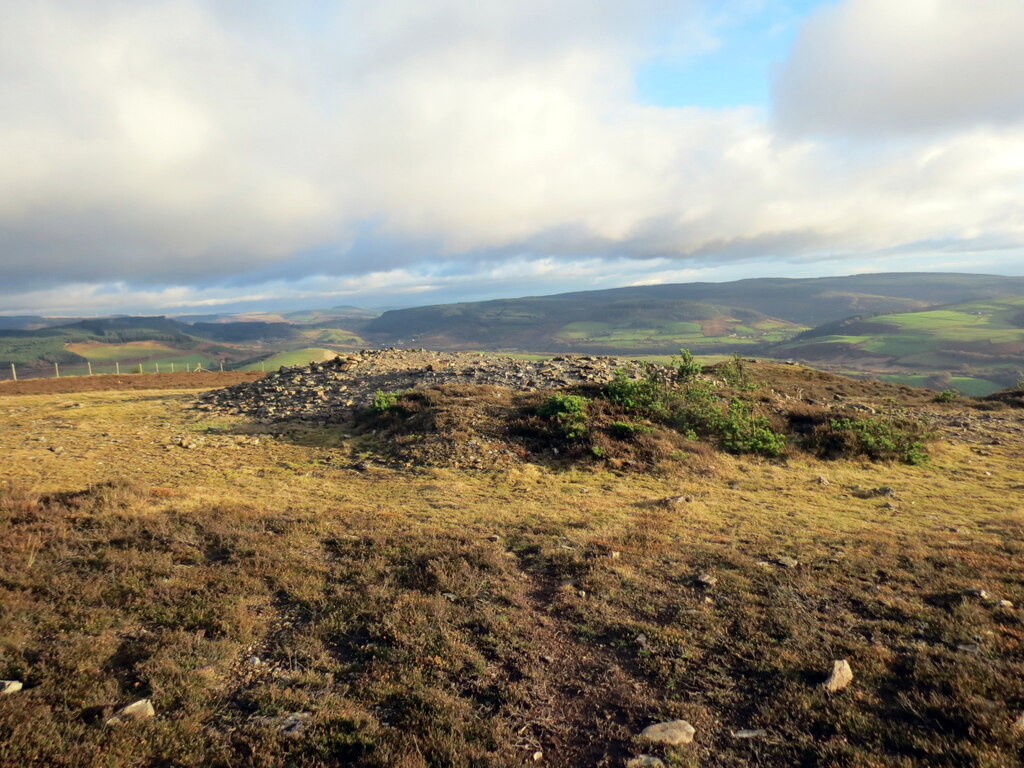
The scheduled flue remains climb the moorland slope above Cwmavon and are the principal visible trace of the works; the chimney it once fed was demolished in 1940 and nothing of it survives above ground.
Nearby mines
- Tewgoed Colliery — 0.5 miles (0.8 km) E
- Ynisdavid Colliery — 0.6 miles (0.9 km) SE
- Cwmmawr Colliery — 0.7 miles (1.1 km) W
- Wern Colliery, Cwmafan — 1.5 miles (2.5 km) NW
- Ynys Dafydd Colliery — 2.1 miles (3.3 km) NW
Straight-line distance, within 9 miles (15 km). Show on the map.
The flue remains sit on open moorland above the village — this entry describes history and general location only, not an access guide.
Recorded claims
Individual factual claims, each attached to the source(s) that support it below. Where sources disagree, both are kept.
- Copper smelting began at Cwmavon in 1835 (foundation stone) with first copper cast in 1838; by 1846, under the English Copper Company, the wider works employed around 4,500 workers with a monthly wage bill over £10,000, and was said to be the largest copper works in Britain. 1,2
- The English Copper Company's financial difficulties led the Bank of England to take over the mortgage on the Cwmavon works in 1848, holding it until the Company resumed control in 1850 and sold the business on in 1852. 2
- The Rio Tinto Company acquired Cwm Avon Works in 1884 and disposed of its copper-producing section in 1906; tinplate and firebrick manufacture continued under later owners. 1
- A culverted flue carried smelting fumes up the hillside west of the works to the Stac-y-Foel chimney on the summit; the chimney was demolished in 1940 for fear of its use as a German bomber navigation landmark, and the flue itself was scheduled as an ancient monument by Cadw in 2004. 1,3
Sources
- (secondary) Cwm Avon Works — Grace's Guide to British Industrial History
- (secondary) English Copper Co — Grace's Guide to British Industrial History
- (primary) Cwmafan Copper Works Flue (scheduled monument) — Cadw (Welsh Government historic environment service)
Record created: 26 August 2026 · Last researched: 26 August 2026