 MineArchive
Lynemouth Colliery
| Location | Lynemouth, Northumberland — 55.2020, -1.5397 (exact) |
|---|---|
| Commodity | Coal |
| Type | Coal |
| Worked | 1927–1994 |
| Maximum depth | Unknown. |
| Operators | Ashington Coal Company (1927–1947) |
Overview
Lynemouth Colliery worked the Northumberland coast from 1927 until 1994. Sunk by the Ashington Coal Company, it passed to the National Coal Board in 1947 and to British Coal in 1986. Its No. 1 pit was the downcast and No. 2 the upcast. Lynemouth was linked underground with the neighbouring Ellington Colliery, the two working as the Ellington Combine, which in the 1980s was described as the biggest undersea mine in the world and produced the great majority of Northumberland's coal. Historic England records Lynemouth as one of Britain's largest collieries until it was closed following an underground fire. It was demolished in 2005.
History
The colliery came into operation in 1927 under the Ashington Coal Company Ltd, one of the great Northumberland coal concerns, and was nationalised into the National Coal Board in 1947, passing to British Coal in 1986. By 1960 it employed 1,734 people. Its long-term significance lies in its pairing with Ellington, sunk from 1909 and completed in 1913 a little to the north: the two collieries were connected underground and worked as the Ellington Combine, driving their workings far out beneath the North Sea. In the 1980s the combine was reckoned the biggest undersea mine in the world and accounted for around seven-tenths of all the coal mined in Northumberland. Lynemouth closed in 1994 after an underground fire, and the surface buildings were demolished in 2005.
Geology
The colliery worked the Coal Measures of the Great Northern Coalfield where they run out beneath the North Sea. It is the offshore extension that defines this ground: at Ellington, with which Lynemouth's workings were joined, the workings reached some 15 miles out under the sea and the deepest part of the mine was about 800 metres. No source names the individual seams worked at Lynemouth.
Geological setting: Sedimentary Beds and Seams (historical documentary reference)
Workings
Two shafts, No. 1 the downcast and No. 2 the upcast. The colliery's workings ran out under the North Sea and were connected underground to those of Ellington Colliery, the pair being operated together as the Ellington Combine.
Closure
Lynemouth closed in 1994. Historic England records that it was one of Britain's largest collieries until it was closed because of an underground fire. The buildings were demolished in 2005.
What remains
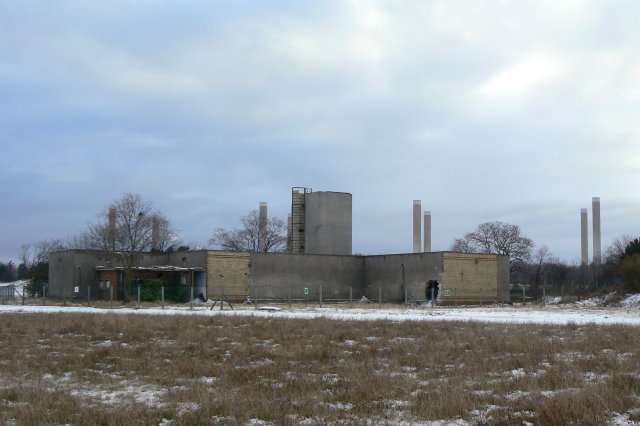
The colliery was demolished in 2005 and the site cleared. The pithead baths were the last building standing on the site. Rising mine water along this stretch of the Northumberland coast is the subject of an ongoing treatment scheme.
Almost nothing survives. The pithead baths were the last remaining building on the former colliery site.
Related mines
- Ashington Colliery — Both were Ashington Coal Company pits; the company built a new colliery township at Lynemouth, and the Ashington railway later carried coal to the power station there.
- Ellington Colliery — Lynemouth and Ellington were connected underground and worked together as the Ellington Combine, described in the 1980s as the biggest undersea mine in the world.
Nearby mines
- Woodhorn Colliery — 0.9 miles (1.5 km) S
- Newbiggin Colliery — 1.3 miles (2.1 km) SE
- Ellington Colliery — 1.4 miles (2.2 km) NW
- Linton Colliery — 2.4 miles (3.8 km) NW
- Ashington Colliery — 2.6 miles (4.1 km) SW
Straight-line distance, within 9 miles (15 km). Show on the map.
Culture
- Billy Elliot (Screen)
Named with Ellington as the location of the film's mining scenes. - Newbiggin Colliery Band (Music)
The band joined with Lynemouth Colliery's band in 1960 and used the Lynemouth Colliery name from 1968 into the 1980s.
What's uncertain
Points where sources disagree or the record could not be settled; both accounts are kept. All open questions in the archive.
- Wikipedia records 1,734 people employed in 1960. The split it gives — 1,390 above ground and 344 below — is implausible for a working colliery and is not repeated here as fact. (uncertain) 1
- The BGS mine-plans catalogue holds a Mining Remediation Authority abandonment plan titled 'Lynemouth Colliery' (catalogue 17948, Ellington Combine, dated 2005); the catalogue gives no location and the plan's details do not clearly tie it to this working, so it may belong to another of the same name. (uncertain) 3
Recorded claims
Individual factual claims, each attached to the source(s) that support it below. Where sources disagree, both are kept.
- Lynemouth Colliery was in operation between 1927 and 1994, under the Ashington Coal Company Ltd from 1927, the National Coal Board from 1947 and British Coal from 1986. 1
- The colliery's No. 1 pit was the downcast and its No. 2 the upcast. 1
- Historic England records that Lynemouth was one of Britain's largest collieries until it was closed due to an underground fire. The colliery was demolished in 2005. 1
- Ellington and Lynemouth collieries were linked underground and known as the Ellington Combine. During the 1980s the combine was described as the biggest undersea mine in the world and produced 69 per cent of the coal mined in Northumberland. 2
- At Ellington, to which Lynemouth's workings were joined, the deepest part of the mine was about 800 metres and the workings extended some 15 miles under the North Sea. 2
- Wikipedia records 1,734 people employed in 1960. The split it gives — 1,390 above ground and 344 below — is implausible for a working colliery and is not repeated here as fact. (uncertain) 1
- The BGS mine-plans catalogue holds a Mining Remediation Authority abandonment plan titled 'Lynemouth Colliery' (catalogue 17948, Ellington Combine, dated 2005); the catalogue gives no location and the plan's details do not clearly tie it to this working, so it may belong to another of the same name. (uncertain) 3
Photographs & further reading
Covers the colliery Lynemouth was joined to and worked with as the Ellington Combine, including the scale of the undersea workings that made the pair the largest submarine mine in the world.
View sourceSources
- (secondary) Lynemouth Colliery — Wikipedia
- (secondary) Ellington Colliery — Subterranea Britannica
- (primary) BGS / Mining Remediation Authority mine plans: LYNEMOUTH COLLIERY — British Geological Survey / Mining Remediation Authority
Record created: 4 September 2026 · Last researched: 4 September 2026