 MineArchive
Llywernog Mine
| Location | Ponterwyd, Ceredigion — 52.4119, -3.8657 (exact) |
|---|---|
| Commodities | Lead, Silver, Zinc |
| Type | Metal |
| Worked | 1742 (vein discovered)–1891 (lead) |
| Maximum depth | 72 fathoms (432 feet) |
| Operators | Lewis Morris (1749–1765), John Barton Balcombe (1861–1875), Scottish Cardigan Lead Mining Company (1907–1911) |
Overview
Llywernog, in the Cambrian Mountains above Ponterwyd, was leased early in its life by the Welsh poet Lewis Morris, and today survives as one of the best-preserved 18th- and 19th-century silver-lead mines in Wales — restored since the 1970s as a working museum rather than left to fall into ruin like most of its neighbours.
History
A vein of galena was discovered at Llywernog around 1742, and the poet and antiquarian Lewis Morris took a lease on the site in 1749, though no clear evidence of active work survives from before his death in 1765; mining is thought to have begun in earnest only in the 1770s, once the construction of a nearby turnpike road made it practical to move ore out of the district. By 1791 the mine employed around 60 miners and had at least one water wheel in operation. Ownership and management changed hands repeatedly over the following century: William Lewis tried unsuccessfully to sell the mine along with the neighbouring Powell's mine in the 1840s, before J.H. Shears reorganised operations as the Llywernog Mines Company in 1843; the Llywernog United Mining Company took over in 1858, working Llywernog alongside the Ponterwyd and Bog mines and sinking the main shaft to 36 fathoms. From 1861 John Barton Balcombe's company invested some £2,000 in new drainage equipment, deepening the main shaft to its eventual full depth of 72 fathoms (432 feet) by 1871 and building a 50-foot water wheel, fed by a leat some six to seven miles long, in 1875. Balcombe's imprisonment for embezzlement that same year brought his tenure to an end, and the Powell Mines Company took over under Nicholas Bray and Evan Hanson, working the mine until collapsing lead prices forced closure, along with Powell's mine, in 1891. A brief revival followed when Scottish Cardigan Mines Ltd leased the site for zinc extraction from 1907, but abandoned the venture by 1911 as zinc prices fell in turn; limited further activity under Thomas Jenkins continued without real success until 1914. The site lay derelict for six decades until Peter Lloyd Harvey, Dr S.H. Harvey and Bob Griffin founded the Mid Wales Mining Museum Ltd in 1973, beginning restoration in 1974 and opening the site to the public as a heritage museum that August.
Geology
The mine worked a lead- and silver-bearing vein within the Cambrian Mountains orefield of mid-Wales, the same broadly mineralised belt worked at other Ceredigion and Powys lead mines including Nant-y-Garw and Cwmsymlog.
Geological setting: Hydrothermal Deposits (well documented example), Veins and Lodes (well documented example)
Workings
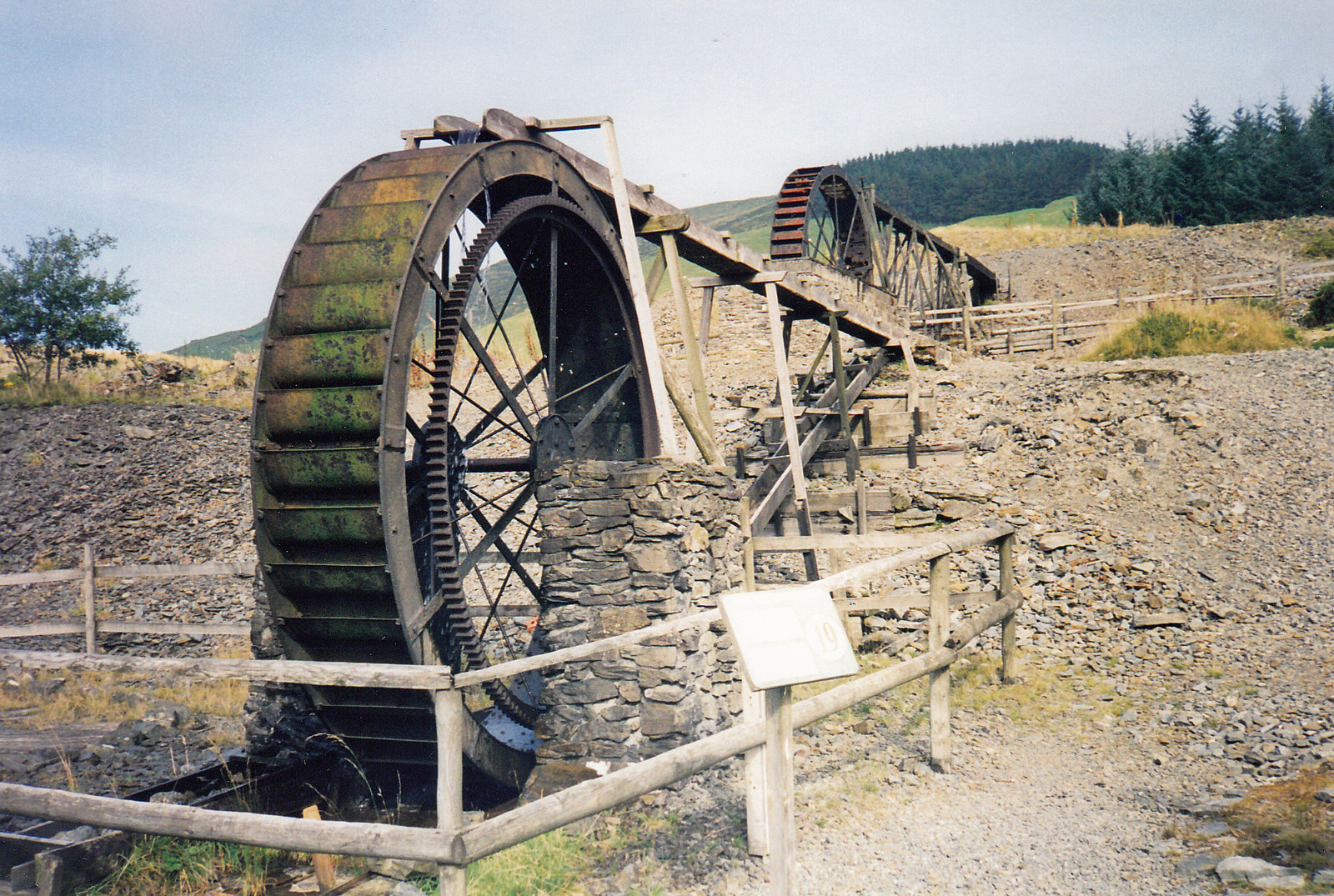
The main shaft, deepened progressively over successive periods of investment, reached a final depth of 72 fathoms (432 feet) by 1871, with working levels between 10 and 72 fathoms; a large part of the shaft remains flooded today. Balcombe's Level, a 150-foot prospecting adit, was the first section of the underground workings cleared for public access during the museum's restoration. Water power came from at least one wheel by 1791 and, from 1875, a 50-foot overshot wheel fed by a leat some six to seven miles long.
Closure
Falling lead prices forced closure in 1891; a 1907-1911 zinc revival and further limited activity to 1914 failed to restore the mine to lasting profitability.
What remains
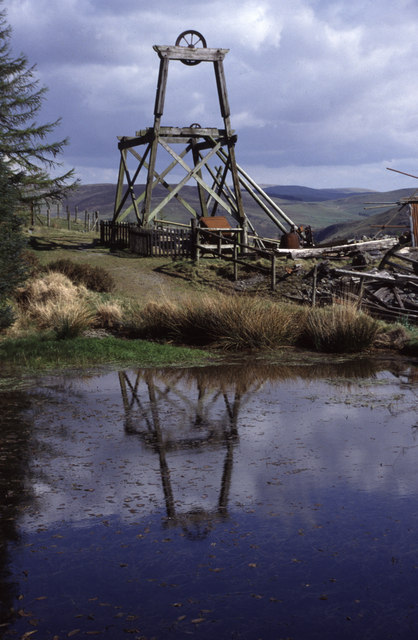
Restoration began in 1974 and the site has operated as a heritage museum ever since — since 2012 rebranded as The Silver Mountain Experience — retaining a larger number of intact original buildings and mining equipment than most other Welsh silver-lead mines, alongside a reconstructed horse-gin, windlasses and working water wheels.
The 2.8-hectare Discovery Park trail around the site illustrates historic ore-dressing processes using restored and reconstructed machinery.
Nearby mines
- Bwlchgwyn Mine — 1.4 miles (2.2 km) S
- Ystumtuen Mine — 1.3 miles (2.2 km) S
- Penrhiw Mine — 1.4 miles (2.3 km) S
- Bwa-Drain Mine — 1.5 miles (2.4 km) SW
- Cwm Rheidol Mine — 1.8 miles (2.9 km) SW
Straight-line distance, within 9 miles (15 km). Show on the map.
Recorded claims
Individual factual claims, each attached to the source(s) that support it below. Where sources disagree, both are kept.
- By 1791 the mine employed around 60 miners; the main shaft reached its final depth of 72 fathoms (432 feet) by 1871 following around £2,000 of investment in drainage equipment from 1861. 1
- Falling lead prices forced closure of Llywernog, along with the neighbouring Powell's mine, in 1891; a zinc revival under Scottish Cardigan Mines Ltd ran from 1907 to 1911. 1
- Restoration began in 1974 and the site opened as a heritage museum; in 2012 it was rebranded the Silver Mountain Experience, adding an underground attraction called The Black Chasm. 1
- Of the museum's waterwheels, the nearer, about 11 feet in diameter, is an all-iron overshot wheel with ring gear cast by the Woodward foundry at Cardigan; the further is a high-breastshot wheel cast by the Central Foundry, Aberystwyth, in 1910. 2
- Located at about 52.412 N, 3.866 W. 1
Sources
- (secondary) Llywernog Mine — Wikipedia
- (observational) Llywernog Silver-Lead Mine Museum: waterwheels (Geograph, Martin Bodman, 1998) — Geograph Britain and Ireland
- (secondary) Show Mines of Great Britain: Llywernog Silver-Lead Mine Museum — Show Caves of the World
Record created: 22 August 2026 · Last researched: 24 September 2026