 MineArchive
Lewis Merthyr Colliery
| Also known as | Hafod Colliery, Trehafod, Coed Cae Colliery, Hafod and Coed Cae Collieries |
|---|---|
| Location | Trehafod, Rhondda Cynon Taf — 51.6105, -3.3892 (exact) |
| Commodity | Coal |
| Type | Coal |
| Worked | 1850 (Hafod/Coed Cae pits)–1983 |
| Maximum depth | Unknown. |
| Operators | Lewis Merthyr Consolidated Collieries Ltd (1876–1947), National Coal Board (1947–1983) |
Overview
Lewis Merthyr, at Trehafod in the Rhondda, grew from two small 1850s pits into one of the Rhondda's major collieries, employing some 5,000 people at its peak. A 1956 firedamp explosion killed nine men and injured five more; the colliery finally closed in 1983, and its surviving pithead buildings and winding engines are now preserved as the Rhondda Heritage Park, with underground tours led by former miners.
History
The Hafod and Coed Cae pits, opened in 1850 by two separate concerns — Hafod by the brothers David and John Thomas, Coed Cae by Edward Mills — were both abandoned early on due to difficult working conditions. William Thomas Lewis (later Lord Merthyr) bought and reopened both in the mid-1870s to work the upper household coal seams. Lewis sank the Bertie shaft in 1880 and the Trefor shaft in 1890, both named after his sons, by which point the operation had grown into Lewis Merthyr Consolidated Collieries Ltd, employing around 5,000 men and producing almost a million tons of coal a year.
The company spread beyond Trehafod. It sank the Lady Lewis Colliery a mile to the north-east in the Rhondda Fach in 1904, and in 1905 it acquired the Universal Colliery at Senghenydd, where in 1913 an explosion killed 439 men and boys — the worst mining disaster in British history. In 1929 the colliery became part of the Powell Duffryn group, and in that year Coed Cae stopped winding coal; Hafod No. 2 followed and Hafod No. 1 in 1933. The colliery passed to the National Coal Board at nationalisation in 1947. A firedamp explosion on 22 November 1956 killed nine men and injured five more — see this site's own disaster record. Production was switched to the neighbouring Tymawr colliery after the two were merged in 1960, with Lewis Merthyr continuing mainly to supply materials to the combined workings until mining finally ceased in July 1983.
Geology
The colliery worked Rhondda coalfield seams via the Bertie and Trefor shafts, sunk in 1880 and 1890 respectively, reaching the household and steam coal seams the South Wales coalfield was famous for.
Geological setting: Sedimentary Beds and Seams (well documented example)
Workings
Underground workings were reached via the Bertie and Trefor shafts; at its peak the colliery employed some 936 underground and 226 surface workers, raising around 1,250 tons of coal a day across three seams.
Closure
Lewis Merthyr merged with the neighbouring Tymawr colliery in 1960, continuing afterwards mainly to supply materials to the combined workings rather than raise coal itself, until mining finally ceased in July 1983.
What remains
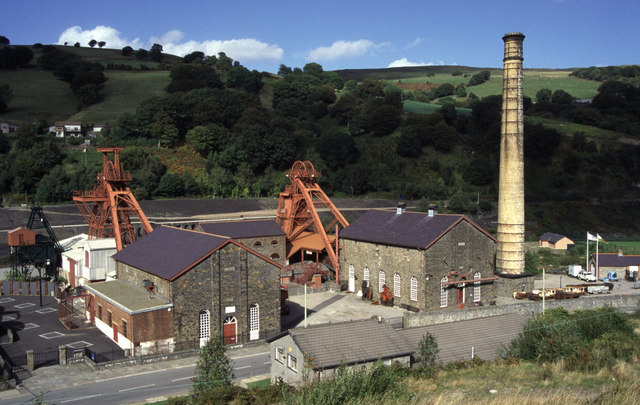
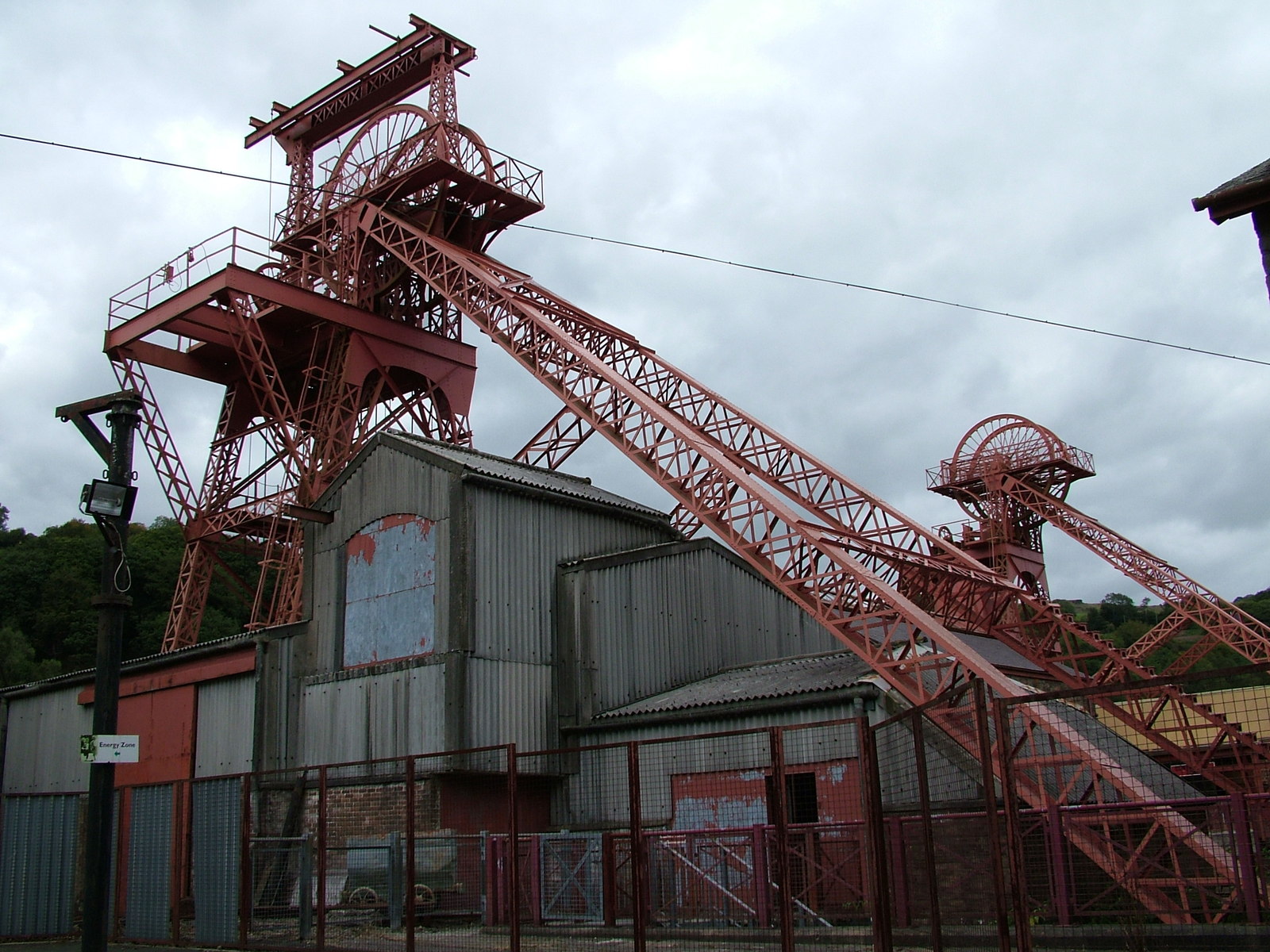
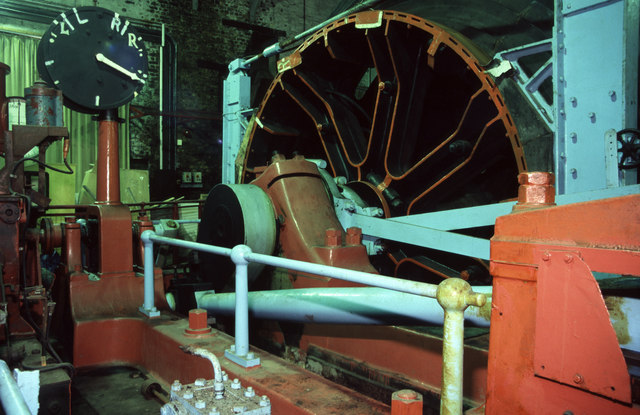
The pithead buildings, winding engines and winding wheels survive and now form the Rhondda Heritage Park, a museum of Welsh coal mining. The two headframes and their associated colliery buildings are listed at Grade II*. Visitors are taken on a guided tour through one of the Lewis Merthyr shafts, led by former colliery workers, and the park is an Anchor Point of ERIH, the European Route of Industrial Heritage. In 2026 a statue of the political activist Elizabeth Andrews was unveiled at the park as part of the Monumental Welsh Women public sculpture project.
The Bertie and Trefor headframes and their engine houses and colliery buildings, all listed at Grade II*, with the winding engines and winding wheels in place.
Redevelopment
The colliery site is the Rhondda Heritage Park, a museum of Welsh coal mining with underground tours through part of the old workings.
Related mines
- Great Western Colliery — Amalgamated in 1958 under a £1.2 million scheme that connected the two collieries underground: coal winding ceased at the Lewis Merthyr surface and was redirected through the Great Western's Tymawr shafts, and the combined pit was renamed Tymawr and Lewis Merthyr Colliery in 1969.
- Tymawr Colliery — Adjacent Trehafod collieries merged into one operation, after which Tymawr wound all the coal and Lewis Merthyr handled men and materials; both are preserved together as the Rhondda Heritage Park.
- Universal Colliery — Lewis Merthyr Consolidated Collieries Ltd acquired the Universal Colliery at Senghenydd in 1905, eight years before the explosion there that killed 439 men and boys.
Nearby mines
- Tymawr Colliery — 0.1 miles (0.1 km) S
- Cymmer Colliery — 0.8 miles (1.3 km) W
- Great Western Colliery — 1.0 miles (1.6 km) E
- Tynewydd Colliery, Porth — 1.0 miles (1.7 km) W
- Dinas Isha Colliery — 1.5 miles (2.3 km) SW
Straight-line distance, within 9 miles (15 km). Show on the map.
Disasters & major incidents
-
Lewis Merthyr (Coedcae) Colliery explosions, 1882
1882 · Explosion · 6 fatalities
On Saturday 11 February 1882, pay day, with the Coedcae pit of the Lewis Merthyr Navigation Collieries empty, two men repairing the shaft were burnt to death by a fire on the cage. A second explosion, as an exploring party went down, killed four more, among them the banksman. -
Lewis Merthyr Colliery explosion, 1956
22 November 1956 · Explosion · 9 fatalities
A firedamp explosion at Lewis Merthyr Colliery on 22 November 1956 killed nine men and injured five more, after methane that had accumulated undetected in an unventilated roof-fall cavity was ignited by a falling stone striking a steel roof support.
Recorded claims
Individual factual claims, each attached to the source(s) that support it below. Where sources disagree, both are kept.
- At its peak Lewis Merthyr employed around 5,000 people and produced almost a million tons of coal a year. 1
- The colliery merged with the neighbouring Tymawr colliery in 1960 and continued mainly to supply materials to the combined workings until mining ceased in July 1983. 1
- The surviving pithead buildings and winding engines now form the Rhondda Heritage Park, with underground tours led by former miners. 2
- The two headframes and their associated colliery buildings are Grade II* listed. 2
- Lewis Merthyr Consolidated Collieries sank the Lady Lewis Colliery in the Rhondda Fach in 1904 and acquired the Universal Colliery at Senghenydd in 1905, the scene in 1913 of the worst mining disaster in British history; in 1929 the colliery became part of the Powell Duffryn group. 2
- Visitors are taken on a guided tour through one of the Lewis Merthyr shafts led by former colliery workers; the park is an Anchor Point of ERIH, the European Route of Industrial Heritage, and a statue of Elizabeth Andrews was unveiled there in 2026. 2
Photographs & further reading
The colliery's history from the 1850 Hafod and Coed Cae pits through the Lewis Merthyr company's expansion to Senghenydd and Powell Duffryn, and the site's afterlife as a museum with underground tours led by former miners.
View sourceSources
- (secondary) Lewis Merthyr Colliery — Northern Mine Research Society
- (secondary) Rhondda Heritage Park — Wikipedia
- (primary) Lewis Merthyr Colliery Explosion - Trehafod - 1956 — Northern Mine Research Society
- (secondary) Plaque marks nine 1956 Lewis Merthyr pit deaths — BBC News
Record created: 20 August 2026 · Last researched: 9 September 2026