 MineArchive
Hough Hole Colliery
| Also known as | Hough Hole Mines, Houghole Colliery |
|---|---|
| Location | Rainow, near Macclesfield, Cheshire — 53.2841, -2.0850 (approximate) |
| Commodity | Coal |
| Type | Coal |
| Worked | c. 1803–1925 |
| Maximum depth | Drift mines driven into the hillside; no shaft depth is recorded. |
| Operators | The Mellor family of Hough Hole (1803–?) |
Overview
A small drift working on the eastern side of Kerridge Hill above Rainow, east of Macclesfield, on the thin and faulted southern edge of the Cheshire coalfield. The mines were opened to supply coal to Hough Hole Mill, a cotton-spinning factory built in the valley below in 1803 by James Mellor, and one entrance was in the mill yard itself. A "loose" or drainage sough was driven from them under the hill to the west side of Kerridge, and the neighbouring California Mines were eventually connected to the same workings and drained through it. The 1880 list of collieries at work returns the pit under W. Mellor, and the Geological Survey noted a colliery still at work at Hough Hole in 1906. It was officially abandoned at the start of 1925 as exhausted, although the last man to work in it remembered the end coming abruptly in 1926 when black damp was found underground.
History
Coal mining around Rainow is old and was never large. An early seventeenth-century survey records only three coal pits in the whole manor and forest of Macclesfield, one of them somewhere in Rainow, worked by four men — two getters, a drawer and a winder. Population growth and the demand for coal to replace wood and peat brought more pits during the seventeenth and eighteenth centuries, worked as simple bell pits, small shafts or adits where the coal outcrops on the east and north of Kerridge Hill, with drainage soughs driven under the hill from Bollington and Hurdsfield as the workings extended. Burdett’s Cheshire map of 1777 shows three coal pits clustered towards the north end of the ridge.
The Hough Hole workings belong to the industrial phase. James Mellor bought Hough Hole Farm in 1796 and built Hough Hole Mill, a cotton-spinning factory, in 1803; the mines were opened to supply it. There were two drift mines, working what the Vare family — the miners who worked them for generations — called seams 2 and 3, and one entrance was in the mill yard. The whole field below the eastern sideway path seems to have been disturbed by the workings, and a photograph taken around 1865 shows the extent of that disturbance when it was still fresh. The official 1880 list of collieries at work returns the pit as "Hough Hole, Rainow, Macclesfield, W. Mellor".
The local coal was never good. Aikin noted a large colliery in Rainow in 1795, and the census of 1851 found sixteen Kerridge men employed in coal mining, but the arrival of the Macclesfield Canal in 1831 and the railways from Manchester in 1845 and Stoke in 1849 brought cheaper and better coal into the district from south Lancashire and north Staffordshire, and mining here was probably already in decline before the middle of the century. What kept the Hough Hole and California mines going was that they were on the doorstep of the mills that burned their output: at the beginning of the twentieth century "cally" coal from the neighbouring drifts was still selling in Bollington at fourpence a hundredweight. The Geological Survey memoir of 1906 recorded a colliery at Hough Hole still in use.
Geology
Kerridge Hill stands on the southern edge of the Cheshire coalfield, where the Coal Measures outcrop or lie close to the surface on the eastern and northern flanks — close enough to be taken in bell pits, small shafts or drifts driven straight into the seam. The seams here are thin, of poor quality, and broken by faulting discontinuities, and one Bollington collier was killed in 1833 by a roof fall while working a fourteen-inch seam in the Kerridge Colliery. Those three limitations together are why local mining could not compete once canal and railway coal arrived.
Geological setting: Sedimentary Beds and Seams (well documented example)
Workings
Two drift mines driven into the hillside, working seams the Vare family numbered 2 and 3, with one entrance opening into the yard of Hough Hole Mill. Drainage was by a "loose" or sough running from the workings under the hill to the west side of Kerridge — the same technique used at the north end of the ridge, where a sough begun in 1808 to drain the mines afterwards supplied water to the Higher Mills for over a century. The California Mines just to the south, three drifts working seams 1, 2 and 3 one above another on the hillside, became connected to the Hough Hole workings and were drained through the Hough Hole loose. Coal there was drawn to the surface by hand; a chimney and flue were built for a proposed steam engine that was never installed, and traces of them remained.
Closure
The mine was officially abandoned at the beginning of 1925 because it was effectively exhausted. The Story of Rainow, drawing on the memories of Frederick Vare — who with his father Joseph was the last to work in it — says instead that working ended abruptly in 1926 when black damp was found underground. The two accounts may both be right: as with other small mines in the district, working seems to have started again during the long national miners’ strike of 1926, after the formal abandonment.
What remains
The site of Hough Hole Mill and its mines lies on the eastern sideway path below Kerridgeside, and the whole field below the path is still visibly disturbed by the old workings. Nothing is worked. The mining ground of Rainow remains unstable enough to matter: a shaft dating from the 1700s collapsed during building work at Sedgewood Mill on Swanscoe Lane, and the Kerridge Ridge and Ingersley Vale project has been mapping all the mines in the parish.
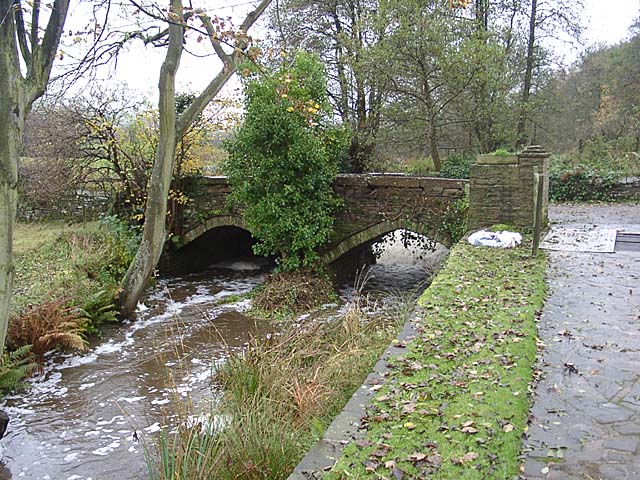
Disturbed ground and spoil across the field below the eastern sideway path, the bridge beside the site of Hough Hole Mill, and — at the neighbouring California Mines — traces of the chimney and flue built for a steam engine that was never installed. Fenced mineshafts survive at the north end of the ridge.
Nearby mines
- Anson Colliery — 4.4 miles (7.2 km) N
- Poynton Collieries — 4.5 miles (7.2 km) N
- Engine Vein — 5.2 miles (8.4 km) W
- Goyt's Moss Colliery — 5.2 miles (8.4 km) SE, Derbyshire
- Alderley Edge Mines — 5.3 miles (8.5 km) W
Straight-line distance, within 9 miles (15 km). Show on the map.
What's uncertain
Points where sources disagree or the record could not be settled; both accounts are kept. All open questions in the archive.
- The mine was officially abandoned at the beginning of 1925 as effectively exhausted; The Story of Rainow, drawing on the recollections of Frederick Vare, the last man to work in it, says working ended abruptly in 1926 when black damp was found. Working may have restarted during the 1926 national strike, as it appears to have done at other small mines in the district. (disputed) 2
Recorded claims
Individual factual claims, each attached to the source(s) that support it below. Where sources disagree, both are kept.
- The official list of collieries at work in 1880 returns the pit as "Hough Hole, Rainow, Macclesfield, W. Mellor" — the family that had built Hough Hole Mill in 1803. 1
- The Story of Rainow records two drift mines at Hough Hole, working what the Vare family called seams 2 and 3, opened to supply coal to Hough Hole Mill, with one entrance in the mill yard and a loose or drainage sough running under the hill to the west side of Kerridge. 2
- The 1906 edition of the Memoirs of the Geological Survey records that a colliery at Hough Hole was still in use. 2
- The mine was officially abandoned at the beginning of 1925 as effectively exhausted; The Story of Rainow, drawing on the recollections of Frederick Vare, the last man to work in it, says working ended abruptly in 1926 when black damp was found. Working may have restarted during the 1926 national strike, as it appears to have done at other small mines in the district. (disputed) 2
- The California Mines, three drifts working seams 1, 2 and 3 one above another on the hillside just to the south, became connected to the Hough Hole workings and were drained by the Hough Hole loose; their coal was drawn to the surface by hand and sold in Bollington at fourpence a hundredweight in the early 20th century. 2
- The Rainow mines were limited by often poor quality coal and by relatively thin seams broken by faulting discontinuities, and were undercut once the Macclesfield Canal of 1831 and the railways of 1845 and 1849 brought cheaper, better coal in from south Lancashire and north Staffordshire. 2
- An early 17th-century survey records only three coal pits in the whole manor and forest of Macclesfield, one of them in Rainow, worked by four men — two getters, a drawer and a winder. 2
- The BGS mine-plans catalogue holds a Mining Remediation Authority abandonment plan titled 'Hough Hole' (catalogue 8432, Third (Probably Ribbon), dated 1925). 3
Photographs & further reading
George Longden’s study for the KRIV project, whose coal-mining chapters walk the eastern side of Kerridge Hill mine by mine — North End, Ingersley Clough, Hough Hole, California, South End — with the documentary evidence for each and what can still be seen on the ground.
View sourceSources
- (secondary) List of coal mines UK 1880 — Coalmining History Resource Centre
- (secondary) Kerridge Ridge and Ingersley Vale: an Historical Study — George Longden, for the Kerridge Ridge and Ingersley Vale project
- (primary) BGS / Mining Remediation Authority mine plans: HOUGH HOLE — British Geological Survey / Mining Remediation Authority
- (observational) Mine shaft collapses outside home — Macclesfield Express
- (observational) Secrets of Ingersley Vale — Cheshire Historyscapes
Record created: 6 September 2026 · Last researched: 6 September 2026