 MineArchive
Poynton Collieries
| Also known as | Poynton Colliery, Poynton and Worth Collieries, Lord Vernon’s Collieries |
|---|---|
| Location | Poynton-with-Worth, near Stockport, Cheshire — 53.3479, -2.1047 (approximate) |
| Commodity | Coal |
| Type | Coal |
| Worked | By 1600–30 August 1935 |
| Maximum depth | 310 yards (283 m) to the Accommodation Seam in the Lawrance Pit, sunk 1884 |
| Operators | The Lords Vernon (1832–1935) |
Overview
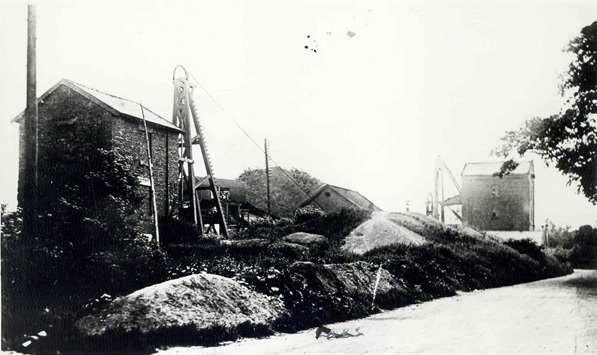
Coal was mined at Poynton from the sixteenth century, and from 1832 until the end the collieries belonged to and were worked by the Lords Vernon, who were lords of the manor and sole landowners. They were the largest collieries in Cheshire. At their height the concern ran eighteen steam engines across a dozen pits, and the whole enterprise turned on pumping: the deeper the workings went, the more water had to be lifted, and the main load was eventually concentrated at Lady Pit behind a huge Cornish engine known as Big Ned. The Anson Pit closed in 1926 and the Oval in 1928, leaving the Lawrance as the last to raise coal. Final closure came on Friday 30 August 1935, when about 250 men were made redundant; within a fortnight of the pumps stopping, water stood a few feet below the top of the Park Pit shafts.
History
Poynton and Worth were being worked well before the age of steam, and by the end of the eighteenth century the collieries were a major undertaking. The earliest drainage used soughs and waterwheels; atmospheric beam engines followed as the workings deepened. In 1794 the press noted a winding engine of only an eighteen-inch cylinder at Sir George Warren’s colliery in Cheshire which raised two laden tubs at a draught and did in eight hours what four horses had done. A pumping engine was put up near Norbury Hollow by Nathaniel Wright in 1795, probably built by Bateman and Sherratt of Salford and fitted with a separate condenser in breach of James Watt’s patent. It was found out the following March by James Lawson, acting for Boulton and Watt, who reported that he had "now nearly finished my espionage": pretending to have come to see the small winding engine, he found the landlord of a neighbouring alehouse half drunk — it being Good Friday — who sent for the engine man and for some ale, and while the winder was set to work Lawson examined the pumping engine at his leisure. It was a 40-inch cylinder with a six-foot stroke, running at about twelve strokes a minute, and had been at work exactly thirty weeks. Wright either could not or would not pay the premium Boulton and Watt then demanded, and converted the engine back to the atmospheric principle.
By 1826 almost every pit was steam worked; the surviving list names Worth Clough, Clough Deep and Rise, Sidebottoms and Lucky, Meadow (Anson), Gees, Gees New, Higher and Lower Smithfield, Accommodation, Waterloo and Horse Pastures, with horse gins still turning at half a dozen more. The 1847 colliery report records eighteen engines — fifteen winding, two pumping and one driving the saw mill at Towers Yard — including a 72 horsepower pumping engine at Lord Pit and a 70 horsepower winder at the Tower Pit. Water was being pumped at six pits by 1857, and only in 1875 was the main pumping load concentrated at Lady Pit with the erection of the great Cornish engine called Big Ned.
The Park Pits, sunk in 1845 and 1846 towards the western edge of the field, proved the most prolific: two shafts 198 yards deep, the smaller called the Round Pit and the larger the Oval, whose shaft was an unusual 12½ feet by 9½. The last new sinking was the Lawrance Pit, begun in 1884, a 13-foot shaft reaching the Accommodation Seam at 310 yards, put down only a few feet from the Oval so that the 1875 winding engine could serve it. By 1891 the Lawrance was the largest producer at 105,283 tons against the Oval’s 73,120 and the Anson’s 72,140. That was close to the peak. The colliery viewer Greenwell was already warning in March 1892 that costs were rising because the Accommodation Seam at Anson and Park was nearly worked out and the quantity had to be made up in the thinner and dearer Gees and Reform seams; in the same report he noted that the adjoining Norbury Collieries had closed, that their water was rising in the old workings, and that it would sooner or later find its way into Poynton through connections made when the two were worked together.
Geology
Poynton sits on the eastern edge of the Cheshire plain where the Lancashire coalfield runs out southward. The pits worked a stack of named seams — the Four Foot and Five Foot, the Ten Foot, the Gees, the Reform or Three Feet, the Accommodation and, lowest, the Arley — taking them in turn as each was exhausted and moving down into thinner and more expensive coal as they went. Water, not coal, was the governing fact: the workings drained into one another and into the neighbouring Norbury collieries, and the cost of pumping is what finally shut the field.
Geological setting: Sedimentary Beds and Seams (well documented example)
Workings
A dozen or more shafts worked in sequence over a century and a half, ventilated by furnaces at Horsepasture, Walker, Venture and Higher Canal pits. The Anson Pit shows the constraints well: only ten feet in diameter, it could take a single cage because two could not pass, until about 1866 the viewer Greenwell had the bore widened at the halfway point and fitted with iron conductors so that the two cages could sidestep each other in mid-shaft — an odd experience, one imagines, for the men riding in them. Compressed-air coal cutters were introduced at the Anson in 1922 but electricity never reached it before it closed. The Oval Pit’s winder of 1845, built by Thomas Murray of Chester-le-Street, was a vertical single-cylinder condensing engine with the drum above the cylinder and a pumping beam as well; it survived at work until 1928, always awkward to handle, with hand valve gear for starting and a tendency to swing back and forth until the engine man took a big prop to push it off dead centre.
Closure
The Anson Pit closed in 1926 when its coal was nearly exhausted and the electrification scheme made the choice unavoidable; the Oval followed in 1928 for the same reason, leaving the Lawrance as the only pit raising coal, at 70,000 to 80,000 tons a year and falling as the Accommodation Seam ran out. One pit could not carry the pumping at Lady Pit, Park Pits and Canal Pit between them. Final closure came on Friday 30 August 1935; about 250 men were made redundant, among them Alfred Wood of Park Lane, who had worked for the collieries for sixty-one years. Work was offered to some eighty men at a colliery in Kent and very few took it. Output in the last eight months was 41,090 tons, worth £25,267. Some men stayed on to recover material from below ground, but pumping had already stopped and much cable and rail was left down: within two weeks the water had risen to within a few feet of the top of the Park Pit shafts and the workings were abandoned for good.
What remains
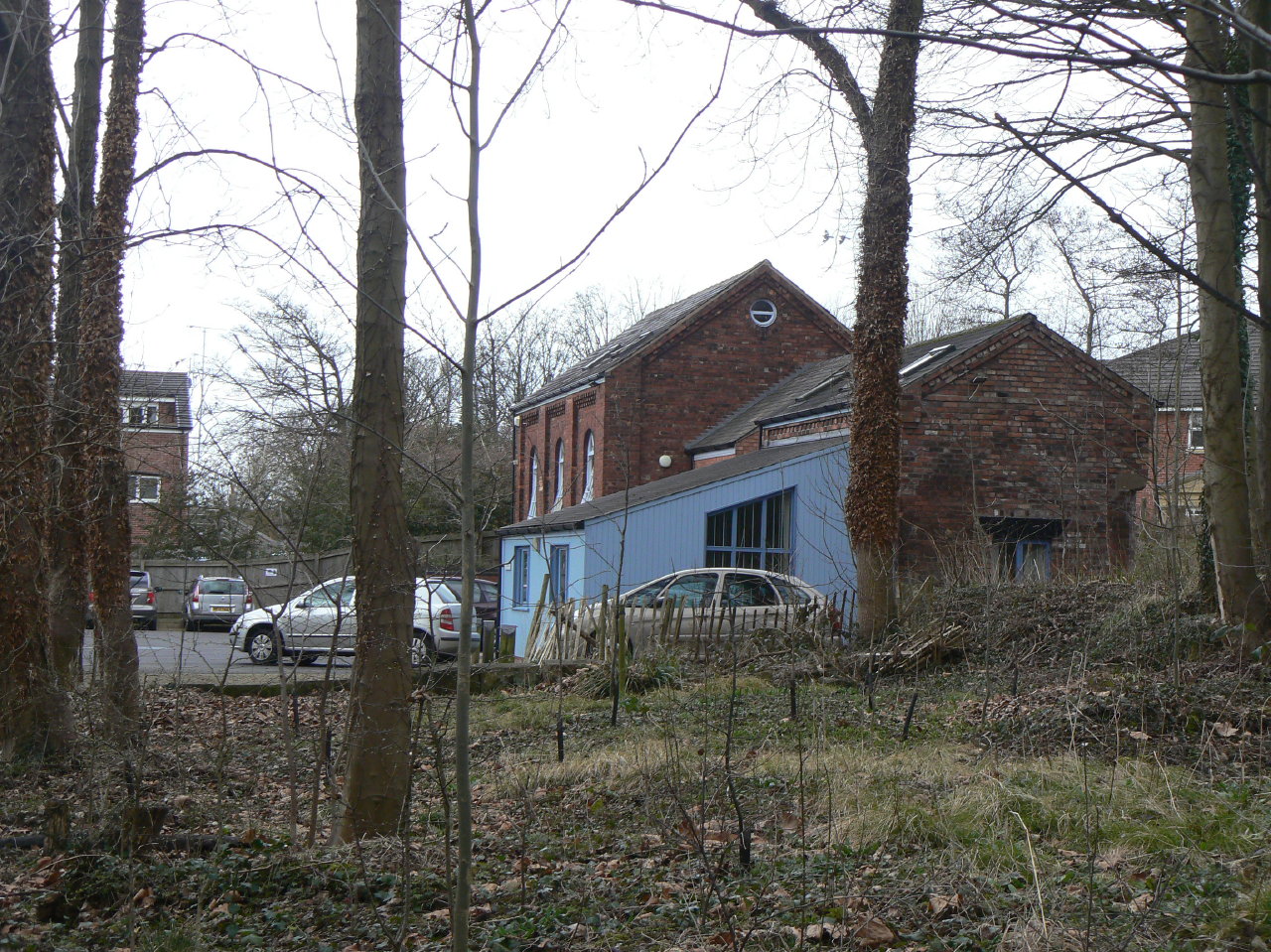
The surface plant was scrapped by Marlowes of Dukinfield in the year after closure and almost every building has since gone. The Lady Pit winding engine house and capstan house survive and have been restored and converted to offices — photographed in 2010 in good repair, having been derelict at one stage. The Anson Pit shaft collapsed in the 1950s and was filled with rubble; Walker Pit was capped by the National Coal Board in 1981 and the Park Pits in July and August 1982, leaving only the Lower Vernon shaft neither capped nor filled.
The Lady Pit winding engine house and capstan house, restored and in office use. The most obvious reminders are the spoil heaps, known locally as dirt rucks: the Anson dirt ruck is the best surviving example and still shows traces of the trackbed of the tubway that climbed to its summit. The Park Pits spoil has been worked over twice since closure, first by speculators taking shale for roadbuilding and then by a washing plant that recovered the small coal mixed into it and sold it to the Central Electricity Generating Board for Carrington power station — so Poynton coal was still making electricity in the 1980s.
Related mines
- Norbury Colliery — Neighbours across Norbury Brook, worked together for a time by Wright and Clayton; Norbury's water drained into Poynton's workings after 1895.
Nearby mines
- Anson Colliery — 0.6 miles (1.0 km) E
- Norbury Colliery — 1.4 miles (2.2 km) N, Greater Manchester
- Hough Hole Colliery — 4.5 miles (7.2 km) S
- Hough Level — 5.6 miles (9.0 km) SW
- Wood Mine — 5.6 miles (9.0 km) SW
Straight-line distance, within 9 miles (15 km). Show on the map.
What's uncertain
Points where sources disagree or the record could not be settled; both accounts are kept. All open questions in the archive.
- The BGS mine-plans catalogue holds a Mining Remediation Authority abandonment plan titled 'Poynton' (catalogue NW1284, Gees, undated in the catalogue); the catalogue gives no location and the plan's details do not clearly tie it to this working, so it may belong to another of the same name. (uncertain) 5
Recorded claims
Individual factual claims, each attached to the source(s) that support it below. Where sources disagree, both are kept.
- Coal was mined at Poynton from the sixteenth century, and the collieries were owned by the Lords Vernon from 1832 until their closure in 1935; they were the largest in Cheshire. 1,2
- James Lawson, acting for Boulton and Watt, inspected the Norbury Hollow pumping engine in March 1796 and found it to be a 40-inch cylinder with a six-foot stroke fitted with an air pump and condenser exactly like theirs; Nathaniel Wright afterwards converted it back to the atmospheric principle rather than pay the premium demanded. 3
- The 1847 colliery report recorded eighteen engines at Poynton — fifteen for winding coal, two for pumping and one driving the saw mill at Towers Yard — including a 72 horsepower pumping engine at Lord Pit and a 70 horsepower winder at the Tower Pit. 3
- The main pumping load was concentrated at Lady Pit in 1875 with the erection of the large Cornish pumping engine known as Big Ned. 3
- Sinking of the Lawrance Pit began in 1884 and its 13-foot shaft reached the Accommodation Seam at 310 yards; by 1891 it was the largest producer at 105,283 tons against the Oval Pit’s 73,120 and the Anson’s 72,140. 3
- The Anson Pit closed in 1926 and the Oval in 1928, and final closure came on Friday 30 August 1935 with about 250 men made redundant; output in the last eight months was 41,090 tons worth £25,267, and within two weeks of pumping ceasing the water had risen to within a few feet of the top of the Park Pit shafts. 4
- The Anson Pit shaft collapsed in the 1950s and was filled with rubble; Walker Pit was capped by the National Coal Board in 1981 and the Park Pits in July and August 1982, leaving only the Lower Vernon shaft uncapped and unfilled. 4
- Small coal recovered from the Park Pits spoil by a washing plant was sold to the Central Electricity Generating Board for use at Carrington power station in the 1980s. 4
- The BGS mine-plans catalogue holds a Mining Remediation Authority abandonment plan titled 'Poynton' (catalogue NW1284, Gees, undated in the catalogue); the catalogue gives no location and the plan's details do not clearly tie it to this working, so it may belong to another of the same name. (uncertain) 5
Photographs & further reading
The engineering chapter of David Kitching’s history: the 1826 and 1847 engine lists pit by pit, the Boulton and Watt patent inspection of 1796 quoted from Lawson’s own letter, and the shaft, winder and pump details for the Anson, Park and Lawrance pits.
View sourceThe closure chapter, from Greenwell’s 1892 warning about Norbury’s rising water to the last shift on 30 August 1935, the capping of the shafts in the 1980s and what is left of the dirt rucks.
View sourceSources
- (secondary) Poynton Collieries: 1832–57, development under the Vernons — David Kitching
- (secondary) Poynton — Wikipedia
- (secondary) Poynton Collieries: Technical Developments and the Main Pits — David Kitching
- (secondary) Poynton Collieries: 1890–1935, the final years — David Kitching
- (primary) BGS / Mining Remediation Authority mine plans: POYNTON — British Geological Survey / Mining Remediation Authority
- (observational) Former Colliery buildings, Lady Pit, Poynton (photographed 2010) — Alan Murray-Rust, Geograph Britain and Ireland
Record created: 6 September 2026 · Last researched: 6 September 2026