 MineArchive
Harry Crofts Colliery
| Location | South Anston, near Rotherham, South Yorkshire — 53.3310, -1.2070 (exact) |
|---|---|
| Commodity | Coal |
| Type | Coal |
| Worked | 1924–1926–1930 |
| Maximum depth | Unknown. |
| Operators | Shireoaks Colliery Company (1924–1930) |
Overview
Harry Crofts was a small, short-lived colliery in the parish of South Anston, sunk by the Shireoaks Colliery Company on ground leased from the Duke of Leeds estates to work the Top Hard coal. It took two years to sink and closed within about four years of reaching the coal, defeated by poor ground rather than by the market. Its surface buildings outlived it: they still stand, in use by a quarry.
History
In 1917 the Shireoaks Colliery Company gained a lease from the estates of the tenth Duke of Leeds to mine Top Hard coal from beneath the villages of North Anston, South Anston and Thorpe Salvin. Harry Crofts was the pit sunk to work it.
The company itself was an established one. Shireoaks Colliery, on the edge of the village of Shireoaks near Worksop in north Nottinghamshire and close to the Yorkshire border, had been sunk from 1861 on mineral rights held by the Duke of Newcastle. The Shireoaks Colliery Company was formed in 1867 and in due course held mining interests across the area, including Steetley and Whitwell.
Harry Crofts was sunk between 1924 and 1926, about two miles east of Kiveton Park railway station. It stood on the north side of the London and North Eastern Railway's main line, almost at the junction of the west curve to the Great Central and Midland Joint Railway at Brantcliffe West Junction — a line that had already closed before the colliery opened, and that was used for wagon storage into the 1960s. The pit closed in 1930.
The company outlasted it comfortably: Shireoaks was sold to the United Steel Companies in 1945, nationalised with the iron and steel industry in 1951 and brought under the National Coal Board, returned to private ownership in 1954, and the Shireoaks pit itself worked on until 1991.
Geology
The colliery was sunk to the Top Hard, the seam the 1917 lease was taken to work — the same coal known further north in the Yorkshire coalfield as the Barnsley Seam, lying in the near-horizontal beds and seams of the Coal Measures. The Geograph photographer who recorded the site in 2006 noted that the colliery closed shortly after opening because of geological problems, which is consistent with a pit abandoned within a few years of a costly two-year sinking; no source sets out what those problems specifically were.
Geological setting: Sedimentary Beds and Seams (well documented example)
Workings
A single shaft, sunk between 1924 and 1926 to the Top Hard. The colliery was laid out against the railway: it sat on the north side of the LNER main line near Brantcliffe West Junction, beside a curve already closed to traffic before the pit began work.
Closure
The colliery closed in 1930, having taken two years to sink and worked for only a few years — one of the shortest working lives of any pit in this archive. The reason recorded is geological rather than commercial. Sources differ on the precise end: the Wikipedia account gives a closure of 1930, while the site is elsewhere described as having stopped production in 1929 with the shaft kept in use afterwards. Both are recorded below; the second could not be verified against any source.
What remains
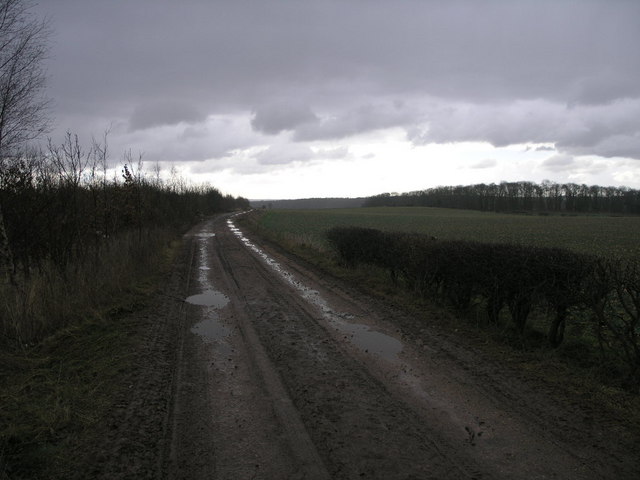
The surface buildings survive and are in use by a quarry on the site. A track leads down to them from the road; a photograph taken from it in February 2006 shows the remaining colliery buildings still standing, and its photographer recorded there that the pit had closed shortly after opening because of geological problems.
Colliery buildings, reused by a quarry occupying the site, reached by a track down from the road.
Related mines
- Shireoaks Colliery — Both were worked by the Shireoaks Colliery Company: Shireoaks was the company's original pit, sunk from 1861 and giving it its name, and Harry Crofts was sunk in the 1920s to work the Top Hard coal the company had leased from the Duke of Leeds estates in 1917.
- Steetley Colliery — Both were held by the Shireoaks Colliery Company, whose mining interests across the area included Steetley and Whitwell alongside this short-lived Anston pit.
Nearby mines
- Shireoaks Colliery — 1.9 miles (3.0 km) E, Nottinghamshire
- Kiveton Park Colliery — 2.4 miles (3.8 km) W
- Steetley Colliery — 2.5 miles (4.1 km) SE, Nottinghamshire
- Dinnington Colliery — 2.7 miles (4.3 km) N
- Whitwell Colliery — 3.5 miles (5.7 km) S, Derbyshire
Straight-line distance, within 9 miles (15 km). Show on the map.
What's uncertain
Points where sources disagree or the record could not be settled; both accounts are kept. All open questions in the archive.
- The colliery closed in 1930. (disputed) 2
- The BGS mine-plans catalogue holds a Mining Remediation Authority abandonment plan titled 'Harrycrofts Colliery' (catalogue SFE189, Surface, undated in the catalogue); the catalogue gives no location and the plan's details do not clearly tie it to this working, so it may belong to another of the same name. (uncertain) 4
Recorded claims
Individual factual claims, each attached to the source(s) that support it below. Where sources disagree, both are kept.
- In 1917 the Shireoaks Colliery Company gained a lease from the estates of the tenth Duke of Leeds to mine Top Hard coal from below the villages of North Anston, South Anston and Thorpe Salvin. 1
- The colliery was sunk between 1924 and 1926, about two miles east of Kiveton Park railway station, on the north side of the LNER main line near Brantcliffe West Junction. 2
- The colliery closed in 1930. (disputed) 2
- The colliery closed shortly after opening because of geological problems. 3
- The Shireoaks Colliery Company was formed in 1867 and held mining interests across the area including Steetley and Whitwell; it was sold to the United Steel Companies in 1945. 1
- The former colliery buildings survive on the site and are in use by a quarry, reached by a track down from the road (observed February 2006). 3
- The BGS mine-plans catalogue holds a Mining Remediation Authority abandonment plan titled 'Harrycrofts Colliery' (catalogue SFE189, Surface, undated in the catalogue); the catalogue gives no location and the plan's details do not clearly tie it to this working, so it may belong to another of the same name. (uncertain) 4
Photographs & further reading
Grace's Guide's account of the company that sank Harry Crofts, including the 1917 Duke of Leeds lease for Top Hard coal under the Anston villages that this pit was sunk to work.
View sourceSources
- (secondary) Shireoaks Colliery Co — Grace's Guide to British Industrial History
- (secondary) Harry Crofts Colliery — Wikipedia
- (observational) Track to Harry Crofts (photograph, February 2006) — Geograph Britain and Ireland
- (primary) BGS / Mining Remediation Authority mine plans: HARRYCROFTS COLLIERY — British Geological Survey / Mining Remediation Authority
Record created: 4 September 2026 · Last researched: 5 September 2026