 MineArchive
Shireoaks Colliery
| Location | Shireoaks, near Worksop, close to the Yorkshire border, Nottinghamshire — 53.3220, -1.1640 (exact) |
|---|---|
| Commodity | Coal |
| Type | Coal |
| Worked | 1859–May 1990 |
| Maximum depth | Unknown. The shaft took from March 1854 to February 1859 to reach coal. |
| Operators | Duke of Newcastle (1854–?), Shireoaks Colliery Company (?–1947), National Coal Board (1947–1990) |
Overview
A colliery sunk from March 1854 by the 5th Duke of Newcastle on the Nottinghamshire side of the Yorkshire border, when Shireoaks was a village of twenty-five houses. It took five years to reach coal. By 1923 it was raising about a million tons a year from the Top Hard or Barnsley Bed. Though in Nottinghamshire, it was transferred to the National Coal Board's South Yorkshire Area in 1967, and closed in 1990.
History
The Duke of Newcastle owned mineral rights across much of north Nottinghamshire, and it was the 5th Duke who sank Shireoaks. A shaft was begun in March 1854, when the village north-west of Worksop had only twenty-five houses, and coal was not reached until February 1859 — five years of sinking.
By 1923 the pit was producing some one million tons of manufacturing and steam coal a year from the Top Hard or Barnsley Bed seams. The National Coal Board took over in 1947, when there were 589 underground workers and 160 on the surface. Although the colliery lay in Nottinghamshire, it was transferred to the South Yorkshire Area in March 1967 and, on a later reorganisation, became part of the South Yorkshire Group in April 1990. That arrangement was short-lived: the colliery closed in May of the same year.
Geology
The colliery worked the Top Hard seam — the Nottinghamshire name for what South Yorkshire calls the Barnsley Bed, the same rich bed pursued at Kiveton Park, Hickleton Main and across the Doncaster coalfield. Reaching it took five years of sinking from March 1854, coal not being struck until February 1859.
Geological setting: Sedimentary Beds and Seams (well documented example)
Workings
A shaft begun in March 1854 that did not reach coal until February 1859. The colliery stood on the edge of Shireoaks village near Worksop, close to the Yorkshire border, and worked the Top Hard or Barnsley Bed seams.
Closure
The colliery became part of the National Coal Board's South Yorkshire Group in April 1990 and closed in May the same year. One source gives the closure date as 25 May 1991, a discrepancy recorded rather than resolved.
What remains
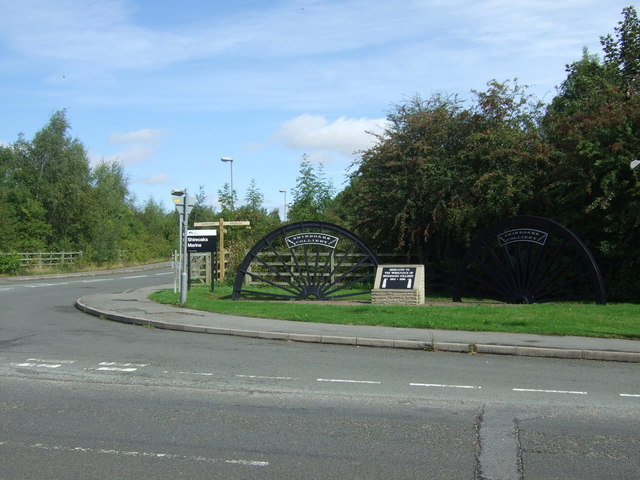
The colliery was demolished, the work photographed in July 1991. A memorial to the colliery stands in the village.
None; a memorial to the colliery stands in Shireoaks village.
Related mines
- Harry Crofts Colliery — Both were worked by the Shireoaks Colliery Company: Shireoaks was the company's original pit, sunk from 1861 and giving it its name, and Harry Crofts was sunk in the 1920s to work the Top Hard coal the company had leased from the Duke of Leeds estates in 1917.
- Steetley Colliery — Steetley was connected to Shireoaks Colliery, relied on it for ventilation and was amalgamated with it in March 1983.
- Whitwell Colliery — Both sunk and owned by the Shireoaks Colliery Company.
Nearby mines
- Steetley Colliery — 1.5 miles (2.5 km) S
- Harry Crofts Colliery — 1.9 miles (3.0 km) W, South Yorkshire
- Whitwell Colliery — 3.3 miles (5.3 km) SW, Derbyshire
- Firbeck Colliery — 3.7 miles (5.9 km) NE
- Dinnington Colliery — 3.8 miles (6.1 km) NW, South Yorkshire
Straight-line distance, within 9 miles (15 km). Show on the map.
What's uncertain
Points where sources disagree or the record could not be settled; both accounts are kept. All open questions in the archive.
- The colliery closed in May 1990, a month after joining the South Yorkshire Group; one source instead gives 25 May 1991. (disputed) 2
Recorded claims
Individual factual claims, each attached to the source(s) that support it below. Where sources disagree, both are kept.
- A shaft was begun at Shireoaks in March 1854 by the 5th Duke of Newcastle, when the village had only twenty-five houses, and had reached coal by February 1859. 1,2
- By 1923 the pit was producing some one million tons of manufacturing and steam coal a year from the Top Hard or Barnsley Bed seams. 2
- The National Coal Board took over in 1947, when there were 589 underground and 160 surface workers. 2
- Although the colliery was in Nottinghamshire it was transferred to the South Yorkshire Area in March 1967, and became part of the South Yorkshire Group in April 1990. 2
- The colliery closed in May 1990, a month after joining the South Yorkshire Group; one source instead gives 25 May 1991. (disputed) 2
Photographs & further reading
The company record for the colliery, with its industrial and corporate history.
View sourceSources
- (secondary) Shireoaks Colliery Co — Graces Guide — Graces Guide
- (secondary) Shireoaks Colliery — Wikipedia
Record created: 3 September 2026 · Last researched: 3 September 2026