 MineArchive
Firbeck Colliery
| Location | Carlton in Lindrick / Langold, Nottinghamshire — 53.3700, -1.1269 (approximate) |
|---|---|
| Commodity | Coal |
| Type | Coal |
| Worked | 1923-25 (sinking)–31 December 1968 |
| Maximum depth | unspecified |
| Operators | Sheepbridge Coal and Iron Company (1923–1947), Doncaster Collieries Association (1923–1947), National Coal Board (1947–1968) |
Overview
A Nottinghamshire colliery, also known as Firbeck Main, sunk in the 1920s as a joint venture between the Sheepbridge Coal and Iron Company and the Doncaster Collieries Association, which built the neighbouring village of Langold to house its workforce — over its 43 years of working, 60 men lost their lives there, though never enough at once to count as a single disaster by this archive's own measure.
History
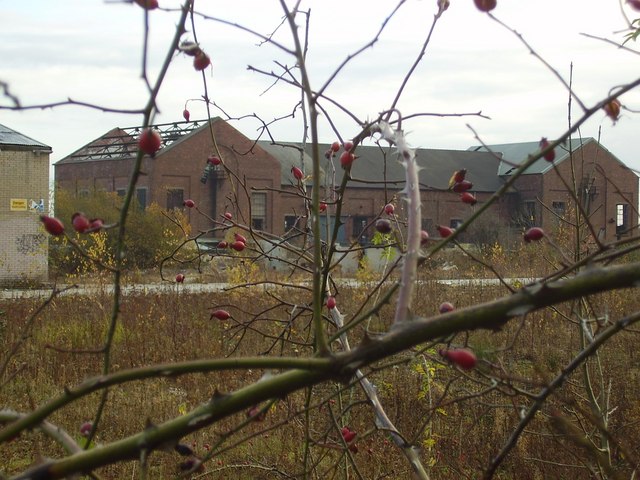
Firbeck Main Colliery's two shafts were sunk between 1923 and 1925 as a joint venture between the Sheepbridge Coal and Iron Company and the Doncaster Collieries Association, with coal production from the Barnsley Bed seam beginning in 1925; the purpose-built village of Langold was created alongside it to house the workforce. At its peak the colliery employed 1,457 men underground and 357 on the surface. Output peaked in 1953, after which flooding, ventilation difficulties and geological faults increasingly hampered the pit, and its shafts proved unsuitable for the mechanical skip winding that could have kept coal moving to the surface efficiently. In March 1967 Firbeck was transferred, along with the neighbouring Shireoaks, Steetley and Manton collieries, from the National Coal Board's East Midlands Division into its North Eastern Division in South Yorkshire. The colliery closed on 31 December 1968 on grounds of uneconomic production, a closure significant enough to be debated in the House of Commons. Over its 43 years of working, 60 men lost their lives at Firbeck, commemorated by a memorial in Langold village; the site itself was finally demolished in the early 2020s.
Geology
Coal of the South Yorkshire field: the Barnsley Bed seam. Geological faults, with flooding and ventilation trouble, are what hampered the pit after 1953.
Workings
Two shafts sunk 1923-25, working the Barnsley Bed seam; unsuitable for later mechanical skip winding, which increasingly limited output as the pit aged.
Closure
Closed on 31 December 1968 on grounds of uneconomic production, following growing problems with flooding, ventilation and geological faults after peak output in 1953; the closure was significant enough to be raised in the House of Commons.
What remains
A memorial in Langold village commemorates the 60 men who lost their lives at the colliery over its working life. The colliery site itself, having stood derelict for some years, was fully demolished in the early 2020s.
Related mines
- Harworth Colliery — Linked by the South Yorkshire Joint Railway connection of 1928, which served both pits.
Nearby mines
- Dinnington Colliery — 3.4 miles (5.4 km) W, South Yorkshire
- Shireoaks Colliery — 3.7 miles (5.9 km) SW
- Harworth Colliery — 4.1 miles (6.6 km) NE
- Harry Crofts Colliery — 4.3 miles (6.9 km) SW, South Yorkshire
- Maltby Colliery — 4.8 miles (7.8 km) NW, South Yorkshire
Straight-line distance, within 9 miles (15 km). Show on the map.
Culture
- Firbeck Main F.C. (Sports)
The football club of Langold, the village built for Firbeck Colliery's miners, playing under the colliery's name in the 1930s and 1940s.
Recorded claims
Individual factual claims, each attached to the source(s) that support it below. Where sources disagree, both are kept.
- Firbeck Main Colliery's two shafts were sunk between 1923 and 1925 as a joint venture between the Sheepbridge Coal and Iron Company and the Doncaster Collieries Association, with coal production from the Barnsley Bed seam beginning in 1925; the village of Langold was built to house the workforce. 1
- The colliery closed on 31 December 1968 on grounds of uneconomic production, following flooding, ventilation problems and geological faults after peak output in 1953; the closure was debated in the House of Commons. 1
- Sixty men lost their lives at Firbeck Colliery over its 43 years of working, commemorated by a memorial in Langold; the derelict site was fully demolished in the early 2020s. 2
Photographs & further reading
The House of Commons debate on the colliery's 1968 closure.
View sourceSources
- (primary) Firbeck Colliery (Closure) — Hansard — UK Parliament
- (observational) Firbeck Colliery, Notts, May 2019 — Derelict Places
Record created: 2 September 2026 · Last researched: 2 September 2026