 MineArchive
Gentlemen Colliers
| Also known as | Harbourne Oake, Gentlemen Colliers Colliery |
|---|---|
| Location | Coalway, between Coleford and Broadwell, Gloucestershire — 51.7964, -2.6013 (approximate) |
| Commodity | Coal |
| Type | Coal |
| Worked | By 1735–c. 1900 |
| Maximum depth | Worked by level as far as the level would drain; no shaft depth is recorded. |
| Operators | Peter Teague and Company (1841–1860), Smith Brothers (1880–1918) |
Overview
A free miners’ working at Coalway, between Coleford and Broadwell, known by this name since at least 1735 and also recorded as Harbourne Oake. It took the Coleford High Delf Seam by level, as far as the level would drain and no further, and it was never large: 338 tons in 1845, 326 in 1846, 1,888 in 1888 and 1,140 in 1894. James Teague, the free miner who built the first tramroads in Dean and established the Whitecliff ironworks, had an interest by 1790 and told Halford and Mushet, who took an interest in 1809, that he had never got anything by it. His son Peter Teague held three undivided eighth shares in 1841, Charles Ford of Monmouth the other five. J. Smith is returned as owner in 1880 and the Smith brothers held it into the twentieth century; no coal was mined after about 1900.
History
The mine is referred to as far back as 1735, under the name Gentlemen Colliers or Harbourne Oake, and a working pit at Littledean Lane End near Broadwell is recorded in 1835. Its ownership runs through the Forest’s own institution of free mining, by which a man born in the Hundred of St Briavels who had worked a year and a day in a local mine could take a gale — a licensed claim — to work coal, iron ore, ochre or stone.
James Teague, who died in 1818, is the best-known name attached to it. Partnered in the 1790s by several Shropshire industrialists, Teague acquired coal and ore mines on the west side of the Forest, installed a steam engine at one of them, built the first tramroads in Dean, established ironworks at Whitecliff near Coleford, and employed other free miners; Ralph Anstis noted that he had an interest in Gentlemen Colliers by 1790. Halford and Mushet, who took an interest in 1809, had heard Teague say that he never got anything by it. His son Peter was a managing partner in Peter Teague and Co., which ran three collieries near Coleford — Hopewell, New Engine and Prosper — and in 1841 held three undivided eighth shares in Gentlemen Colliers, Charles Ford of Monmouth holding the other five, both claiming through or under Free Miners. The gale covered coal in the Coleford High Delf as far as the level would drain, to a distance of 200 yards beyond the Coleford–Newnham turnpike road.
Recorded owners afterwards run J. Rawkins & Teague from 1855 to 1860, J. Smith from 1880 to 1890 — the name in the official 1880 list of collieries at work — and Smith Brothers from 1895 to 1918. Output was small and erratic: 338 tons in 1845, 326 in 1846, 1,888 in 1888 and 1,140 in 1894 under the Smiths. No coal was mined after about 1900, and a case reported in the Dean Forest Guardian on 18 October 1905 — Sarah Jenkins, wife of a Lane End quarry owner, suing Edwin, Milsom, Amos and John Smith, colliery proprietors, for £28 18s. — records the gale as not worked since September 1900. In February 1910 it was reported that the Smiths might reopen New Hawkins Colliery, which they had probably bought in 1898, from a pit on Gentlemen Colliers.
Geology
The Coleford High Delf Seam, the coal that underlies most of the western side of the Forest of Dean basin and outcrops around Coleford and Broadwell. It is the seam the free miners had been taking by level for centuries, and the gale here was defined by that method: coal as far as the level would drain, and no further. Everything below the free drainage line needed capital the free miners generally did not have.
Geological setting: Sedimentary Beds and Seams (well documented example)
Workings
Levels and shallow shafts on the high ground north of Baker’s Hill, between Coleford and Broadwell. At least three tips survive in that area, and at one of them an air shaft can still be made out beside the tip. The gale’s terms — as far as the level will drain, to 200 yards beyond the Coleford–Newnham turnpike road — describe the working directly: a level driven into the Coleford High Delf from its outcrop, taking coal above the water it could get rid of by gravity.
Closure
The gale had not been worked since September 1900, according to evidence given in a case reported in the Dean Forest Guardian in October 1905, and no coal appears to have been mined after that date. The Smiths kept the gale, and in February 1910 it was reported that they might reopen the neighbouring New Hawkins Colliery through one of the Gentlemen Colliers pits. The recorded ownership runs on to Smith Brothers in 1918 and the site was still being referred to in 1954, under W. C. Beard at Palmers Flat.
What remains
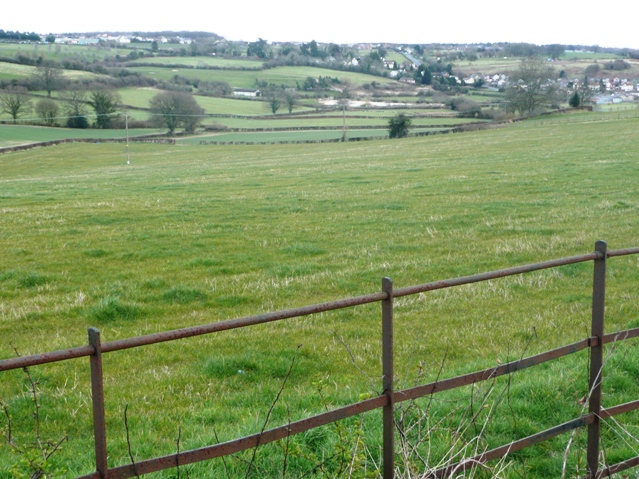
Overgrown ground on the ridge between Coleford and Broadwell. At least three tips can be seen north of Baker’s Hill, with an air shaft site beside one of them; the Forest of Dean Local History Society photographed them in March and November 2004. Nothing else survives.
At least three spoil tips north of Baker’s Hill between Coleford and Broadwell, one with the site of an air shaft beside it, and the site of one of the shafts visible in the ground west of the Society’s viewpoint.
Nearby mines
- Cross Knave Colliery — 0.7 miles (1.1 km) N
- Dark Hill Colliery — 1.0 miles (1.6 km) S
- Whitecliff Ironworks — 1.2 miles (2.0 km) SW
- Hopewell Colliery — 1.3 miles (2.1 km) E
- Cannop Colliery — 1.5 miles (2.4 km) E
Straight-line distance, within 9 miles (15 km). Show on the map.
Recorded claims
Individual factual claims, each attached to the source(s) that support it below. Where sources disagree, both are kept.
- The official list of collieries at work in 1880 returns the pit as "Gentlemen Colliers, Coleford, J. Smith". 1
- References to the colliery go back as far as 1735, when it was known as Gentlemen Colliers or Harbourne Oake, and a working pit at Littledean Lane End near Broadwell is recorded in 1835. 2,3
- James Teague had an interest in the colliery by 1790; Halford and Mushet, who took an interest in 1809, had heard Teague say that he never got anything by it. 3
- In 1841 Charles Ford of Monmouth held five undivided eighth shares and Peter Teague the other three, both claiming through or under Free Miners, in coal in the Coleford High Delf extending as far as the level would drain, to a distance of 200 yards beyond the Coleford–Newnham turnpike road. 2,3
- Output was 338 tons in 1845, 326 tons in 1846, 1,888 tons in 1888 and 1,140 tons in 1894 under the Smith brothers. 2,3
- Evidence in a case reported in the Dean Forest Guardian on 18 October 1905 records the gale as not worked since September 1900; in February 1910 it was reported that the Smiths might reopen New Hawkins Colliery, which they had probably bought in 1898, from a pit on Gentlemen Colliers. 3
- One death is recorded: William Hawkins, a collier aged 35, killed on 7 March 1814 when a large quantity of coal fell on his body and head. The accident report gives the colliery name as "Gentleman’s Colliery", which the Forest of Dean Local History Society takes to be this mine. 2
- Free mining in the Forest of Dean allowed a person born in the Hundred of St Briavels who had worked for a year and a day in a local mine to work a gale — a licensed claim — for coal, iron ore, ochre or stone. 4
Photographs & further reading
A page of notes and abstracts on the gale from 1735 to 1954: the Teague interest, the 1841 division of shares between Charles Ford and Peter Teague, the recorded outputs, and the 1905 Dean Forest Guardian case that dates the end of working to September 1900.
View sourceThe standard account of free mining and the gale system that this colliery was worked under, and of James Teague — the free miner who built the first tramroads in Dean and whose interest here he reckoned had never paid him.
View sourceSources
- (secondary) List of coal mines UK 1880 — Coalmining History Resource Centre
- (primary) Miners Memorial Project: Fatalities in Coal Mines — Forest of Dean Local History Society
- (secondary) Gentlemen Colliers — Forest of Dean Coal Mining — Lightmoor Press
- (secondary) A History of the County of Gloucester: Volume 5, Bledisloe Hundred, St Briavels Hundred, the Forest of Dean — Industry — Victoria County History / British History Online
- (observational) View towards Coleford (photographed 27 March 2008) — Graham Horn, Geograph Britain and Ireland
Record created: 6 September 2026 · Last researched: 6 September 2026