 MineArchive
Hopewell Colliery
| Also known as | Hope-Well Pit, Hopewell Colliery Museum |
|---|---|
| Location | Cannop Hill, near Coleford, Forest of Dean, Gloucestershire — 51.7954, -2.5713 (approximate) |
| Commodity | Coal |
| Type | Coal |
| Worked | from 1822 |
| Maximum depth | The Coleford High Delf seam lies at about 45 m |
| Operators | James and Robert Morrell (1822–1880), George Powell (1824–1830), Hopewell Colliery (1997–?) |
Overview
A Forest of Dean coal mine still worked by a freeminer — the holder of a right, granted by Edward I and still administered by a Crown official, that belongs to nobody in Britain except men born in the Hundred of St Briavels who have worked a year and a day underground.
History
Hopewell opened in 1822 as the Hope-Well Pit under James and Robert Morrell, Oxford bankers with substantial Forest interests; the gale was first granted around 1824 to the freeminer George Powell, who leased his interest to them, and they were working the neighbouring Miles' Level and Hopewell Engine gales in the same period. A rail connection to the Severn and Wye Railway followed in 1863, and output peaked at 4,330 tons a year by 1880 before the Forest's small mines went into long decline after the 1920s. The site reopened as a museum in 1997 and is run by a working freeminer, who still mines coal nearby.
Geology
The workings follow the Coleford High Delf, the Forest of Dean's principal coal seam, laid down in the Carboniferous around 309 million years ago and lying here at about 45 m below the surface. What makes it remarkable to stand in is its thinness: the seam is around 18 inches high, which is the whole working space a Dean miner had.
Geological setting: Sedimentary Beds and Seams (well documented example)
Workings
Entered by adit rather than shaft — the New Road Adit, an original 1820s tunnel, is the way in for visitors today, taken by helmet and hand lamp with no electric lighting. Underground the thin seam is visible with period wooden supports and miners' tools in place.
Closure
Hopewell has not closed. Commercial working at the scale of the 1880s ended long ago, but the mine is still galed and still worked, and the proprietor mines coal nearby.
What remains
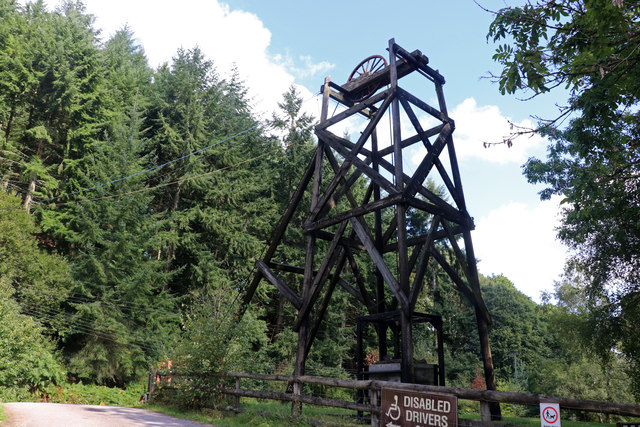
Open to the public from spring to autumn as a working mine and museum, with underground tours, re-erected headgear and mining equipment at surface.
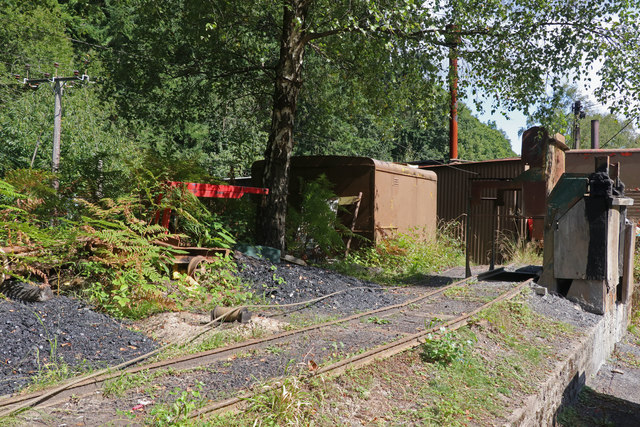
Colliery buildings, a pump, re-erected head gear and a cable-operated narrow-gauge railway, alongside the museum and café.
Redevelopment
None — the site is a working mine that also takes visitors, which is very nearly unique in Britain.
Nearby mines
- Cannop Colliery — 0.4 miles (0.6 km) N
- Gentlemen Colliers — 1.3 miles (2.1 km) W
- Brookall Ditches Colliery — 1.4 miles (2.3 km) SE
- Dark Hill Colliery — 1.5 miles (2.4 km) SW
- New Fancy Colliery — 1.5 miles (2.5 km) SE
Straight-line distance, within 9 miles (15 km). Show on the map.
What's uncertain
Points where sources disagree or the record could not be settled; both accounts are kept. All open questions in the archive.
- The freemining right dates to the reign of Edward I and is said to have been granted in recognition of the miners' military service, possibly at the recapture of Berwick-upon-Tweed — an origin that remains traditional rather than documented. (uncertain) 1,3
Recorded claims
Individual factual claims, each attached to the source(s) that support it below. Where sources disagree, both are kept.
- Hopewell opened in 1822 as the Hope-Well Pit under James and Robert Morrell; the gale was granted around 1824 to the freeminer George Powell, who leased his interest to them. 1,2
- Rails connected the colliery to the Severn and Wye Railway in 1863. 1
- Output peaked at 4,330 tons a year by 1880, with decline setting in after the 1920s. 1
- The mine works the Coleford High Delf seam at about 45 m depth; the seam itself is around 18 inches high and formed in the Carboniferous roughly 309 million years ago. 1
- The freemining right dates to the reign of Edward I and is said to have been granted in recognition of the miners' military service, possibly at the recapture of Berwick-upon-Tweed — an origin that remains traditional rather than documented. (uncertain) 1,3
- The Dean Forest (Mines) Act 1838 defined a freeminer as a person born and abiding within the Hundred of St Briavels, aged twenty-one or over, who had worked a year and a day in a coal or iron mine. 3
- A gale is a mining claim granted to a freeminer — historically a twelve-yard radius around a designated spot, for which fees were paid — and the system is administered on behalf of the Forestry Commission by the Deputy Gaveller, a Crown official. 2
- Only a handful of freeminers remain. Hopewell reopened as a museum in 1997 and is run by a working freeminer who still mines coal nearby. 1
- Coal Authority plan SW209, covering Hopewell with the neighbouring Wimberry and Cannop gales, records abandonment on 30 April 1954. 4
Sources
- (secondary) Hopewell Colliery — Show Mines of Great Britain
- (secondary) Forest of Dean Coal Mining — Lightmoor Press
- (primary) Freemining — Hopewell Colliery — Hopewell Colliery
- (primary) Mine plans SWR2577 and SW209: Hopewell, Wimberry, Cannop and associated gales — British Geological Survey / Mining Remediation Authority mine plans catalogue
Record created: 24 August 2026 · Last researched: 24 August 2026