 MineArchive
Danescombe Mine
| Also known as | Calstock Consols, Danescombe Valley Mine |
|---|---|
| Location | Danescombe valley, Calstock, Cornwall — 50.5018, -4.2258 (exact) |
| Commodities | Arsenic, Copper |
| Type | Metal |
| Worked | Before 1837–after 1900 |
| Maximum depth | Unknown. |
| Operators | Calstock Consols (1850–1872) |
Overview
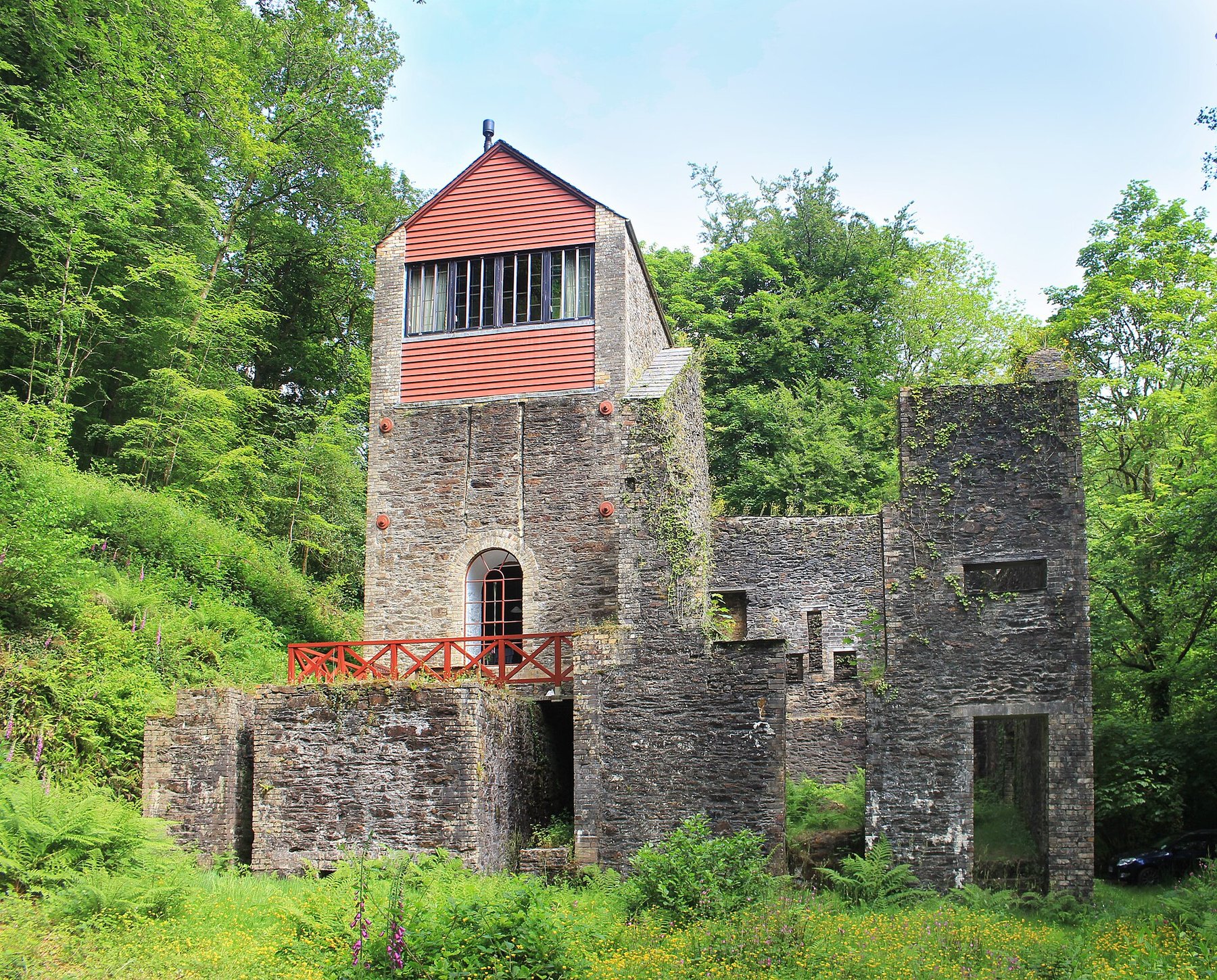
A copper and arsenic mine in the wooded Danescombe valley on the Cotehele estate above Calstock, worked on and off through the nineteenth century and closed after 1900. Its history is the Cornish story in miniature: copper first, then arsenic as foreign copper destroyed the market, then nothing. Part of the mine buildings, once housing an engine, a Cornish boiler and crushing plant, were restored in 1972-73 and are let for holidays by the Landmark Trust.
History
The mine's beginnings are obscure, but it was working before 1837, when it was restarted under leases granted by Lord Ashburton and the Earl of Mount Edgcumbe. That company was wound up in 1842 and the plant dispersed: the 30-inch pumping engine went to the South Hooe lead mine across the Tamar and the steam whim to Marke Valley at Linkinhorne. Further work went on here and at the closely related Wheal Calstock between 1846 and 1868, the company changing its name to Calstock Consols in 1850, and the machinery was sold off in 1872. The mine restarted once more in 1888 and produced both copper and arsenic; production ceased after 1900, though there was later prospecting in the valley.
The swing from copper to arsenic was not local bad luck but the whole Cornish predicament. Copper was made unprofitable here by discoveries in Cuba, South Australia, Chile and then Michigan, culminating in the great copper slump of 1866 to 1868. Tin became the mainstay after copper declined, and was in turn undercut by Australian deposits in the 1870s, then the Malay states, and after 1900 Bolivia. In 1891 Cornwall had 6,156 men and boys classed as miners; seven years later it had 2,749.
Geology
The mine lies in the Tamar valley mining district at the eastern edge of the Cornubian orefield, where copper lodes carry the arsenic-bearing mispickel that became the more valuable product once copper prices collapsed. The valley is steep and wooded, which shaped the works as much as the geology: buildings are stacked down the hillside rather than spread across a sett.
Geological setting: Veins and Lodes (well documented example)
Workings
The surviving grouping housed an engine, a Cornish boiler and crushing plant, which is what the Landmark Trust's building was before it was a house. Water and steam plant moved between mines as fortunes changed rather than being scrapped: Danescombe's 30-inch pumping engine was sold across the river to South Hooe in 1842 and its steam whim to Marke Valley, and the rest of the machinery went in 1872.
Closure
Production ceased after 1900. There was later prospecting in the valley but no further working. The mine had already been wound up, restarted and sold off three times before that, which is the pattern its account gives: the varying fortunes were the result not only of the unpredictability of mining but of the changing world price of copper and then tin.
What remains
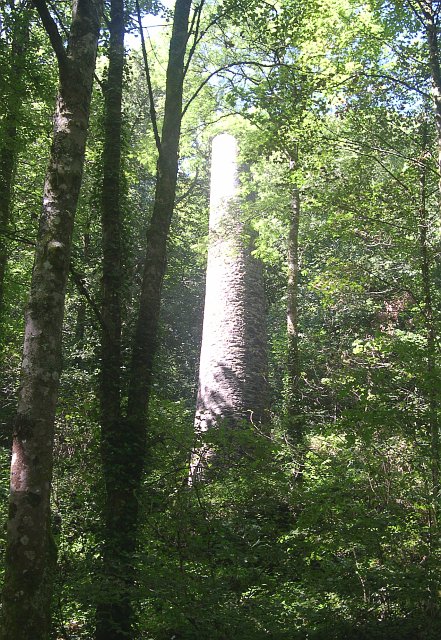
The mine buildings stand in woodland in the valley. The Landmark Trust leases part of them from the National Trust and lets them for holidays, the restoration having been carried out in 1972-73 by the architect Paul Pearn of Pearn and Procter of Plymouth. A mine chimney survives hidden among the trees, and underground workings in the valley have been photographed. A short walk through the woods leads to Cotehele, the medieval house the estate is named for.
The engine, boiler and crushing house group, restored in 1972-73 and let by the Landmark Trust, and a chimney hidden among the trees.
Redevelopment
The engine, boiler and crushing house grouping was restored in 1972-73 and is let as holiday accommodation by the Landmark Trust under lease from the National Trust.
Related mines
- Marke Valley Mine — Danescombe's steam whim was sold to Marke Valley at Linkinhorne when the Danescombe company was wound up in 1842; Danescombe is named on the Marke Valley record.
Nearby mines
- Drakewalls Mine — 0.9 miles (1.4 km) N
- Hingston Down Quarry — 1.4 miles (2.2 km) N
- Okeltor Mine — 1.5 miles (2.3 km) E
- George and Charlotte Copper Mine — 1.5 miles (2.4 km) E, Devon
- Bere Alston Silver-Lead Mines — 1.6 miles (2.5 km) SE, Devon
Straight-line distance, within 9 miles (15 km). Show on the map.
Recorded claims
Individual factual claims, each attached to the source(s) that support it below. Where sources disagree, both are kept.
- The mine was working before 1837, restarted that year under leases from Lord Ashburton and the Earl of Mount Edgcumbe, wound up in 1842, worked again from 1846 to 1868 as Calstock Consols from 1850, sold off in 1872, restarted in 1888 and ceased production after 1900. 1
- On the 1842 winding up the 30-inch pumping engine was sold to the South Hooe lead mine across the Tamar and the steam whim to Marke Valley at Linkinhorne. 1
- Cornish copper was made unprofitable by discoveries in Cuba, South Australia, Chile and Michigan and the slump of 1866-68; the county's miners fell from 6,156 in 1891 to 2,749 seven years later. 1
- The grouping that housed an engine, a Cornish boiler and crushing plant was restored in 1972-73 by the architect Paul Pearn of Pearn and Procter, Plymouth, and is let for holidays by the Landmark Trust. 1
Photographs & further reading
The Trust's account of the mine's successive companies, the sale of its engines, and the 1972-73 restoration of the crusher house that is now let for holidays.
View sourceSources
- (secondary) Danescombe Mine, Calstock, Cornwall — Landmark Trust history sheet — The Landmark Trust
- (observational) Danescombe Mine — Geograph Britain and Ireland
- (primary) Copper and arsenic mine, Danescombe Valley, Cotehele — National Trust Heritage Record MNA100166 — National Trust
Record created: 9 September 2026 · Last researched: 9 September 2026