 MineArchive
Birley Collieries
| Also known as | Birley Colliery, Birley East Colliery, Birley West Colliery, Birley Vale Colliery |
|---|---|
| Location | Shire Brook valley, Woodhouse, South Yorkshire — 53.3528, -1.3666 (exact) |
| Commodity | Coal |
| Type | Coal |
| Worked | From 1870s–1943 |
| Maximum depth | Unknown. |
| Operators | Sheffield Coal Company (1866–1877), William Dunn Gainsford (1877–1926) |
Overview
A pair of Sheffield Coal Company pits in the Shire Brook valley of south-east Sheffield, worked from the 1870s and served by their own branch railway. Six men died in an explosion in 1876 that put the fireman in the dock for manslaughter, and four more in an explosion in 1924. Birley East drew its last coal in 1943 and spent the rest of its life training Bevin Boys.
History
In 1866 the Sheffield Coal Company, founded in 1805, agreed with Earl Manvers to work the coal under his land around Frecheville, Woodhouse and Hackenthorpe, then outside the Sheffield boundary. Over the following decade it sank and developed Birley West Colliery in the Shire Brook valley between Woodhouse and Hackenthorpe. A second ten-year plan brought more land and a new shaft, though work on that sinking did not start until the spring of 1887; the part-finished pit was named Birley East the next year, drawing its coal up at Birley West until a new winding engine brought it fully on stream in 1890. Mining rights under Handsworth Common followed, from the Duke of Norfolk. From 1877 until his death in 1926 the collieries' owner was William Dunn Gainsford, with his cousin Alfred John Gainsford as managing director.
The pits were reached by their own line. The Manchester, Sheffield and Lincolnshire Railway had obtained powers for a set of short coal branches in 1852 and built only one of them: the Birley branch, two and three-quarter miles from Woodhouse East Junction, opened in June 1855, built by Thomas Waring and Company for £9,989, single track and worked on the one-engine-in-steam principle. The railway companies worked it until 1943, when the colliery company took over.
The record of deaths at these pits, assembled from the Sheffield press, runs from a sixteen-year-old at Birley Vale in 1856 to the last day of production in 1943, when John Prest was trapped by coal shaken down from an upper layer. Six died in the explosion of June 1876 and four in that of February 1924 (see Disasters, below); two men were killed together by a fall of three tons of bind in November 1911, and three by a wet roof collapse that brought down eighty tons of coal in December 1934. In 1904 a fire in the engine house spread to the pit head with six or seven hundred men and boys below; it took two hours to get them all out through a neighbouring shaft, and the pit-head buildings were almost entirely destroyed. In 1898 a boy of sixteen was crushed by a runaway tub after working eleven or twelve hours, and the chief inspector of mines for the Midlands district used his report to criticise the practice of boys working overtime.
Birley West drew its last coal in 1908 and everything moved to the East pit, which drew its own last coal on 15 October 1943. That was not the end of it. In December 1943 Ernest Bevin announced the ballot that produced the Bevin Boys, and Birley's recently closed surface was turned over to training them, with Nissen huts on Beighton Road taking their first occupants early in 1944. After the war the trainees were men from allied countries settling in England, a large contingent of them Polish. Later a borehole and pumping house were sunk on the site to help with the water table at Brookhouse Colliery, and that pump ran until Brookhouse closed in 1986.
Geology
The collieries worked the Coal Measures of the South Yorkshire coalfield on the eastern edge of Sheffield. The Silkstone seam was being worked at Birley Vale at the time of the 1876 explosion, and the Parkgate is named in accident reports from the First World War; a shaft ran from the Parkgate down to the Silkstone, a drop of thirty yards. The 1876 inquest turned on an exploring heading driven some ninety yards beyond a fault to prove the coal on the far side of it.
Geological setting: Sedimentary Beds and Seams (well documented example)
Workings
Two shafts a little apart in the same valley, West and East, with the East pit eventually carrying the whole operation. Underground the pits used corves and tubs on inclined planes and endless-chain haulage, both of which appear repeatedly in the accident record. Ventilation in the exploring heading of 1876 was carried to the far end in wooden pipes, and the shift from locked safety lamps to naked lights in that district is what caused the explosion.
Closure
Birley West drew its last coal in 1908; Birley East on 15 October 1943. The site then served as a mining training centre into the post-war years, and a borehole and pump installed there for Brookhouse Colliery ran until Brookhouse closed in 1986.
What remains
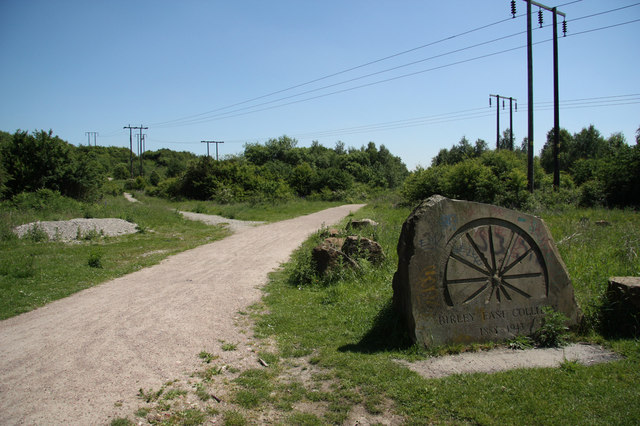
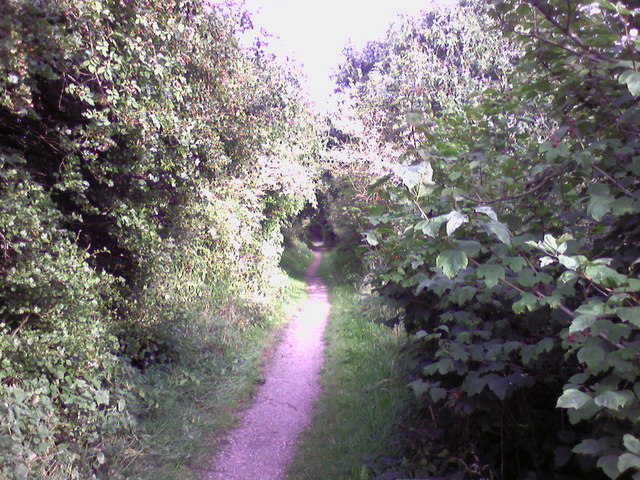
The colliery sites are open ground in the Shire Brook valley. The course of the Birley branch railway is now a section of the Trans Pennine Trail.
None identified beyond the site itself.
Redevelopment
The branch railway's route is part of the Trans Pennine Trail; the valley is public open space.
Related mines
- Brookhouse Colliery — Both were Sheffield Coal Company pits east of Sheffield. After Birley stopped drawing coal a borehole and pumping house were sunk on its site to help with Brookhouse's water table, and ran until Brookhouse closed in 1986.
- North Staveley Colliery — Both were Sheffield Coal Company pits, standing either side of the Manchester, Sheffield and Lincolnshire line east of Woodhouse East Junction.
Nearby mines
- Fence Colliery — 1.5 miles (2.4 km) NE
- Orgreave Colliery — 1.8 miles (2.9 km) N
- Handsworth Colliery — 1.8 miles (3.0 km) NW
- Brookhouse Colliery — 1.9 miles (3.1 km) E
- Holbrook Colliery — 2.2 miles (3.6 km) SE, Derbyshire
Straight-line distance, within 9 miles (15 km). Show on the map.
Disasters & major incidents
-
Birley Vale Colliery Explosion, 1876
26 June 1876 · Explosion · 6 fatalities
Six men died on the morning of 26 June 1876 when colliers carrying naked lights fired gas that had gathered in an exploring heading at Birley Vale Colliery near Sheffield. The men had been using locked safety lamps until two days earlier, when the under-viewer reported the ventilation improved and the manager left the choice of lights to his discretion. Neither he nor the fireman had walked to the end of the heading. The Yorkshire jury returned manslaughter against the fireman. -
Birley East Colliery Explosion, 1924
23 February 1924 · Explosion · 4 fatalities
An explosion at Birley East Colliery on 23 February 1924 killed four men and injured four others. Two of the dead were father and son, Herbert and Ernest Roper of Rainbow Forge, Hackenthorpe.
What's uncertain
Points where sources disagree or the record could not be settled; both accounts are kept. All open questions in the archive.
- The BGS mine-plans catalogue holds a Mining Remediation Authority abandonment plan titled 'Birley' (catalogue 5312, Silkstone, dated 1908); the catalogue gives no location and the plan's details do not clearly tie it to this working, so it may belong to another of the same name. (uncertain) 3
Recorded claims
Individual factual claims, each attached to the source(s) that support it below. Where sources disagree, both are kept.
- The Sheffield Coal Company agreed with Earl Manvers in 1866 to work the coal under Frecheville, Woodhouse and Hackenthorpe, sank Birley West over the following decade, and began Birley East in the spring of 1887; William Dunn Gainsford owned the collieries from 1877 to his death in 1926. 1
- The Birley coal branch, two and three-quarter miles from Woodhouse East Junction, opened in June 1855, built by Thomas Waring and Company for £9,989; it was single track, worked on the one-engine-in-steam principle, and taken over by the colliery company in 1943. 1
- The Silkstone seam was being worked at Birley Vale colliery at the time of the 1876 explosion, and an exploring heading had been driven about ninety yards beyond a fault to prove the mine. 2
- Birley West drew its last coal in 1908 and Birley East on 15 October 1943; the site was then used to train Bevin Boys and later European trainees, and a borehole and pump installed for Brookhouse Colliery ran until Brookhouse closed in 1986. 1
- A fire in the engine house at Birley East in 1904 spread to the pit head with some six or seven hundred men and boys below ground; all were brought out through a neighbouring shaft over two hours, and the pit-head buildings were almost entirely destroyed. 1
- The BGS mine-plans catalogue holds a Mining Remediation Authority abandonment plan titled 'Birley' (catalogue 5312, Silkstone, dated 1908); the catalogue gives no location and the plan's details do not clearly tie it to this working, so it may belong to another of the same name. (uncertain) 3
Photographs & further reading
The sinkings, the Gainsford ownership, the branch railway and its costs, the closure and the Bevin Boy training centre, with a long roll of accidents compiled from the Sheffield press.
View sourceThomas Evans's report on the June 1876 explosion and the evidence taken at the two inquests, with the inspector's judgement on the manager, the under-viewer and the fireman.
View sourceSources
- (secondary) Birley Collieries — Wikipedia
- (primary) Birley Colliery Accident, from the Annual Mines Inspectors Report for 1876, report of Thomas Evans, page 67 — Mines Inspectors Report, transcribed by the Durham Mining Museum
- (primary) BGS / Mining Remediation Authority mine plans: BIRLEY — British Geological Survey / Mining Remediation Authority
Record created: 9 September 2026 · Last researched: 9 September 2026