 MineArchive
Brookhouse Colliery
| Location | Between Swallownest and Beighton, Metropolitan Borough of Rotherham, South Yorkshire — 53.3536, -1.3194 (exact) |
|---|---|
| Commodity | Coal |
| Type | Coal |
| Worked | 1929–26 October 1985 |
| Maximum depth | Two shafts, each 18 feet in diameter, about three-quarters of a mile apart: the Beighton (upcast) shaft 1,282 feet deep, the Brookhouse (downcast) shaft 1,285 feet deep, both to the Silkstone Seam. |
| Operators | Sheffield Coal Company (1929–1937), United Steel Companies (1937–1947), National Coal Board (1947–1985) |
Overview
Brookhouse Colliery was a coal mine near Beighton, Rotherham, opened in 1929 by the Sheffield Coal Company and closed in 1985. It is remembered chiefly for a serious overwinding accident in 1958 that injured 36 of the 44 men in a descending cage.
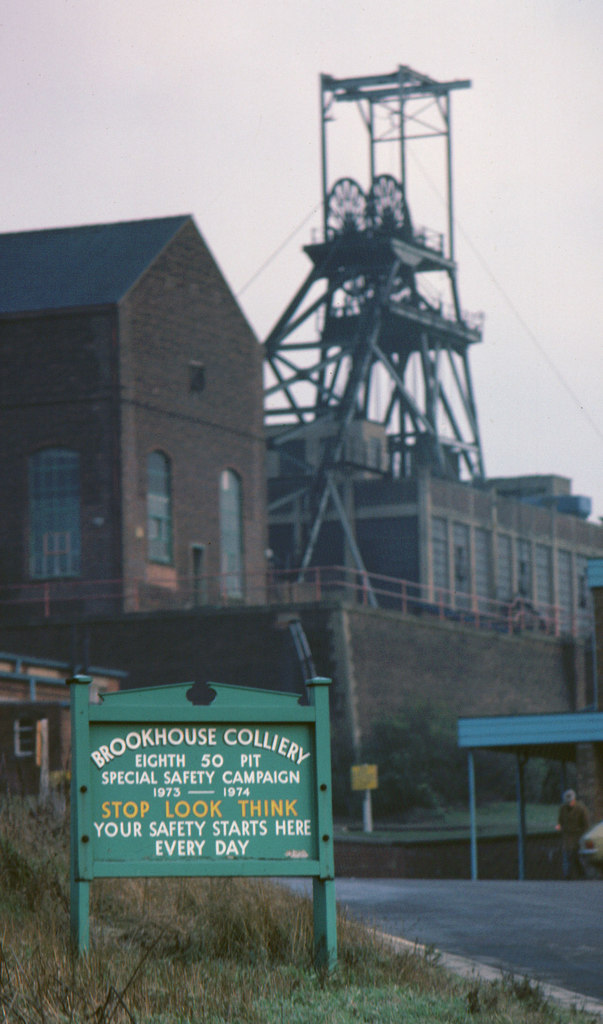
History
Brookhouse Colliery was opened in 1929 by the Sheffield Coal Company between Swallownest and Beighton, on what was then the border of the Rotherham Rural District and Derbyshire, alongside the company's existing Birley Collieries and North Staveley Colliery at Aston Common. The Sheffield Coal Company became part of United Steel Companies in 1937, and the colliery passed to the National Coal Board at nationalisation in 1947. Two circular shafts, each 18 feet in diameter and about three-quarters of a mile apart, worked the Silkstone Seam: the Beighton shaft (upcast, 1,282 feet deep) carried materials and small numbers of men between shifts, while the Brookhouse shaft (downcast, 1,285 feet deep) carried around 16,000 tons of coal a week and the majority of the 1,500 men employed underground. The colliery also included coke ovens and by-products plants supplying metallurgical coke to the iron and steel industry, particularly at Scunthorpe; the coking plant ceased production in 1981. Brookhouse closed on 26 October 1985, after 56 years of production. Opencast mining followed at the site, yielding a further 1.5 million tonnes of coal before that too ceased in 1994, and the former colliery ground was later incorporated into plans by Rotherham and Sheffield councils to extend the Rother Valley Country Park.
Geology
Coal of the South Yorkshire field: the Silkstone Seam, reached by two 18-foot shafts about three-quarters of a mile apart at 1,282 and 1,285 feet.
Workings
Worked the Silkstone Seam via two shafts. The Brookhouse downcast shaft carried around 16,000 tons of coal a week and most of the 1,500-strong underground workforce; the Beighton upcast shaft carried materials and smaller numbers of men.
Closure
Closed on 26 October 1985 after 56 years of production; opencast working at the site continued into 1994, yielding a further 1.5 million tonnes of coal.
What remains
No colliery-era structures are known to survive; the former site was worked opencast after closure and later incorporated into plans to extend the Rother Valley Country Park.
Redevelopment
After opencast working ended in 1994, the site was earmarked by Rotherham Borough Council, Sheffield City Council and North East Derbyshire District Council for extension of the Rother Valley Country Park.
Related mines
- Birley Collieries — Both were Sheffield Coal Company pits east of Sheffield. After Birley stopped drawing coal a borehole and pumping house were sunk on its site to help with Brookhouse's water table, and ran until Brookhouse closed in 1986.
Nearby mines
- North Staveley Colliery — 0.4 miles (0.6 km) NE
- Waleswood Colliery — 0.8 miles (1.4 km) SE
- Fence Colliery — 1.3 miles (2.0 km) NW
- Norwood Colliery, Killamarsh — 1.7 miles (2.7 km) SE, Derbyshire
- Birley Collieries — 1.9 miles (3.1 km) W
Straight-line distance, within 9 miles (15 km). Show on the map.
Disasters & major incidents
-
Brookhouse Colliery Overwind, 1958
4 March 1958 · Winding / Shaft Accident · 0 fatalities
An overwind in the No. 1 downcast shaft at Brookhouse Colliery injured 36 of the 44 men in a descending cage, after excessive winding speed went unchecked by faulty braking and an improperly equipped automatic safety device.
Recorded claims
Individual factual claims, each attached to the source(s) that support it below. Where sources disagree, both are kept.
- On 4 March 1958 an overwind in the Brookhouse downcast shaft injured 36 of the 44 men in the descending cage, when excessive winding speed -- not sufficiently checked by regenerative or mechanical braking, nor by an improperly equipped automatic Lilly Controller -- caused the cage to crash onto wooden baulks at the Silkstone Seam entrance. 1
- The colliery's coking plant supplied metallurgical coke to the iron and steel industry, particularly at Scunthorpe, until it ceased production in 1981, four years before the colliery itself closed. 2
- Brookhouse was linked underground with the Sheffield Coal Company's neighbouring collieries, the Birley pits and North Staveley at Aston Common. 2
- After closure the site was opencast for coal and then landscaped as the northern extension of Rother Valley Country Park, a plan of Rotherham, Sheffield and North East Derbyshire councils whose southern part had begun in 1976. 2
Photographs & further reading
A dedicated mines-rescue history page covering Brookhouse Colliery, including the 1958 overwind.
View sourceSources
- (primary) Brookhouse Colliery, Overwind, 4th March 1958 — Durham Mining Museum (reproducing the official Ministry of Power inspector's report)
- (secondary) Brookhouse Colliery — Wikipedia
Record created: 2 September 2026 · Last researched: 24 September 2026