 MineArchive
Holbrook Colliery
| Location | Holbrook, near Halfway and Eckington, Derbyshire — 53.3263, -1.3356 (exact) |
|---|---|
| Commodity | Coal |
| Type | Coal |
| Worked | By 1875 (sinking)–February 1944 |
| Maximum depth | 352 yards (Norwood shafts, Holbrook No. 2) |
| Operators | J. and G. Wells Ltd (1875–1944) |
Overview
A colliery of J. and G. Wells of Eckington, sunk in the mid-1870s at Holbrook and employing over a thousand people in the 1890s. Worked latterly with the old Norwood pit as Holbrook No. 2, it was abandoned in February 1944.
History
Holbrook Colliery stood in Eckington parish, six and a half miles south-east of Sheffield, with its sidings at Halfway. It belonged to J. and G. Wells, the Eckington coal masters, whose business became a limited company in 1876 after the deaths of the brothers Joseph and George Wells. The pit was being sunk in the mid-1870s. A labourer fell down the shaft while a windlass was being taken from the pit top in July 1875, a sinker was killed by a fall of bind from the shaft side in November 1876, and on 11 March 1878 two sinkers, Jacob Crooks and James Gilbert, were fatally hurt when air pipes they were removing broke loose in the shaft.
By 1894 it was a large colliery, with 1,092 people, 901 of them underground, raising gas and steam coal from the Deep Hard seam. A local account has more than five hundred men and boys below ground taking about an acre of coal a week. In October 1888 the coal getters at Holbrook and at the firm's Renishaw Park and Hornthorpe pits handed in notices to stop work. By 1905 the colliery was returned as three pits: No. 1 in the Silkstone seam, with 100 people, and Nos. 3 and 4 in the Deep Hard, with 641 and 96. No. 1 was standing by 1910, when No. 3, in the Deep Hard and Deep Soft, employed 1,026. At one period the pit had coke ovens, and a wooden cooling tower for the steam winder.
On 27 April 1913 a deputy, Albert Spooner, and a rope boy, John Turner, were killed by an explosion of firedamp put down to a defective safety lamp. On 24 November 1914 an assistant enginewright and a labourer, John Oxley and Robert Copely, were buried when the side of an old road rolled over the pack as they lifted out a broken water pipe.
After the Sheepbridge company closed its Norwood Colliery at Killamarsh in 1914, J. and G. Wells reopened it, the shafts being deepened in 1916 to the Deep Soft at 352 yards, and worked it with Holbrook as No. 2. In 1918 Holbrook No. 3 employed 800 people, Norwood 40 and Holbrook No. 4 48, and in 1923 No. 3 had 850. The Parkgate seam at Holbrook was finished on 31 March 1931. By 1938 the balance had moved to Norwood: No. 2 employed 706 people and No. 3 only 291.
The Deep Soft, or Flockton, workings of Holbrook Nos. 2 and 3 and Norwood were abandoned in February 1944, the pit by then joined underground to the firm's Westthorpe Colliery. The chimney and winding house were demolished. One account has Holbrook as the only colliery the company still worked at nationalisation in 1947, passing then to the National Coal Board; Holbrook No. 2 (Norwood) is still listed under the firm in 1945.
Geology
Coal Measures of the north-east Derbyshire coalfield. The colliery worked the Deep Hard, the Deep Soft or Flockton, the Parkgate and the Silkstone seams. At the Norwood shafts the Top Hard lay at 161 yards, 4 feet 9 inches thick, and the Deep Soft at 352 yards, 5 feet 2 inches thick.
Geological setting: Sedimentary Beds and Seams (well documented example)
Workings
Three Holbrook pits are returned, Nos. 1, 3 and 4, with the Norwood shafts at Killamarsh worked as No. 2 from the First World War; these were 352 yards deep after their deepening in 1916. The workings were joined to Westthorpe Colliery.
Closure
The Parkgate seam was finished on 31 March 1931, and the Deep Soft, or Flockton, workings of Holbrook Nos. 2 and 3 and Norwood were abandoned in February 1944. The workings were by then joined to Westthorpe Colliery, which carried on.
What remains
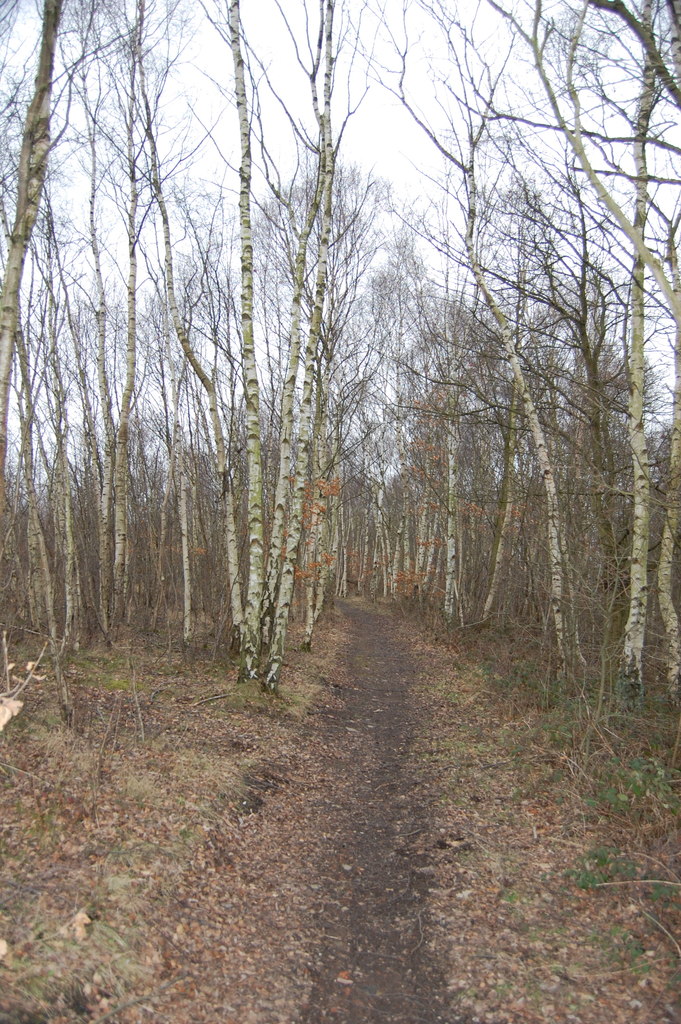
The colliery sidings at Halfway are overgrown with self-set birch.
The chimney and winding house were demolished after closure.
Related mines
- Norwood Colliery, Killamarsh — Reopened in 1916 by J. and G. Wells as Holbrook No. 2.
- Renishaw Park Colliery — Both were J. and G. Wells pits at Eckington; their coal getters handed in notices together in October 1888.
- Westthorpe Colliery — Both were J. and G. Wells pits, and Holbrook's workings were joined to Westthorpe before their abandonment in 1944.
- Westwell Colliery — Both were worked by J. and G. Wells of Eckington.
Nearby mines
- Eckington Mine — 1.0 miles (1.6 km) S
- Westthorpe Colliery — 1.2 miles (1.9 km) SE
- Norwood Colliery, Killamarsh — 1.4 miles (2.3 km) E
- Westwell Colliery — 1.6 miles (2.5 km) SW, South Yorkshire
- Plumbley Colliery — 1.6 miles (2.6 km) SW, South Yorkshire
Straight-line distance, within 9 miles (15 km). Show on the map.
What's uncertain
Points where sources disagree or the record could not be settled; both accounts are kept. All open questions in the archive.
- At nationalisation in 1947 Holbrook was the only colliery the company worked, and it passed to the National Coal Board. (disputed) 2
Recorded claims
Individual factual claims, each attached to the source(s) that support it below. Where sources disagree, both are kept.
- The colliery was being sunk between 1875 and 1878: men were killed in the shaft in July 1875, November 1876 and March 1878. 1
- J. and G. Wells became a limited company in 1876. 2
- In 1894 the colliery employed 1,092 people, 901 below ground, in the Deep Hard seam. 1
- The colliery employed more than five hundred men and boys underground and mined about an acre of coal a week. 3
- In 1910 No. 3 pit employed 1,026 people in the Deep Hard and Deep Soft seams. 1
- A deputy and a rope boy were killed on 27 April 1913 by an explosion of firedamp caused by a defective safety lamp. 1
- Two men were buried and killed on 24 November 1914 when the side of an old road gave way as they removed a broken water pipe. 1
- Norwood Colliery was worked by J. and G. Wells as Holbrook No. 2, its shafts deepened to the Deep Soft at 352 yards. 4
- In 1938 Holbrook No. 2 (Norwood) employed 706 people and Holbrook No. 3 291. 4
- The Parkgate seam at Holbrook was finished on 31 March 1931. 5,6
- Holbrook Nos. 2 and 3 and Norwood were abandoned in February 1944, joined to Westthorpe. 5,7
- At nationalisation in 1947 Holbrook was the only colliery the company worked, and it passed to the National Coal Board. (disputed) 2
- Self-set trees have taken over the land that was once the colliery's sidings at Halfway. 8
Photographs & further reading
Owners, seams and employment for each pit from 1894 to 1940, with the recorded fatalities.
View sourceThe history of the Norwood shafts and their later working as Holbrook No. 2, with managers and employment for 1918, 1938 and 1945.
View sourceA short history of the Eckington colliery firm and the pits it worked, with newspaper references.
View sourceA 2012 photograph of the birch woodland that has grown over Holbrook Colliery's sidings at Halfway.
View sourceSources
- (primary) Holbrook Colliery — Durham Mining Museum
- (secondary) J. and G. Wells — Grace's Guide
- (secondary) Eckington and Mosborough collieries — oldminer.co.uk
- (secondary) Norwood Colliery — oldminer.co.uk
- (secondary) Bob Bradley: 1944, page C (collieries closed in 1944) — Healey Hero
- (primary) Mine plan: HOLBROOK, Parkgate seam, abandoned 31 March 1931 (feature 21885951) — British Geological Survey / Mining Remediation Authority mine plans catalogue
- (primary) Mine plan: HOLBROOK AND NORWOOD, Flockton or Deep Soft seam, abandoned 1 February 1944 (feature 21887054) — British Geological Survey / Mining Remediation Authority mine plans catalogue
- (observational) Path Pipworth Lane to Station Road Halfway (John Jennings, 2012) — Geograph Britain and Ireland
Record created: 1 October 2026 · Last researched: 2 October 2026