 MineArchive

The Price of Coal
| Category | Screen |
|---|---|
| Dates | 29 March 1977: Meet the People, BBC1. 5 April 1977: Back to Reality. 1979: the novel. May 1984: stage version, Nottingham Playhouse. |
Barry Hines and Ken Loach's two-part BBC Play for Today of 1977, set at the fictional Milton Colliery near Barnsley: a comedy of the preparations for a royal visit, then, a month later, the explosion underground that follows the pit's shortcuts. It was filmed around the disused colliery at Thorpe Hesley, near Rotherham.
The mining history in this record
Barry Hines was born in 1939 in the pit village of Hoyland Common near Barnsley and, after leaving Ecclesfield Grammar School, went to the National Coal Board as an apprentice mining surveyor at Rockingham Colliery. A neighbour who met him at the coal face asked whether he couldn't find a better job than that; he went back into education and became a teacher. His novel A Kestrel for a Knave became Loach's film Kes in 1969, made with the producer Tony Garnett, and The Price of Coal brought the three together again for the first time since.
Hines had first written a comedy based on a real royal visit to Silverwood Colliery at Rotherham. Garnett liked it for the Play for Today slot but felt it needed more than the farce of a pit being 'tarted up' for royalty, and Hines wrote a second part, about a pit disaster, during the winter of 1975-76. Five men had lately been killed by an explosion at Houghton Main Colliery near Barnsley, and that autumn the new Health and Safety Executive's inquiry into it sat in Barnsley; many of the safety recommendations made by Arthur Scargill, then president of the Yorkshire miners, were echoed in the inspector's findings.
The first part, Meet the People, first titled The Visit, is a comedy about the expense and absurdity of readying a pit for Prince Charles: special lavatories built to be demolished afterwards, a brick holding up a window painted, signs in the pit baths forbidding swearing, the men mocking the royal accent, and the slogan Scargill rules OK painted on a wall on the eve of the visit. In the pub the colliers argue whether the pit was chosen because its union men were tame. The managers recall the Cadeby Main disaster of July 1912, which happened while the King and Queen were touring the Yorkshire pit villages, as bad luck. The second part, Back to Reality, first titled Disaster, is set a month on, when an explosion underground kills several men and the rest wait on the rescue.
The cast was drawn partly from the Yorkshire working men's club circuit: the comedians Duggie Brown, Bobby Knutt, Stan Richards and Jackie Shinn. Knutt, then a comedian on the Sheffield clubs with a Sunday-morning slot on Radio Sheffield, auditioned early in 1976 at the old Victoria Station Hotel in Sheffield by improvising a domestic row with the club singer Rita May, and the two were given the leads; he played the militant collier Syd Storey. The characters speak Yorkshire dialect and the plays have been shown with subtitles even in England, with some north-eastern voices for the Durham and Northumberland men who had moved to the Yorkshire coalfield in the 1960s. The pit scenes were filmed in the long hot summer of 1976 around the recently abandoned colliery on Wentworth Road at Thorpe Hesley, near Rotherham, and the Mines Rescue scenes in Wakefield with the real rescue team, who are thanked in the credits. The two parts went out on BBC1 on 29 March and 5 April 1977, in the year of the Queen's Silver Jubilee.
People
Barry Hines (1939-2016), writer. Ken Loach, director. Tony Garnett, producer. Duggie Brown, Bobby Knutt, Stan Richards and Jackie Shinn, cast.
Legacy today
Hines turned the screenplay into a novel, published in 1979, and it was staged at the Nottingham Playhouse in May 1984. His papers on it, from 1975 to 2009, are among the Barry Hines Papers at the University of Sheffield. When he died in 2016 Garnett wrote that the play showed both his compassion for the daily dangers of mining and his acknowledgement of the backwardness of his own community. In 2016 it was screened at a memorial event for Hines held by the Campaign for Press and Broadcasting Freedom.
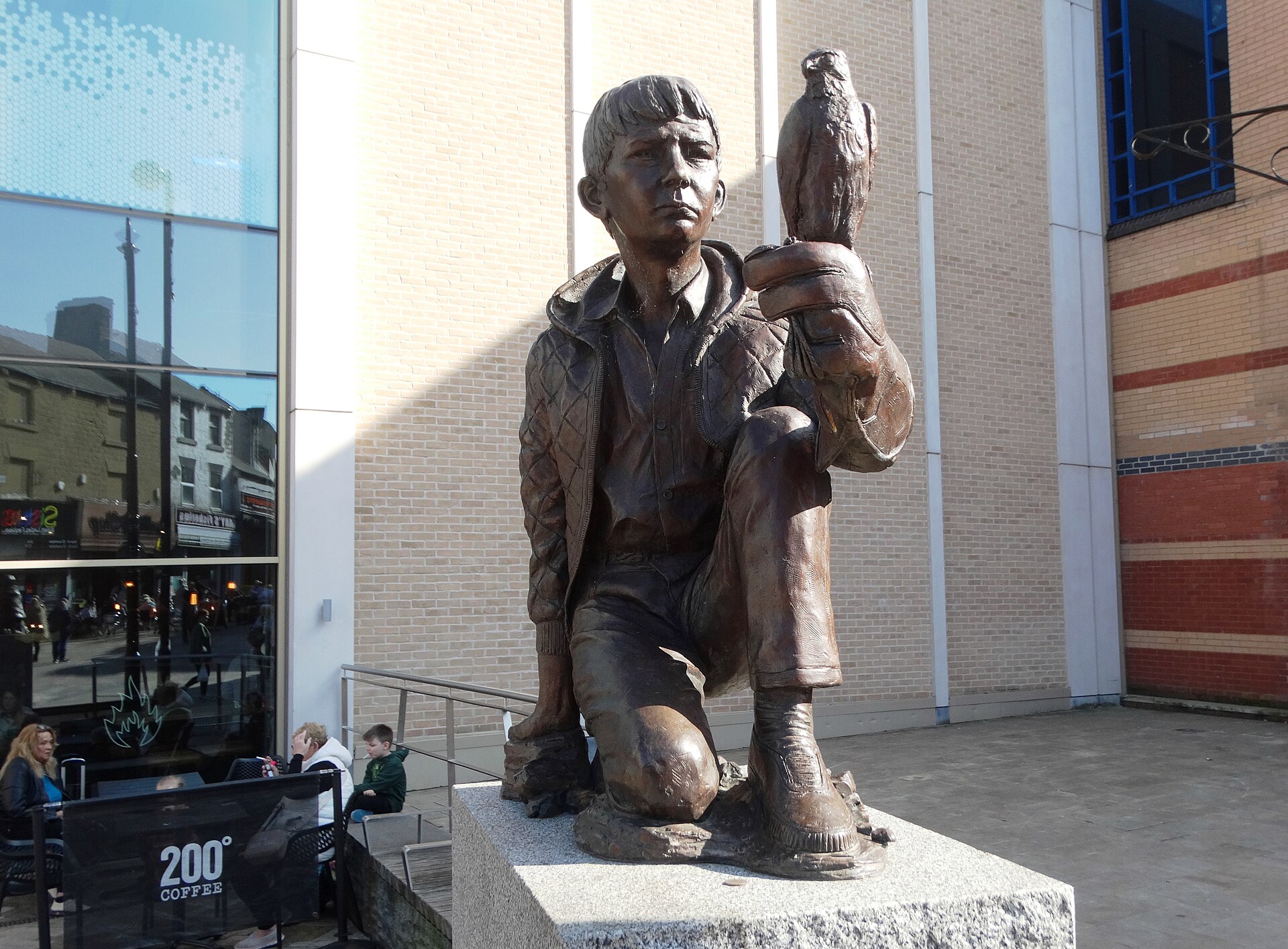
The Thorpe Hesley colliery has been closed and demolished, like the village's other modern pits. Hines is remembered in Barnsley town centre by a bronze of Billy Casper and his kestrel.
Mining language in this record
Words and phrases in this record that are genuine mining terminology, occupations, methods or economic practice — not scenery or ordinary regional language that merely appears in a mining-adjacent work.
| Expression | Meaning | MineArchive connection |
|---|---|---|
| pit baths | The pithead baths where the men change and wash; in the play the management's no-swearing signs go up there before the royal visit. (Yorkshire) | Pithead Baths — Same thing as the archive's Pithead Baths term, in the men's shortened name. |
| Mines Rescue Team | The trained rescue brigade called to the explosion in part two; the scenes were filmed with the real Wakefield team. (Yorkshire) | No term in the archive; explained on its own terms. |
Recorded claims
Individual factual claims, each tagged with how solidly it's grounded and attached to the source(s) that support it. Where sources disagree, both are kept.
- The Price of Coal is a two-part television drama written by Barry Hines and directed by Ken Loach, first broadcast in the BBC's Play for Today strand in 1977. (documented fact) 1,2
- Part one, Meet the People, was originally titled The Visit, and part two, Back to Reality, was originally titled Disaster. (documented fact) 2
- It is set at the fictional Milton Colliery near Barnsley and contrasts the cosmetic preparations for a royal visit with the safety shortcuts that lead to a fatal accident. (documented fact) 1
- The drama was filmed around the disused colliery on Wentworth Road at Thorpe Hesley, near Rotherham, since closed and demolished. (documented fact) 1,3
- Hines worked for the National Coal Board as an apprentice mining surveyor at Rockingham Colliery after leaving school. (documented fact) 4
- The plot resembles the Cadeby Main disaster of July 1912, which occurred during the King and Queen's visit to Yorkshire pit villages, and the managers discuss that disaster in the first episode. (documented fact) 1
- Hines adapted the screenplay as a novel published in 1979, and a stage version was performed at the Nottingham Playhouse in May 1984. (documented fact) 2
- A bronze of Billy Casper and his kestrel stands as the Barry Hines memorial in Barnsley town centre. (contemporary account) 5
- The play grew out of a comedy Hines wrote about a real royal visit to Silverwood Colliery at Rotherham. (documented fact) 6
- Hines wrote the second part, Back to Reality, in the winter of 1975-76, after the Houghton Main explosion and the inquiry into it in Barnsley. (documented fact) 6
- It was shot in the summer of 1976 at the recently abandoned Thorpe Hesley colliery near Rotherham. (documented fact) 6
- Bobby Knutt played the militant miner Syd Storey, his first acting role. (later recollection) 6
Mines
- Houghton Main Colliery — South Yorkshire
Part two was written in the winter after the 1975 Houghton Main explosion and the inquiry into it in Barnsley. - Rockingham Colliery — South Yorkshire
Hines went to the National Coal Board as an apprentice mining surveyor at Rockingham Colliery on leaving school, and it was a neighbour's remark to him at the coal face that sent him back into education. - Silverwood Colliery — South Yorkshire
Hines based the comedy of part one on a real royal visit to Silverwood.
Disasters
- Cadeby Main Colliery disaster, 1912 — 9 July 1912
The plot resembles the Cadeby Main disaster of July 1912, during the King and Queen's tour of the Yorkshire pit villages, and the managers in part one recall it. - Houghton Main Colliery explosion, 1975 — 12 June 1975
Hines wrote the disaster half of the play after this explosion and the inquiry held in Barnsley that autumn.
Regions
Real-world mining concepts used here
Coal, Colliery, Mineral Royalty, National Coal Board, Rescue Brigade
Sources
- (secondary) The Price of Coal — Wikipedia
- (primary) The Price of Coal, 1975-2009 (Barry Hines Papers, 389/1/PRC) — University of Sheffield Special Collections
- (secondary) Thorpe Hesley — Wikipedia
- (secondary) Barry Hines — Wikipedia
- (observational) Barry Hines Memorial (SE3406) — Geograph
- (secondary) Feature: Kes author Barry at the coalface of television drama (16 August 2016) — Doncaster Free Press
Record created: 10 October 2026 · Last researched: 10 October 2026