 MineArchive
Spoil Tip
| Also known as | Spoil heap (Northern and general usage), Pit heap (North-east England), Colliery spoil tip (Full form), Bing (Scots, especially of oil-shale tips), Batch (Somerset coalfield), Waste tip (Common formal usage, including in the Aberfan tribunal) |
|---|---|
| Category | Ground Conditions & Hazards |
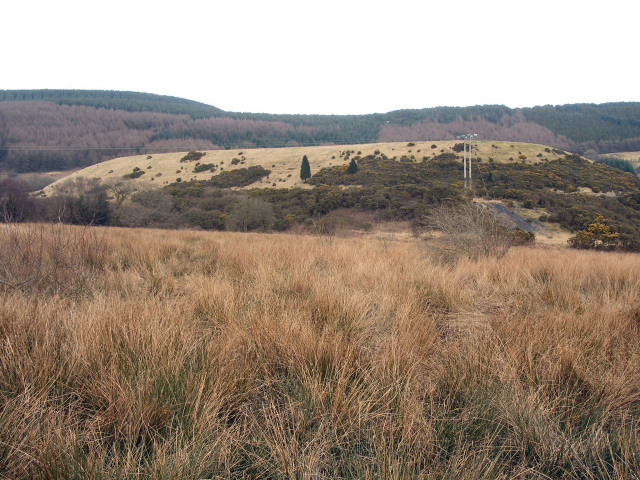
The heap of waste rock, shale and dirt raised alongside a mine or quarry — everything brought to the surface that was not the thing being mined. On a colliery it is the tip; in the hills of South Wales and the Pennines it is often the most conspicuous thing left of the mine.
Historical usage
Tipping is as old as mining, but industrial-scale tips are a product of deep coal. A colliery raising a thousand tons of coal a day also raised hundreds of tons of dirt with it, and had to put it somewhere. At Merthyr Vale, sunk from 1869, the valley floor was full by 1916 and tipping moved up onto the mountainside above the village of Aberfan; by 1966 seven tips there held 2.7 million cubic yards. Nothing in law governed how any of this was done. Tips were sited by convenience, built by tipping from the top of the growing heap, and inspected by nobody in particular.
How it worked
Waste went up the shaft with the coal, was separated on the screens, and was carried out to the tip — by tramway and end-tipping wagon, by aerial ropeway, or later by conveyor and dump truck. Tipping from the crest builds a heap at the natural angle of repose of loose shale, which is stable enough when dry. The danger is water. Colliery shale weathers, breaks down and loses strength; a tip built across a hillside spring or over ground that concentrates groundwater can become saturated at its base, and saturated fine spoil can liquefy and run. That is what happened at Aberfan on 21 October 1966, when Tip 7 flowed down into the village and killed 116 children and 28 adults.
Why it was used
Because the waste had to go somewhere, and moving it any distance cost money that the coal would not repay. Tipping close to the pit on ground the colliery already held was always the cheapest option, and until 1969 there was no legal reason to do anything else.
Risks & limitations
Instability and flow slides are the acute risk; the chronic ones are acid and metal-rich runoff, spontaneous combustion in tips containing coal, dust, and the sheer difficulty of ever growing anything on the surface. Aberfan changed the law: the Mines and Quarries (Tips) Act 1969 placed a duty on mine and quarry operators to make and keep tips secure, extended the same duty to liquid waste lagoons, made endangering a tip's security a criminal offence, and gave local authorities powers to require remedial work on disused tips or carry it out themselves and recover the cost. The problem has not gone away. Wales has 2,573 disused coal tips and an estimated 20,000 other disused tips, now graded A to D by their potential to affect public safety — Category A tips inspected at least twice a year — and the Disused Mine and Quarry Tips (Wales) Act 2025 has put the whole regime on a modern statutory footing.
Regional variation
Tip in the South Wales coalfield and generally in colliery usage; spoil heap, pit heap or pit hill in the north-east; bing in Scotland, particularly of the oil-shale tips of West Lothian; batch in parts of Somerset. Metal-mining districts more often speak of dumps, deads or burrows, and the waste from ore dressing rather than from driving is tailings, a different material with different problems.
Related terminology
Images
Mines associated with this term
Included only where MineArchive's own research gives a reasonable evidential basis — not every mine where this might plausibly apply.
- Auchencairn Mine — Dumfries and Galloway (well documented example)
Automatically linked by scripts/link_terms.py: exact-phrase match in the record's own recorded text. - Auchengeich Colliery — North Lanarkshire (well documented example)
Automatically linked by scripts/link_terms.py: exact-phrase match in the record's own recorded text. - Broxburn Oil Works — West Lothian (well documented example)
Automatically linked by scripts/link_terms.py: exact-phrase match in the record's own recorded text. - Cannop Colliery — Gloucestershire (well documented example)
Automatically linked by scripts/link_terms.py: exact-phrase match in the record's own recorded text. - Luing Slate Quarries — Argyll and Bute (well documented example)
Automatically linked by scripts/link_terms.py: exact-phrase match in the record's own recorded text. - Sutton Manor Colliery — Merseyside (well documented example)
Automatically linked by scripts/link_terms.py: exact-phrase match in the record's own recorded text. - Tarbrax Oil Shale Mine — South Lanarkshire (well documented example)
Automatically linked by scripts/link_terms.py: exact-phrase match in the record's own recorded text. - Merthyr Vale Colliery — Rhondda Cynon Taf (notable incident)
The colliery's waste tips, raised on the hillside above Aberfan once the valley floor was full, are the reason tip construction became a regulated activity in 1969.
Disasters associated with this term
Included only where MineArchive's own research gives a reasonable evidential basis, with the nature of the relationship stated — not every disaster where this term might plausibly apply.
- Aberfan disaster, 1966 (direct cause)
Tip 7, a colliery spoil tip built over hillside springs, liquefied and flowed into the village — the failure that put tips into statute for the first time.
Sources
- (primary) Coal tip safety — Welsh Government
- (primary) Mines and Quarries (Tips) Bill, House of Lords, 28 January 1969 — Hansard
- (secondary) Aberfan disaster — History.com
Record created: 24 August 2026 · Last researched: 24 August 2026