 MineArchive
Sutton Manor Colliery
| Location | Sutton, St Helens, Merseyside — 53.4394, -2.6706 (approximate) |
|---|---|
| Commodity | Coal |
| Type | Coal |
| Worked | 1906–1991 |
| Maximum depth | No. 2 shaft 2,343 feet (714 m) when completed in 1912; the shafts were deepened to 820 yards in the 1952–57 reorganisation. |
| Operators | Sutton Manor Collieries Ltd (1906–1946), National Coal Board (1947–1986), British Coal Corporation (1987–1991) |
Overview
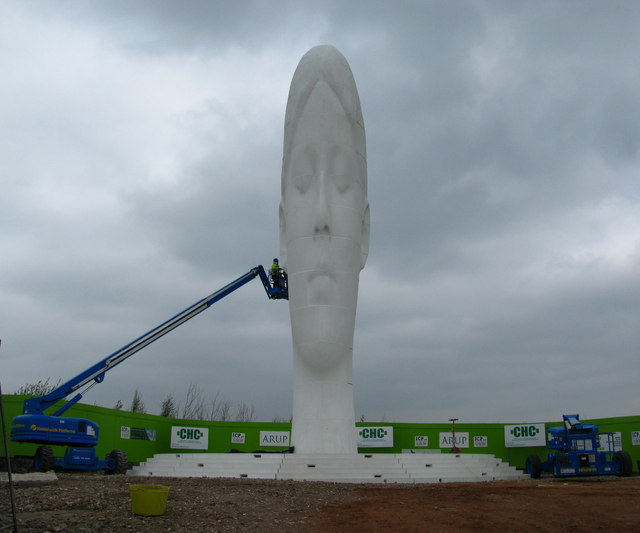
A Lancashire coalfield colliery whose old spoil tip now carries Dream, a 20-metre sculpture of a young girl's head commissioned with the involvement of the very miners who once worked beneath it.
History
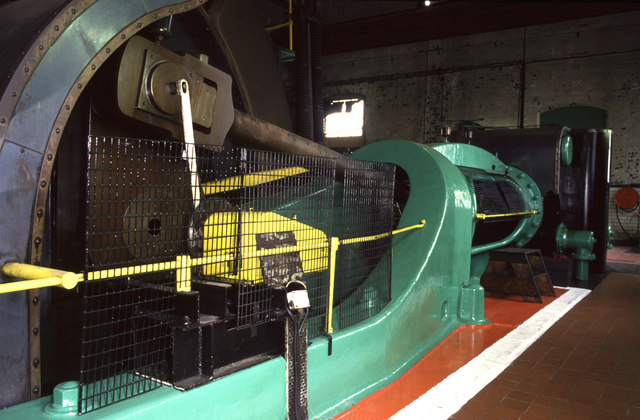
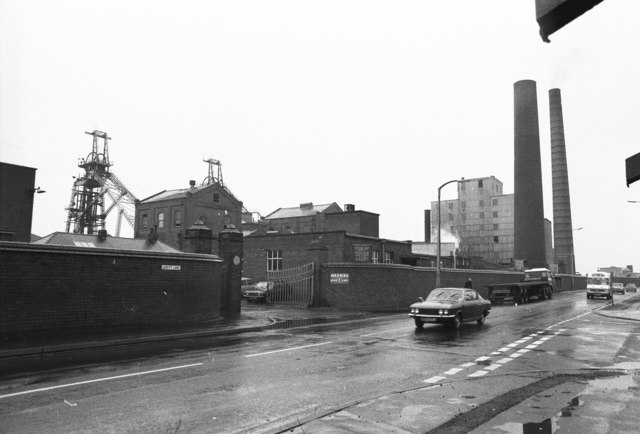
Sutton Manor Colliery, near St Helens, worked coal from 1906 until its closure in 1991. Rather than simply demolishing and abandoning the site, the Forestry Commission began managing the former colliery land from 2001, planting some 50,000 trees — alder, willow and ash — to turn the old spoil tip into a community woodland. In 2008, as part of Channel 4's 'The Big Art Project', St Helens Council, local residents and former Sutton Manor miners were directly involved in commissioning a major public artwork for the site; the Catalan artist Jaume Plensa was selected, and his sculpture Dream — a 20-metre-high, 500-tonne head and neck of a young girl in meditation, coated in gleaming white Spanish dolomite — was installed atop the old spoil tip in 2009. Ex-miners were closely involved in choosing the piece, intended deliberately to set a bright, hopeful, white monument against the site's black coal-mining past. Sutton Manor Collieries Ltd was floated in 1904 to bore for and work the coal under the Sutton Manor estate, and the local coal proprietor Richard Evans began sinking No. 1 shaft, eighteen feet across, in May 1906; No. 2, twenty-two feet, followed in July. The coal was deep and badly faulted and the first years were spent finding a seam that could be worked economically — a Sutton Beauty account has an Irish borer named Duffy striking a first-class seam on the seventh day of a deadline week — so that No. 1 was not finished, at 1,823 feet, until December 1909 and No. 2, at 2,343 feet, until 1912, when production began. By 1914 the pit was raising 700 tons a day; a third shaft started that year was abandoned at 180 feet on the outbreak of war and filled in. It was the only St Helens colliery opened in the twentieth century. The Durham Mining Museum records 1,100 employed in 1933, 1,387 in 1940 and 1,412 in 1954, working the Crombouke, Higher and Lower Florida, Trencherbone, Wigan Five Feet and Yard seams, and the National Coal Board's 1967 leaflet records a reorganisation of 1952–57 in which the shafts were deepened to 820 yards and two and a half miles of new tunnels opened further reserves, 1,460 men then producing 583,000 tons. A virgin area at Barrows Green to the south was proved by boreholes in 1976 after a £200,000 investment, and promised thirty years of reserves; but the pit lost money every year from 1974, and after British Coal electrified No. 1 winder in 1986 — leaving No. 2's Yates & Thom steam winder as the last in the country — it issued an ultimatum to the 427 remaining men in November 1987. Sutton Manor was listed among 41 pits most at risk in March 1990 and closed in 1991 with, its men insisted, much coal still underground.
Geology
Sutton Manor worked coal seams of the Lancashire Coalfield near St Helens.
Geological setting: Sedimentary Beds and Seams (well documented example)
Workings
Coal was worked by conventional methods typical of the Lancashire coalfield through the 20th century.
Closure
The colliery closed in 1991; the Forestry Commission began reclaiming the site as community woodland from 2001. British Coal's case was economic: the pit had lost money every year since 1974 and its output targets were missed despite record performances; the men's case was the coal left in the ground at Barrows Green.
What remains
The former spoil tip is now Sutton Manor Community Woodland, home to Dream, a major public sculpture, and open to visitors.
The reclaimed spoil tip, now planted woodland, topped by the Dream sculpture.
Related mines
- Holland Colliery — Sutton Manor Collieries Ltd bought Holland in 1938 to close it and transfer its production quota to Sutton Manor.
- Lea Green Colliery — Both St Helens pits in the same ground; the Sutton Heath and Lea Green company held £90,000 of shares in Sutton Manor Collieries Limited, and the mineral line that served Lea Green also served Sutton Manor.
Nearby mines
- Collins Green Colliery — 0.5 miles (0.9 km) N
- Bold Colliery — 0.6 miles (1.0 km) SW
- Haydock Colliery — 1.4 miles (2.2 km) NE, Lancashire
- Parr Colliery — 2.1 miles (3.3 km) NW, Lancashire
- New Boston Colliery — 2.2 miles (3.6 km) NE
Straight-line distance, within 9 miles (15 km). Show on the map.
Disasters & major incidents
-
Sutton Manor Colliery shaft accident, 1920
11 May 1920 · Winding / Shaft Accident · 2 fatalities
On 11 May 1920 a bricksetter and a fireman fell down the shaft together and were killed at Sutton Manor Colliery, near St Helens in Lancashire.
Culture
- Sutton Manor Colliery Institute Prize Band (Music)
The band took its name from Sutton Manor Colliery and its miners' institute, and was raised from the pit's workforce and community.
Recorded claims
Individual factual claims, each attached to the source(s) that support it below. Where sources disagree, both are kept.
- Sutton Manor Colliery closed in 1991; from 2001 the Forestry Commission planted around 50,000 trees to reclaim the former spoil tip as community woodland. 1
- In 2008-09, as part of Channel 4's 'The Big Art Project', former Sutton Manor miners were directly involved in commissioning Jaume Plensa's sculpture Dream — a 20-metre, 500-tonne head and neck of a young girl — installed on the old spoil tip. 2,1
- No. 1 shaft, eighteen feet in diameter, was started in May 1906 and completed to 1,823 feet in December 1909; No. 2, twenty-two feet, was started in July 1906 and completed to 2,343 feet in 1912. 3
- The shafts were deepened to 820 yards in a 1952–57 reorganisation that opened two and a half miles of new tunnels; 1,460 men then produced 583,000 tons. 4
- After British Coal electrified No. 1 winder in 1986, No. 2's Yates & Thom steam winding engine was the last in use at any British colliery. 5
- Employment was 1,100 in 1933, 1,387 in 1940, 1,290 in 1947 and 1,412 in 1954. 4
- The BGS mine-plans catalogue holds a Mining Remediation Authority abandonment plan titled 'Sutton Manor' (catalogue NW1544, Pigeon House (Higher And Lower Pigeon House), dated 1989). 6
Photographs & further reading
Sutton Beauty & Heritage's illustrated history of the pit from the 1906 sinking to the 1930s: the shafts, the early fatalities, the Miners' Institute, the band and the 1926 strike.
View sourceSources
- (secondary) Dream St.Helens — Sutton Beauty & Heritage
- (secondary) Dream (sculpture) — Wikipedia
- (secondary) Sutton Manor Colliery Part 1 — Sutton Beauty & Heritage
- (primary) Durham Mining Museum: Sutton Manor Colliery — Durham Mining Museum
- (secondary) History of Sutton Manor Colliery Part 2 — Sutton Beauty & Heritage
- (primary) BGS / Mining Remediation Authority mine plans: SUTTON MANOR — British Geological Survey / Mining Remediation Authority
- (primary) Durham Mining Museum: Sutton Manor Collieries Ltd. — Durham Mining Museum
Record created: 21 August 2026 · Last researched: 8 September 2026