 MineArchive
Wylam Colliery
| Location | Wylam, Northumberland — 54.9731, -1.8103 (approximate) |
|---|---|
| Commodity | Coal |
| Type | Coal |
| Worked | By the 1700s–By 1888 |
| Operators | Christopher Blackett (1820–1829), Wylam Coal Company (1880–1888) |
Overview
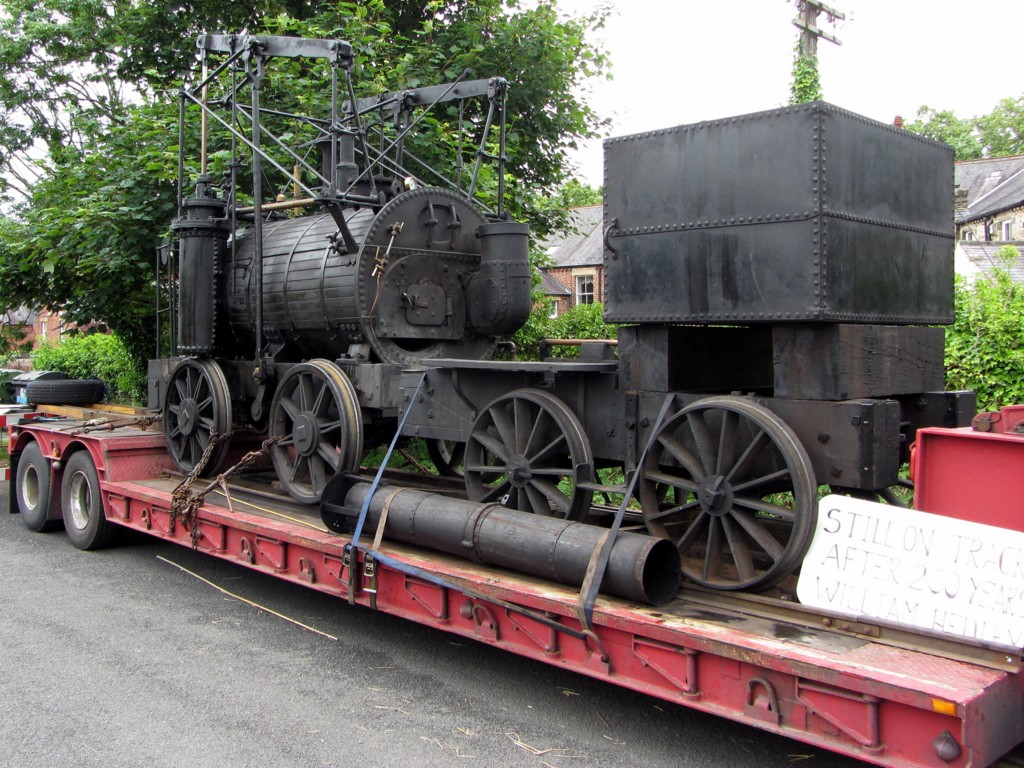
Wylam Colliery, on the Tyne eight miles west of Newcastle, was where colliery viewer William Hedley built Puffing Billy and Wylam Dilly -- the world's oldest surviving steam locomotives -- to haul its coal, and where George Stephenson, born in a cottage on the colliery's own estate in 1781, grew up.
History
Wylam Colliery lay on the north bank of the Tyne at Wylam, Northumberland, eight miles west of Newcastle, worked across some twenty old pits including the Andrew, Ann, Elliot, Endeavour, Haugh, Hedge, John, Margery, Peggy, Primrose and Prosperous pits, some worked continuously for over ninety years by the time of an 1860s survey. A waggonway to staiths at Lemington, built around 1748, was among the earliest in the north of England; a wooden platform bridge later carried the waggonway across the Tyne to connect with the Newcastle and Carlisle Railway. The colliery was owned by Christopher Blackett through the 1820s and John Blackett through the 1840s, passing to the Wylam Coal Company by the 1880s. During the great flood of 17 November 1771, which also destroyed Newcastle's bridge, water reached one of the colliery's shafts and inundated workings under 300 acres, an estimated 1,728,000 hogsheads of water flooding the seams. In 1812 Christopher Blackett asked his colliery viewer William Hedley to build a locomotive to replace horse haulage; working with enginewright Jonathan Forster and blacksmith Timothy Hackworth, Hedley produced Puffing Billy in 1813-14, followed by Wylam Dilly -- the two oldest surviving steam locomotives in the world, built specifically to haul coal chaldron wagons from Wylam Colliery to the staiths at Lemington. George Stephenson, born in a cottage on the colliery's own estate in June 1781, grew up around these workings. The colliery flourished until around 1870 and had closed by 1888.
Geology
Coal of the Northumberland field beside the Tyne, close enough to the river for the great flood of November 1771 to reach a shaft and inundate the workings.
Workings
Worked across around twenty named pits (Andrew, Ann, Elliot, Endeavour, Haugh, Hedge, John, Margery, Peggy, Primrose and Prosperous among them); coal was hauled from 1813-14 by Puffing Billy and Wylam Dilly, the world's oldest surviving steam locomotives, along a waggonway built around 1748 to staiths at Lemington.
Closure
The colliery flourished until around 1870 and had closed by 1888.
What remains
No trace of the colliery's own surface workings is described; the site is now part of the residential village of Wylam, whose railway heritage is separately commemorated (a road sign and a 'Puffing Billy' sculpture in the village, and George Stephenson's birthplace cottage, now in the care of the National Trust).
Nearby mines
- Clara Vale Colliery — 0.8 miles (1.3 km) NE, Tyne and Wear
- Phoenix Drift — 1.3 miles (2.1 km) SE, Tyne and Wear
- Emma Colliery — 1.4 miles (2.3 km) E, Tyne and Wear
- Greenside Colliery — 1.8 miles (2.9 km) SE, Tyne and Wear
- Prudhoe Colliery — 2.2 miles (3.6 km) W
Straight-line distance, within 9 miles (15 km). Show on the map.
Disasters & major incidents
-
Wylam Colliery Boiler Explosion, 1865
27 October 1865 · Machinery · 3 fatalities
A boiler explosion at Wylam Colliery killed three workers, including a 13-year-old boy, and was reported at the time in the local press.
Culture
- George Stephenson and West Moor Pit (Learning)
Stephenson's father was fireman on the Wylam Colliery pumping engine, where he was born in 1781.
Recorded claims
Individual factual claims, each attached to the source(s) that support it below. Where sources disagree, both are kept.
- In 1812 Christopher Blackett asked colliery viewer William Hedley to build a locomotive to replace horse haulage; working with enginewright Jonathan Forster and blacksmith Timothy Hackworth, Hedley produced Puffing Billy in 1813-14, followed by Wylam Dilly, to haul coal chaldron wagons from Wylam Colliery to the staiths at Lemington -- the two oldest surviving steam locomotives in the world. 1,2
- During the great flood of 17 November 1771, which also destroyed Newcastle's bridge, water reached one of the colliery's shafts and inundated workings under 300 acres, an estimated 1,728,000 hogsheads of water flooding the seams. 3
- The colliery was worked across around twenty named pits, some -- per an 1860s survey -- worked continuously for over ninety years; ownership passed from Christopher Blackett (1820s) to John Blackett (1840s) to the Wylam Coal Company (1880s). 3
Photographs & further reading
The museum's own detailed record of the colliery's named pits, owners, output years and recorded fatalities.
View sourceSources
- (secondary) Wylam Colliery — Grace's Guide to British Industrial History
- (secondary) Wylam — Wikipedia
- (primary) Wylam Colliery — Durham Mining Museum
Record created: 2 September 2026 · Last researched: 2 September 2026