 MineArchive
Clara Vale Colliery
| Location | Clara Vale, near Ryton and Crawcrook, Tyne and Wear — 54.9808, -1.7945 (approximate) |
|---|---|
| Commodity | Coal |
| Type | Coal |
| Worked | 1893 (sinking from 1891)–1966 |
| Maximum depth | 68 fathoms (to the Brockwell, 1893); the sinking record runs to 439 feet |
| Operators | Stella Coal Company (1891–1947), National Coal Board (1947–1966) |
Overview
The Stella Coal Company's colliery at Clara Vale, near Ryton, sunk in 1891-93 with its own purpose-built village, named after the owner's wife. It employed 1,221 at its 1925 peak and closed in February 1966.
History
John Simpson of Bradley Hall began sinking a pair of shafts at Clara Vale, in the township of Crawcrook, in 1891, on ground beside the old Crawcrook water mill; the sinking took two years, and the colliery opened in July 1893. The shafts went down 68 fathoms to the Brockwell, where a considerable feeder of water was met. The Stella Coal Company built the colliery and the village together and named both after Clara, wife of the owner John Bell Simpson. In 1894 the pithead had electric lighting and a brickworks, and the pit raised 300 tons a day. The village had an Anglican tin tabernacle, two successive miners' institutes and a school, open from 1898 to 1962.
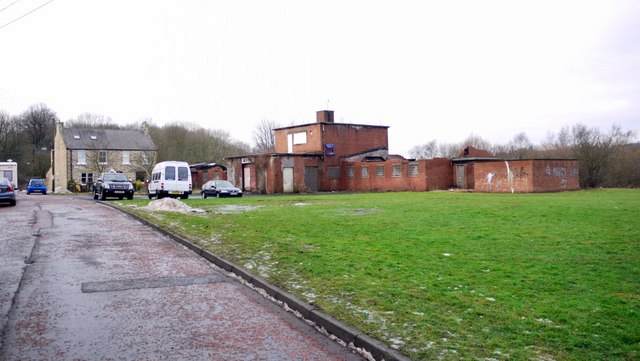
The workforce grew from 372 in 1894 to 903 in 1910 and a peak of 1,221 in 1925, working the Brockwell, Five Quarter, Stone Coal, Towneley, Three Quarter and Tilley, with the Ruler and Plessey later. The National Coal Board took over in 1947 and built pithead baths in 1959. The Brockwell was abandoned in 1963, and the colliery closed on 5 February 1966, about the time of the neighbouring Emma, Greenside and Stargate pits, with 562 men. Clara Vale was made a Category D village; derelict colliery buildings stood until the 1980s, and the pithead baths, later used by light industry and as a recording studio, were destroyed by fires in the 2010s.
Geology
Durham Coal Measures: the Brockwell, Five Quarter or Bottom Busty, Stone Coal or Top Busty, Towneley or Harvey, Three Quarter, Tilley, Ruler and Plessey.
Workings
Two shafts to the Brockwell (1891-93); a brickworks at the pithead; pithead baths (1959).
Closure
Closed on 5 February 1966.
What remains
The colliery buildings were demolished in the 1980s; the original ambulance shed remains.
The colliery ambulance shed. The pithead baths of 1959 stood until fires in the 2010s.
Redevelopment
The pithead baths were reused by light industry and as a recording studio before they burned.
Related mines
- Emma Colliery — Neighbouring Ryton collieries that closed about the same time in the 1960s.
- Stargate Colliery — Both Stella Coal Company collieries near Ryton.
Nearby mines
- Wylam Colliery — 0.8 miles (1.3 km) SW, Northumberland
- Emma Colliery — 1.1 miles (1.8 km) SE
- Throckley Colliery — 1.5 miles (2.4 km) E
- Stargate Colliery — 2.1 miles (3.4 km) SE
- Blaydon Burn Colliery — 2.7 miles (4.4 km) SE
Straight-line distance, within 9 miles (15 km). Show on the map.
Recorded claims
Individual factual claims, each attached to the source(s) that support it below. Where sources disagree, both are kept.
- Sinking took two years from 1891, and the colliery opened in July 1893, its shafts 68 fathoms deep to the Brockwell. 1,2,3
- The colliery and village were named after Clara, wife of the owner John Bell Simpson. 2,3
- The colliery employed a peak of 1,221 in 1925. 1,2
- The colliery closed on 5 February 1966. 1,2,3
Photographs & further reading
Owners, employment, seams and those killed at the colliery.
View sourceSources
- (primary) Clara Vale Colliery — Durham Mining Museum
- (secondary) Clara Vale — Wikipedia
- (secondary) Photographs of Newcastle: Clara Vale — Photographs of Newcastle (blog)
Record created: 4 October 2026 · Last researched: 4 October 2026